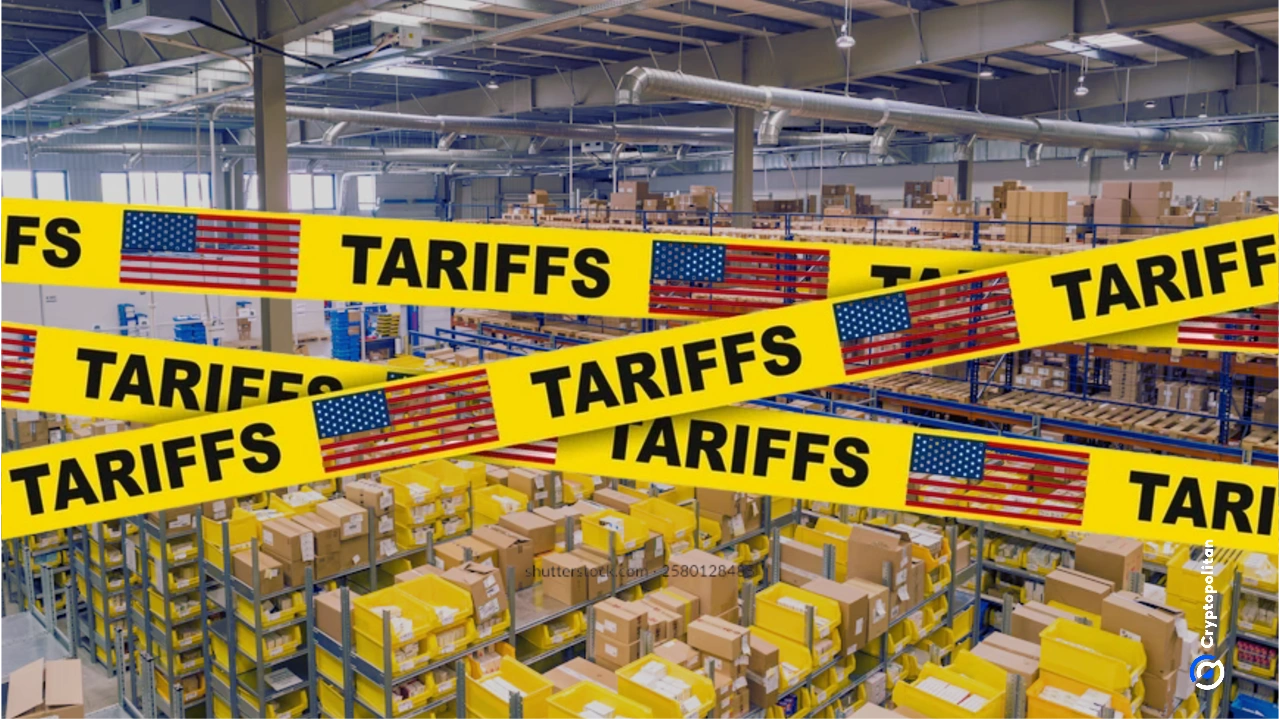


Corporate resistance is on the rise as Nintendo joins over 1,000 other companies in suing the U.S. government for refunds and accruing interest over the imposition of “illegal” Trump tariffs. Trade lawyer Alexis Early said that the U.S. Customs and Border Protection agency must now process the refunds.
Nintendo filed a lawsuit on March 6 against President Donald Trump’s administration in the U.S. Court of International Trade seeking a full refund and any accruing interest after the Supreme Court struck down Trump’s tariffs last month.
The suit requests that the court not only order the immediate refund of the “unlawful” tariff fees imposed under the International Emergency Economic Powers Act of 1977 (IEEPA), with interest, but also award attorney fees.
The Supreme Court struck down the tariffs on February 20, but Trump vowed to impose new 15% tariffs on many global imports under Section 122 of the Trade Act of 1974, claiming that he has the right to “do tariffs.”
Technically, Nintendo is suing not just the Trump administration but the United States of America itself, which is explicitly named as a defendant in the suit, Nintendo of America Inc. V. United States of America.
The suit also names several Trump administration officials, including the recently fired Secretary of the Department of Homeland Security, Kristi Noem, and Secretary of Commerce Howard Lutnick.
Nintendo claims there is no justification for IEEPA Duties
According to Nintendo, the complaint focuses on the Defendants’ imposition of IEEPA Duties, founded on Trump’s executive orders invoking the IEEPA to justify them. However, the company believes that the IEEPA does not authorize or justify the imposition of the IEEPA Duties.
Both the Federal Circuit and the U.S. Court of International Trade have issued rulings confirming the same. However, the IEEPA Duties termination executive order does not address the refunding of the illegally collected IEEPA Duties.
Meanwhile, Nintendo claims that it has suffered a significant burden from these tariffs, citing the temporary delay of the U.S. pre-orders for Switch 2 and the unavoidable price hike for peripherals.
Even so, the company has not touched the console’s price, choosing to absorb the tariff costs itself. The swallowed-up burden will directly turn into profits if the refunds are realized, but consumers who had the cost of Trump’s tariffs passed on to them through price hikes will not get any of that money returned.
On the other hand, there is a likelihood that the Trump administration will appeal or seek a stay, according to trade lawyer Ryan Majerus, a partner at King & Spalding and a former U.S. trade official.
However, it remains unpredictable when and to what extent the refunds will happen. Paths to cost recovery will open up at once if the ruling is finalized, and the development should be a tailwind for all Japanese companies that have shouldered tariffs on exports to the U.S.
Law professor says decision is great for U.S. importers
Barry Appleton, a law professor and co-director of the New York Law School’s Center for International Law, said this decision is great for U.S. importers and consumers who paid extra due to the IEEPA-imposed duties.
He also emphasized that the decision will make customs brokers busy and make things easier for the courts, while getting the process underway for importers who paid tariff duties within the last 180 days.
Meanwhile, Judge Richard Eaton of the U.S. Court of International Trade also noted that the president could not unilaterally set or change tariffs because the power to tax belongs to Congress.
Another federal court rejected the Trump administration’s attempt to slow the refund process, with the U.S. Court of Appeals for the Federal Circuit starting the next phase by sending it to the New York trade court for further sorting.
Nintendo’s lawsuit may look like gaming industry news, but the real crux is the legality of America’s trade policy. With over 1,000 companies banding together in this historic moment, it could be a pivotal turning point in shaping U.S. strategies for Japanese firms.
Join a premium crypto trading community free for 30 days – normally $100/mo.

Read More