
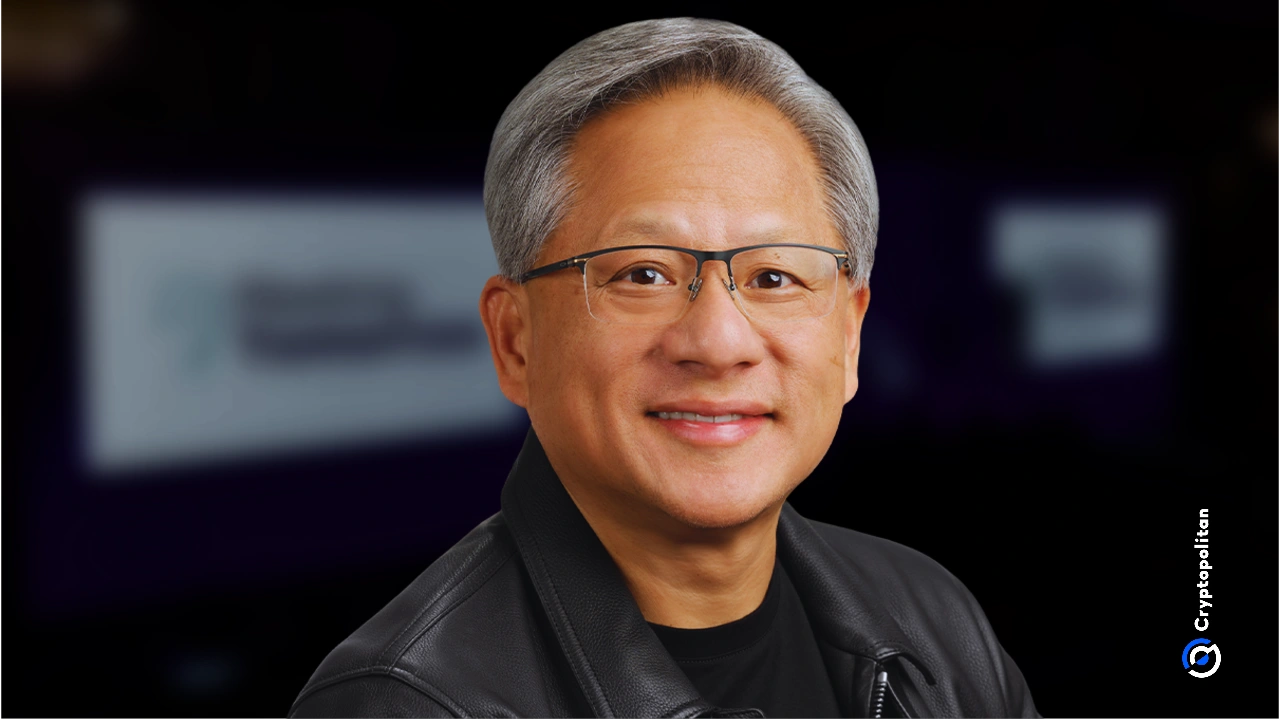


Jensen Huang wants to hand engineers a new kind of perk alongside their paychecks, a budget of AI tokens that could be worth tens of thousands of dollars a year.
NVIDIA’s chief executive made the proposal at the company’s annual GPU Technology Conference, where he described tokens, the basic units AI systems use to carry out tasks, as an emerging recruitment tool in Silicon Valley.
The idea fits into a larger picture Huang is painting of the modern workplace. In his view, workers will soon manage large teams of AI agents, software programs that can complete complicated, multi-step jobs on their own.
Huang stated that although NVIDIA now employs 42,000 people, he anticipates that figure will soon be overshadowed by “hundreds of thousands” of “digital employees.” In that scenario, data centers become what Huang refers to as “AI factories,” establishments that produce tokens in the same manner as factories produce things.
Huang argues that tokens have become the core currency of the technology industry.
“If computing power is compared to a money-printing machine, tokens are the real currency of the AI era,” he said. Computing power, he added, now functions like revenue: without it, you cannot generate tokens, and without tokens, growth stalls.
New chips, bigger numbers
NVIDIA cited their new Grace Blackwell chip architecture to support such assertion. According to the business, it can process 5,000 tokens per second, compared to about 700 on a Hopper configuration, and provides 50 times the throughput of the old Hopper platform.
The jump, according to Huang, was a calculated gamble made while Hopper was still doing well. He referred to Grace Blackwell as the only infrastructure that businesses can confidently expand over, whether in a private cloud or internationally.
According to Huang, the efficiency increases are important because once a corporation constructs a gigawatt-scale data center, its power capacity is practically fixed.
“Your workload is inference, your tokens are your commodity, and that compute is your revenue,” he said. “Every company is going to be thinking about token effectiveness.”
NVIDIA is already working on its next platform, called Vera Rubin, which is built for training large AI models and running them continuously.
Huang suggested that AI services will likely move toward tiered pricing in the future, with free entry-level access on one end and premium tiers costing up to $150 per million tokens on the other.
Other big players are moving in the same direction. Alibaba recently reorganized parts of its business to create the Alibaba Token Hub Business Group, led by CEO Eddie Wu Yongming. The unit is meant to pull together all of Alibaba’s AI products under a single goal: building, delivering, and using tokens.
Jobs, costs, and the talent crunch
But the shift is not without complications.
A recent survey found that 98% of C-suite executives believe AI will eventually reduce headcount, yet 54% say finding qualified talent is still their biggest challenge.
Goldman Sachs has estimated that AI could automate work accounting for 25% of all working hours in the United States. Goldman senior global economist Joseph Briggs acknowledged the transition will not be smooth, but said history shows that new technology eventually creates jobs that did not previously exist.
For smaller companies, the costs are already biting.
Startup founders say that every task an AI completes comes with a price tag in tokens. Several major AI providers have recently raised prices by 5% to 30%.
Bruno Guicardi, president of IT firm CI&T, described the shift as one where engineers now instruct computers in plain English rather than writing code.
In that environment, knowing when and how to use AI and getting real value out of every token spent is what separates good judgment from wasted money.
If you want a calmer entry point into DeFi crypto without the usual hype, start with this free video.


Read More


