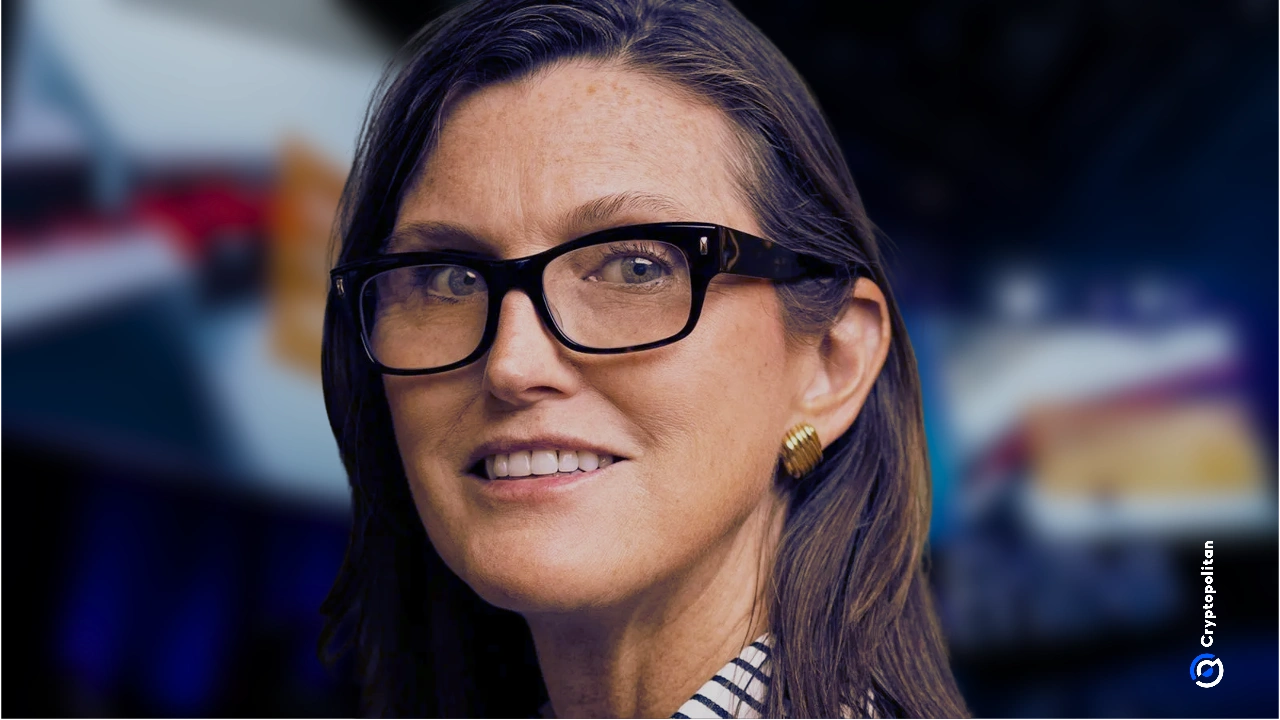


The ARK Invest boss said Thursday her firm now uses Kalshi prediction market data to guide investment decisions. And the timing? Pretty interesting. This week, Wood put $16.3 million into Circle Internet Group shares while other investors were heading for the exits.
“Bringing prediction markets into institutional workflows is a natural next step for innovation in financial research,” Wood said in a statement. “We believe these signals can enhance our research process and provide valuable context around key drivers across disruptive sectors, helping investors better quantify uncertainty and make more informed decisions.”
Prediction markets let people bet real money on future events. Supporters say this creates unbiased forecasts since participants have cash on the line. ARK uses this data in three ways. Adding continuously updated forecasts to traditional analysis, tracking trading volume for real-time sentiment, and managing risks tied to specific events.
$16.3 million Circle bet amid stock crash
The Circle trade shows this working. Wood’s three flagship funds, ARK Innovation ETF, ARK Next Generation Internet, and ARK Blockchain & Fintech Innovation, bought 161,513 shares of Circle at $101.17 each on the day the stock crashed, according to Benzinga.
The drop came after lawmakers introduced the Senate CLARITY bill. It would ban interest-style earnings on stablecoin holdings. Bad news for Circle since the company makes most of its money from interest generated by reserves backing USDC, the second-biggest stablecoin out there.
But here’s the thing. Wood had sold Circle stock just days before. Textbook contrarian move. Sell high, wait for the drop, buy back lower with more capital. Risky, sure, but when it works, you pocket gains everyone else left behind.
“We believe prediction markets offer some of the purest expressions of risk around key economic and company-specific outcomes,” said Nick Grous, ARK’s Director of Research. The firm uses Kalshi to “hedge exposure to discrete outcomes that impact portfolio positions” and hedge against broader economic and sector risks.
Venture capital thinking meets public markets
Wood’s whole approach is different from that of typical fund managers. She takes venture capital thinking and applies it to publicly traded companies. She’s hunting for businesses tied to major tech shifts that could reshape entire industries. Artificial intelligence, robotics, electric vehicles, energy storage, DNA sequencing, blockchain.
Patience is the other half. Wood says revolutionary innovation bounces around by nature. That’s why ARK plans around a five-year window instead of quarterly earnings. Short-term drops based on sentiment instead of fundamentals? Often means it’s time to buy.
The Circle situation shows one big crypto problem. A single proposed law can threaten an entire company’s revenue model overnight. Individual crypto platforms may not have the safety nets regular investors expect.
Wood also trimmed her position in Meta recently. March 25, she sold 3,578 shares of Meta Platforms worth about $2.1 million. The sale spread across three actively managed ARK funds as Meta’s value fell 16% over the previous month. The social media giant is dealing with court battles, spending worries, and job cuts.
ARK funds down as market struggles
ARK’s funds haven’t had a great year. On March 25, the flagship ARK Innovation ETF was down 9.13% for the year. The S&P 500 had fallen more than 5% by March 26 on a total-return basis, according to TotalRealReturns data.
For regular people who invest, the real question is whether crypto should even be in the mix. Turns out more Americans have dabbled in it than you’d expect. JPMorgan Chase Institute looked at the numbers and found roughly 17% of people with active Chase checking accounts put money into crypto between January 2017 and May 2025. Activity jumped when Bitcoin prices were at their peak.
Financial experts tend to say keep it small. Morgan Stanley’s Global Investment Committee puts it at 4% max if you’re going aggressive growth, 3% for moderate risk-takers, and zero if you’re conservative and focused on income or just protecting what you’ve got.
Most financial planners say don’t go above 5% of your portfolio in crypto. A lot of them actually prefer somewhere between 1% and 3%, going by CNBC analysis that used Grayscale Investments data.
Wood’s trading style follows her long-term thinking. Earnings reports are reality checks. ARK trades on the market reaction, not the event itself. When a stock she believes in drops on sentiment instead of fundamentals, Wood buys. When a position gets too big, ARK trims it and uses those gains to fund other names the firm thinks will pay off down the road.
If you want a calmer entry point into DeFi crypto without the usual hype, start with this free video.




Read More