

Powerful Russian businessmen and state-run banking institutions have been profiting from schemes designed to evade Western sanctions, according to a new investigation into Moscow’s “shadow financial system.”
Russia has deployed a multi-billion-dollar network for cross-border money transfers, often using cryptocurrency, that has allowed it to import almost anything it needs, from iPhones to drones, the authors have found.
Here’s how the system works
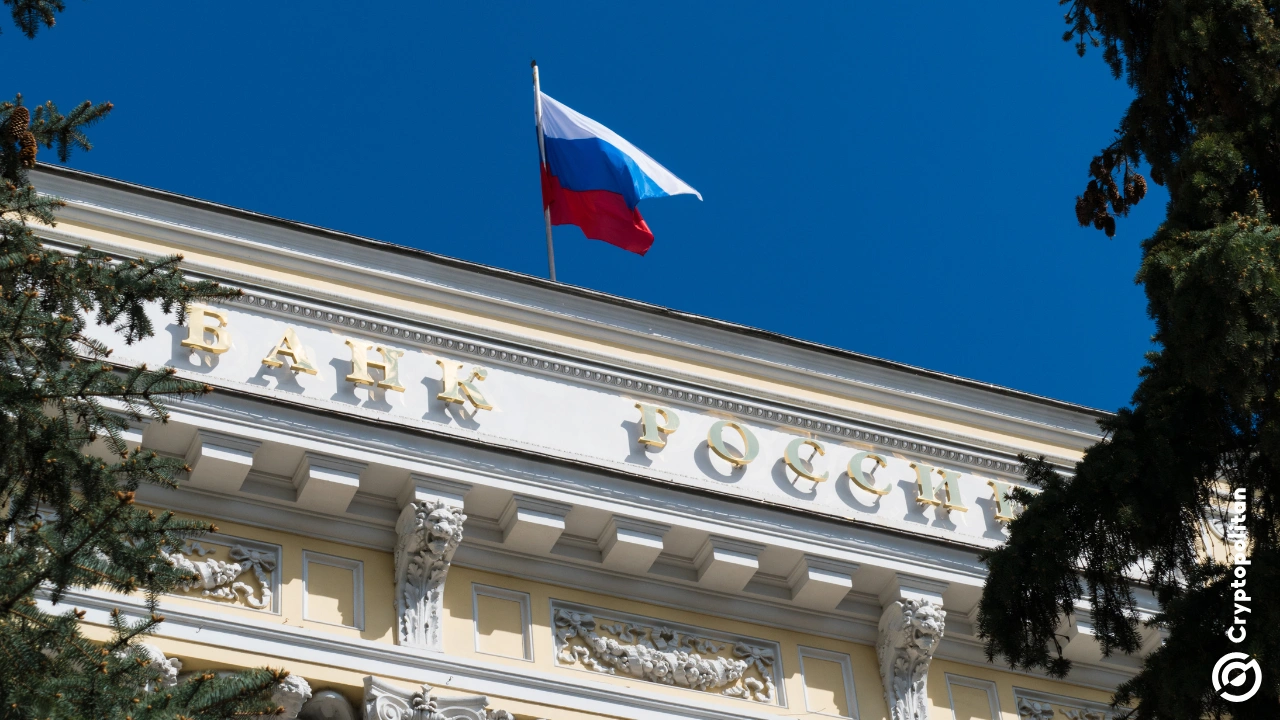
Russia’s isolation from global finances, achieved by measures like its disconnection from SWIFT, has actually benefitted oligarchs like Roman Abramovich, state-owned sanctioned banks such as PSB, and people connected to the Federal Security Service (FSB).
The findings were made public through a new report produced by the independent investigative media outlet Proekt, long labeled as an “undesirable organization” in the Russian Federation, based on financial documents obtained from key players in the payments market.
The study sheds light on how Russia’s parallel banking system functions, allowing it to circumvent financial restrictions and continue to register around $2 billion in foreign trade daily.
A significant portion of this massive volume passes through Moscow City, the international business center in the heart of the Russian capital, the researchers note.
The services of payment processors with offices there, such as SpectrePay or VD Technolab, enjoy significant demand nowadays, from both companies and individuals.
But the market for international settlements is not limited to small platforms like these. In fact, it’s much better represented by companies like A7, Russia’s largest payment agent.
The scheme works as follows. When a Russian buyer wants to pay for an item abroad, they deposit rubles into A7. The money is then transferred to Kyrgyzstan through the PSB bank, which co-owns it.
Kyrgyz-registered intermediaries purchase cryptocurrency on the Grinex exchange, also linked to A7, concealing the Russian origin of the funds.
And then other affiliated companies in third countries, often in the Middle East or Southeast Asia, convert the coins into local currency and pay the seller who ships the goods to Russia.
What’s the role of the Oligarchs?
A7 is the creator of the Russian ruble-pegged stablecoin A7A5. Backed by ruble deposits at the sanctioned PSB, the crypto is issued by a Kyrgyzstan-registered entity, Old Vector.
Launched in early 2025, it already accounts for nearly half of the non-dollar stablecoin market. A top executive of the project recently admitted it has processed transactions worth well over $100 billion.
A7 is majority-owned by Ilan Shor, a fugitive Moldovan oligarch holding a Russian passport, wanted in his home country for his role in a massive bank theft, as noted in a report by Radio Liberty.
Formerly Promsvyazbank, PSB is his main partner in the company. It’s headed by the son of former Russian Prime Minister and ex-spy chief Mikhail Fradkov and sanctioned for funding Russia’s military.
According to Proekt, A7 has more owners than the officially known Shor and PSB. The publication noted that the state development corporation VEB (Vnesheconombank) is “supporting” the project.
It also highlighted that unofficially, another Russian oligarch, Roman Abramovich, may be playing an important, albeit secret, role in the firm, too.
One of his associates told the media outlet that “Abramovich has no connection to A7, is not its beneficiary, and does not own any shares in it.”
However, a source from the payments industry described the oligarch as acting as a “roof” for the company, providing protection and sponsorship.
The West is well aware of its activities, and A7 is also subject to sanctions. At the same time, it continues to move money around the world through more than 20 shell firms.
Around 2,000 people work for the payments provider, which holds up to 19% of all Russian cross-border transfers, according to its own estimates, making it the largest player in this market.
Proekt’s report also reveals that other prominent figures involved in the industry include the son and other relatives and friends of Nikolai Patrushev, former director of the FSB and aide to Putin.
There’s a middle ground between leaving money in the bank and rolling the dice in crypto. Start with this free video on decentralized finance.




Read More