

Families across Europe are struggling to keep up with soaring car prices, which have been a significant drain on household budgets since the epidemic.
Insurance premiums have risen by 37% since 2021, while repair and maintenance expenses have risen by 20% to 30% as vehicles have become more complicated and parts such as batteries have become more expensive.
In France and Germany, cars take up about 7% to 8% of household spending, and up to 11% for the poorest families.
At the same time, repair costs are rising much faster than incomes across the EU.
James Kan, who leads industrial research for Asia Pacific at BNP Paribas, pointed out that families switching to electric cars might not save as much as they hope.
“Saved petrol costs could be offset by insurance and maintenance expenses for EVs in some emerging markets,” Kan said.
Charging network falls short of targets
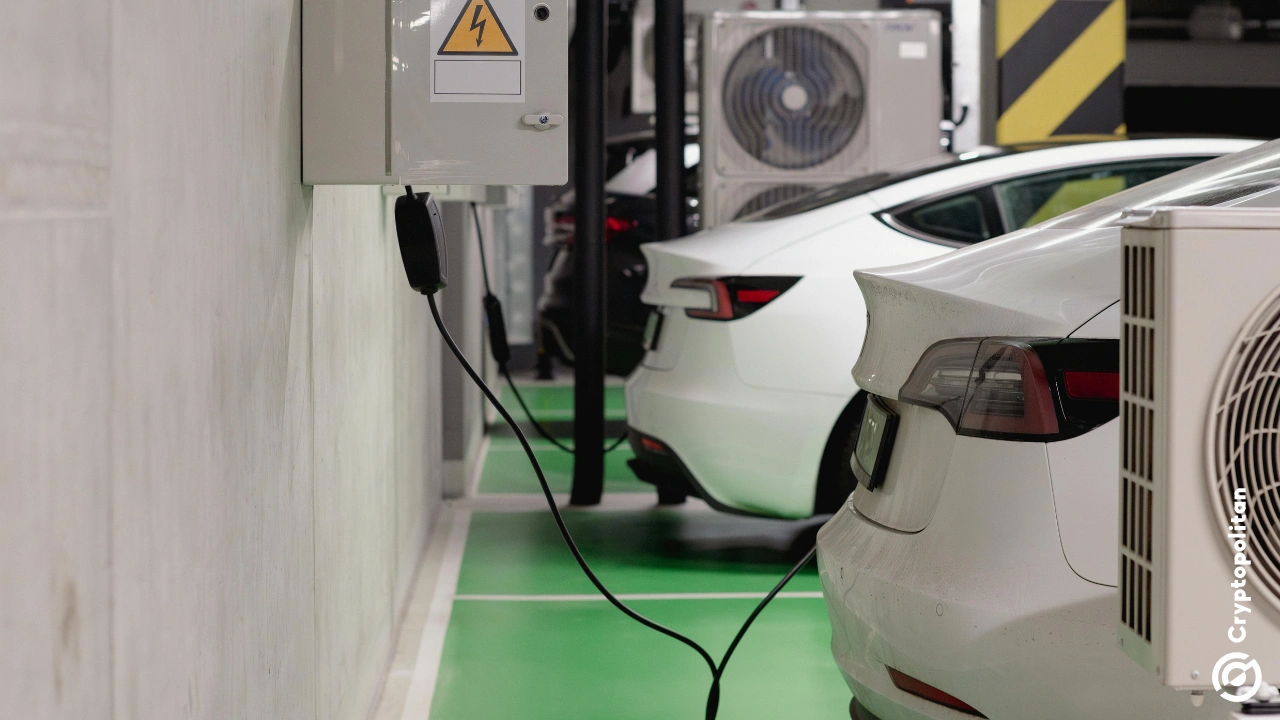
A major problem is still the lack of charging stations. As Kan said, “the infrastructure readiness is not necessarily there” in many countries.
He stated that China and Europe have the most robust charging networks, whereas the United States and many developing countries are switching to hybrid vehicles because to insufficient power grid capacity.
Europe’s network is growing, but not fast enough. Since 2020, the number of charging stations has increased by approximately 20% each year, reaching 1.1 million in early 2026.
This is still short of the EU’s target of 3.5 million by 2030, which requires 27% annual growth.
At the present rate, Europe might fall behind by about 0.8 million stations.
Most chargers are also slow.
Only 16% are ultra fast DC chargers. The network is uneven, with the Netherlands, France, Germany, and Belgium holding about 65% of all stations.
France and Germany also account for about 40% of ultra fast chargers, while many rural areas remain poorly served.
Data centers are also driving up electricity demand.
The International Energy Agency predicts that the EU would use 70 TWh in 2024, rising to 115 TWh by 2030, a 65% increase.
This means that EV charging and AI systems will compete for limited grid capacity, while overall EU electricity demand is only increasing by 1.1% to 1.5% each year.
At the same time, rising oil prices are driving an increase in the number of people switching to electric vehicles.
A 30% increase in Brent crude lifted fuel prices in France, Germany, and the Netherlands above 2.0 euros per liter, a level not seen since the Russia-Ukraine war began.
In Germany, increasing fuel prices have frequently resulted in reduced car sales.
Prices could rise further. By the early 2030s, EU policies might drive oil prices to $100 to $114 per barrel, with fuel prices ranging from 2.10 to 2.55 euros per liter.
Under tougher Net Zero standards, oil may cost more than $190 per barrel, with pump prices reaching 5.60 euros per liter.
At those prices, many families would struggle to afford fuel-powered vehicles.
Battery costs drive market expansion
The electric vehicle market is growing fast. It is worth $575 billion in 2026 and is expected to reach about $2.3 trillion by 2036, growing around 15% a year.
This adds roughly $1.75 trillion in value over the decade.
Lower battery costs are a key driver of growth. Lithium-ion prices have dropped by 93%, from $1,474 per kWh in 2010 to $108 in 2024, and will continue to reduce as production increases.
Battery consumption is predicted to increase from over 1,000 GWh today to more than 5,000 GWh in the early 2030s.
Prices could fall below $60 to $70 per kWh by 2030, and below $55 subsequently, making electric cars more affordable than gasoline vehicles without subsidies.
Smart charging is also growing. The bidirectional EV charger market is expected to increase from $1.4 billion in 2025 to $6.2 billion by 2032.
These systems allow cars to transfer electricity back to the grid, thereby balancing power use and giving drivers more control over their energy.
Ultimately, as declining battery costs collide with severe grid constraints, the future of the EV boom will hinge on transforming vehicles from mere energy consumers into vital, decentralized pillars of the power grid itself.
If you’re reading this, you’re already ahead. Stay there with our newsletter.




Read More