

Something interesting is happening in crypto right now, and it has nothing to do with meme coins, ETF speculation, or the latest market rotation. The conversation is slowly shifting toward a much bigger question. How do you trust artificial intelligence when nobody can verify what it is doing?
That was the central theme of Kevin O’Leary’s recent keynote for Zero Knowledge Proof (ZKP), and it may explain why some investors are beginning to look beyond traditional crypto narratives. While XRP struggles below key support levels and Monero faces fresh pressure following a powerful rally, O’Leary is making a different argument altogether. He believes the next major opportunity in digital infrastructure will not come from faster payments or private transactions. It will come from systems that can prove computations are correct. That idea is reshaping how many investors think about blockchain, artificial intelligence, and where the next wave of value creation may emerge.
XRP Loses Momentum Below Key Levels
XRP entered June facing one of its most challenging technical setups in months.
The token recently slipped below the important $1.30 support zone, falling to fresh multi-week lows and extending a period of weakness that has frustrated both traders and long-term holders. While institutional interest remains tied to ongoing ETF discussions and broader adoption efforts, price action has failed to reflect the optimism many investors expected.

Technical indicators remain under pressure. XRP continues to trade below several major moving averages, and futures activity has cooled as traders reduce exposure rather than increase it. The result is a market searching for direction at a time when investors were hoping for acceleration. This is one reason many market participants are beginning to examine earlier-stage opportunities.
Monero Pulls Back After a Powerful Run
Unlike XRP, Monero entered 2026 with significant momentum as interest in privacy-focused technologies returned to the market. The token delivered strong gains earlier in the year and became one of the better-performing major cryptocurrencies.
Recently, however, that momentum has cooled.
Monero has entered a pullback phase as traders lock in profits following its rally. Investors are closely watching whether the asset can hold key support levels while broader market sentiment remains cautious.
Regulatory concerns continue to shadow privacy-focused cryptocurrencies as well. While Monero remains one of the most established privacy projects in the industry, increased scrutiny from regulators and exchange restrictions have created ongoing uncertainty surrounding the sector.
The Problem Kevin O’Leary Is Talking About
This is where the conversation becomes more interesting.
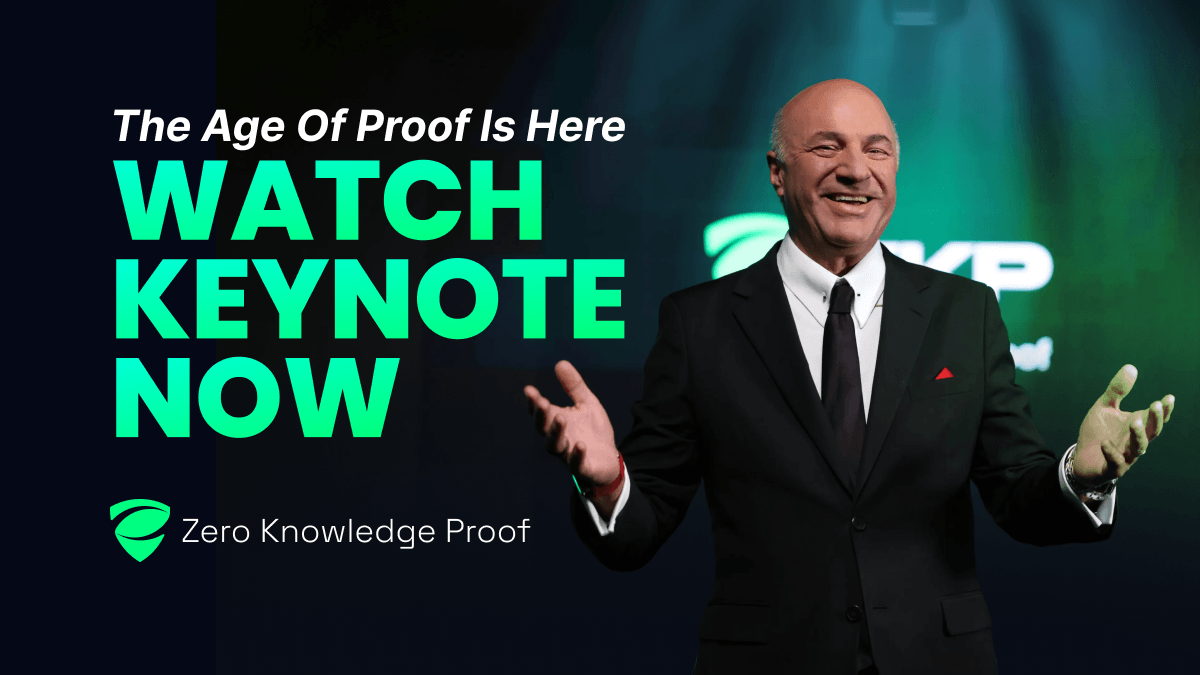
Kevin O’Leary’s keynote was not focused on token prices, meme coin speculation, or short-term market movements. Instead, he focused on what he sees as a growing problem inside the AI economy.
Artificial intelligence is becoming embedded in healthcare, finance, law, research, and countless other industries. Yet many of the systems producing these outputs cannot prove how their results were generated.
A legal brief can cite cases that never existed. A research paper can reference fabricated information. An AI model can produce answers that sound convincing without any way to verify whether they are actually correct.
O’Leary described the issue simply.
Confidence is cheap. Trust is expensive.
His argument is that the next phase of artificial intelligence requires infrastructure built around verification rather than assumption. He calls this transition the Age of Proof.
Why ZKP Is Positioned Around Verifiable AI
Zero Knowledge Proof (ZKP) is attempting to build the infrastructure layer behind that vision.
The project is a Layer 1 blockchain focused on privacy-protecting AI infrastructure. Rather than asking users to trust outputs, the system is designed around proof-based verification and transparent computation.
The network is supported by Proof Pods, real computing hardware that perform computing work across the ecosystem. Validators remain responsible for securing the blockchain, creating distinct roles within the network architecture.
The goal of ZKP presale is to enable provable compute, decentralized verification, transparent systems, and infrastructure built on proof. That message aligns directly with the themes O’Leary emphasized throughout his keynote.
ZKP’s presale structure has also become a major part of the conversation.
This presale statistics has a total of 25 stages. Stage 1 is currently open at $0.0004, while the public launch target is set at $0.04. The final Stage 25 price is $0.02.
Token allocations decrease as the presale progresses, beginning at 2.5 billion tokens in Stage 1 and declining to 1.5 billion by Stage 25. The presale allocation itself is fixed at 35% of total supply.
The pricing follows deterministic progression rather than discretionary changes. Each stage contains predefined pricing and fixed allocation mechanics, creating a transparent framework visible to all participants.
Analysts argue that this structure rewards early participation while maintaining visibility throughout the entire process.
The Bigger Shift Taking Place
XRP continues to pursue adoption within digital payments. Monero continues to defend the importance of financial privacy. Both remain important projects with established communities and proven histories.
Yet Kevin O’Leary’s recent keynote introduced a different conversation altogether.
Instead of asking how blockchains can move money faster or protect transactions more effectively, he asked how artificial intelligence can become trustworthy enough to support the next generation of digital infrastructure. That question sits at the center of the Zero Knowledge Proof (ZKP) thesis. According to Kevin O’Leary, that is where the next major infrastructure opportunity may be found.

Find Out More about Zero Knowledge Proof:
Website: https://zkp.com/
Buy: purchase.zkp.com/
Telegram: https://t.me/ZKPofficial

Read More