


The amount of Ethereum sitting on exchanges just hit its lowest record on paper of 14.5 million ETH according to data from CryptoQuant. When looking at the data, it is clear that there is a clear starting point as to when ETH exchange balances started falling off a cliff. Reserves broke to the downside pretty sharply around July 2025 and have never recovered since, which is also the same time when corporate ETH treasuries turned from an experiment into a buying race.
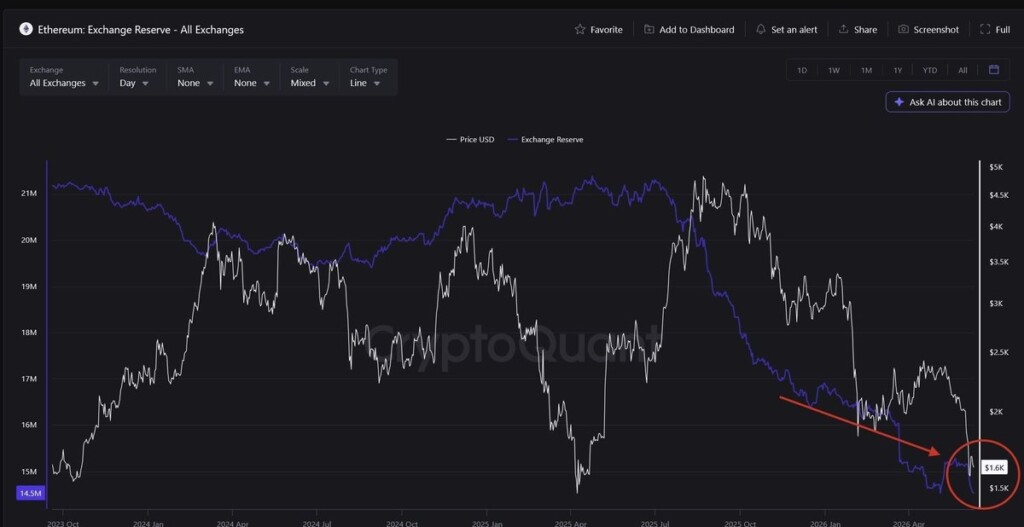
The exchange balance metric is a very useful indicator to understand how much ETH could potentially hit order books on any given day. When coins sit on Binance or Coinbase, the likelihood of them being sold is often high. On the other hand, when these coins are transferred into a treasury wallet or a staking contract, that supply essentially goes dark. A record low means the float capable of moving price right now is the thinnest it has ever been.
This is happening at a time when ETH is trading at around $1650, down around 44% year to date and sentiment sharply in the extreme fear territory. May closed at -11.07% and the ETFs also saw their second largest monthly outflows since inception at -$540.88M. The tightest supply crunch in Ethereum’s history is taking place during some of the weakest price action of the cycle.
Why the Drain Accelerated in July 2025
ETH exchange reserves stood at around 20 million for the most part of 2024, up until July of last year. That trend saw a steep decline in the same month corporate ETH treasuries stopped being a niche idea. BitMine kicked off its ETH treasury pivot in June 2025 with a $250 million capital raise and has continued to accumulate ever since. Today, it holds over 5.5 million ETH valued at roughly $9.21 billion and second only to Strategy across every crypto treasury. SharpLink is the next largest with 868,699 in total ETH holdings to their name as of this writing. Since most of the ETH held by them are staked, this removes those coins even further away from any sort of order book.
It’s important to note that this indicator of exchange reserve only highlights coins exiting or leaving exchanges. It does not show where these coins have landed up. That said, the reserve broke down in the same stretch the biggest holders started locking ETH into multi-year balance sheets. At current prices, the two of the largest ETH treasuries at the moment are deep underwater and yet they are still holding and even accumulating. This is a clear signal of conviction rather than a short term trade.
A Thin Float Doesn’t Move Price, Until It Does
A shrinking float does not push ETH price higher on its own. Plenty of assets carry tight supply and go nowhere for months. What a thin float changes is the slope of whatever happens next.
When demand is dead, the way it is now, low supply does nothing. Price drifts. But the second buyers show up in size, almost nothing stands in their way. Fewer coins on exchanges means each new bid climbs through a much thinner order book to get filled. The same dollar of demand that barely registers in a liquid market can snap price in a tight one.
That is the asymmetry hiding underneath the extreme fear reading. ETH looks broken on the daily chart. The supply backdrop says close to the opposite.
What the Setup Actually Means
A record low in exchange supply is not a bottom signal by itself. Sentiment can stay ugly for a long time and the treasury firms can keep sitting on losses. Treating thin supply as a reason to buy ignores how long these conditions can hold.
What it does mean is that the conditions for a violent move are already loaded. The day demand returns, there is very little ETH standing between buyers and a sharp repricing.
If you’re reading this, you’re already ahead. Stay there with our newsletter.




Read More