


Over the course of the past thirty days, around $440 billion has been wiped out from the total cryptocurrency market cap. Bitcoin fell from the highs of roughly $81K to a low of $59K set on June 5. The broader altcoin market, measured through the TOTAL2 chart, fell by around 14% over the same window. All in all, the selloff across the market accelerated last month. Most trading platforms lose users and volume when the tape turns ugly. Hyperliquid, on the other hand, did the exact opposite.
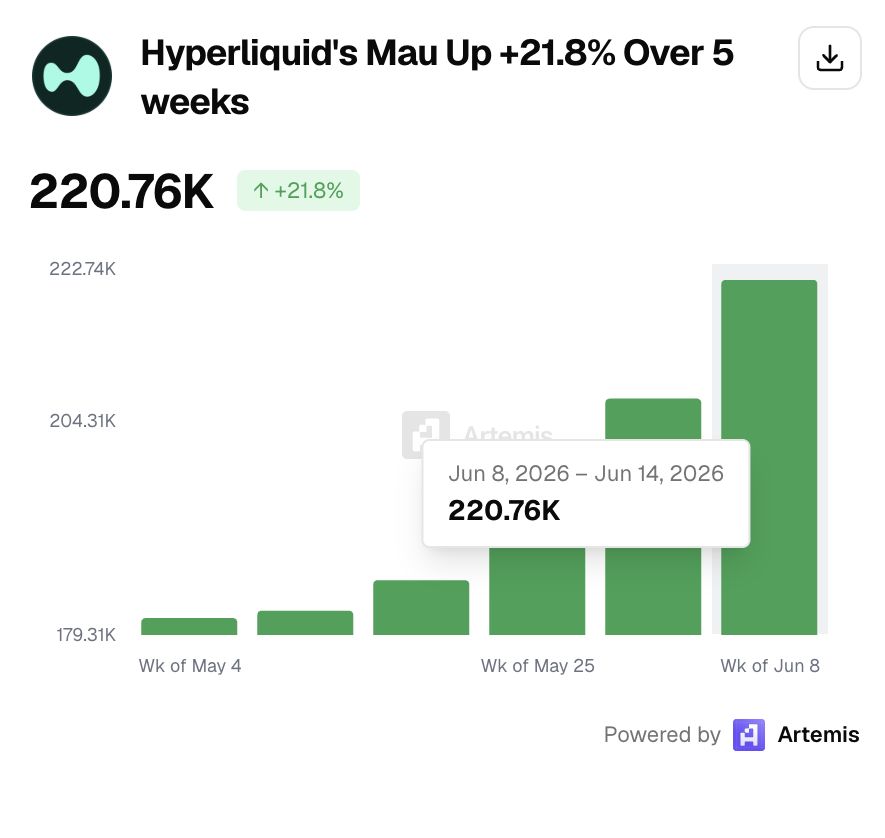
Over the past five weeks, monthly active users on the decentralized exchange have grown by 21.8% to 220.76K for the week of June 8 to 14, according to Artemis.
Market Share Keeps Climbing
The user growth sits on top of a much larger shift in where perp volumes live. Hyperliquid currently dominates the lion’s share of perp DEX volume at 56.31%, growing from around 23% at the start of the year. In other words, it now runs more than half of all onchain perp activity with no rival being close to keeping up.
While this is impressive in itself, the more noteworthy figure is the platform hitting a record 7.6% share of all exchange perpetual volume, centralized platforms included. The platform is no longer winning the DEX race alone but also taking volume from the biggest centralized names in the space.
There are two main reasons for this growth. Number one, there is structural migration, with traders leaving centralized platforms and rival DEXs for Hyperliquid’s onchain orderbook. Secondly, the recent volatility in itself helps bolster activity. Perp venues feed on active markets, and the June drawdown handed them plenty to work with. The fear that pushed users away from everywhere else is the same fear that gave Hyperliquid more to trade.
The Flywheel Keeps Widening the Funnel
Hyperliquid’s design routes money back into the system as it grows. Fees from trading flow into HYPE buybacks, which tightens supply and rewards the token as activity rises. The loop gets stronger the more the platform gets used.
HIP-3 adds another layer. Builder-deployed markets let outside teams launch their own perps on Hyperliquid’s infrastructure, expanding what traders can access without the core team building every market by hand. More markets means more reasons to show up, which feeds straight back into the active-user count.
The Macro Picture Just Shifted
The forward question is whether the recent risk-off mood holds. On June 14, the U.S. and Iran reached a peace deal, with signing set for June 19 in Switzerland and the Strait of Hormuz set to reopen. The energy shock that hung over markets for weeks is starting to lift.
A resolution like this is a risk-on catalyst. It could pull broader participation back into crypto and bring the kind of upside volatility that has been missing through the selloff. Both outcomes tend to grow the active-trader pool, and Hyperliquid has spent this year proving it captures that pool better than anyone else in the space.
The platform grew during fear. Whether it can keep growing once greed returns is the next test.
If you’re reading this, you’re already ahead. Stay there with our newsletter.




Read More