

AI companies continue to generate a fraction of the revenue their market caps imply, while investments keep rolling in from both Beijing and Wall Street.
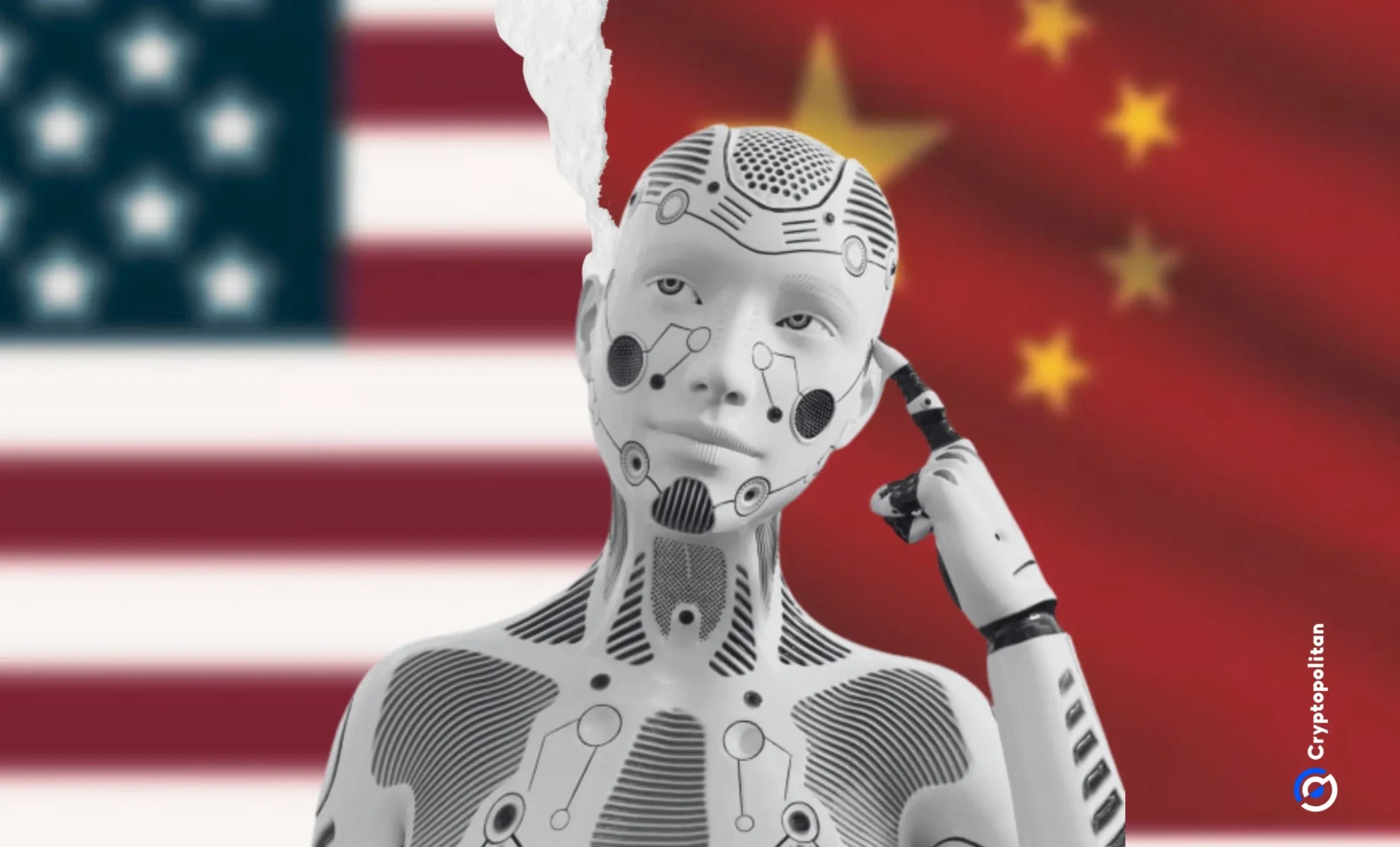
AI labs in both the U.S. and China hold combined valuations approaching $2 trillion despite generating a small fraction of that in actual revenue, with individual firms like Zhipu trading at over 1,200 times annual sales.
Why are investors paying so much for companies making almost no money?
Eight major AI laboratories in the U.S. and China now carry a combined valuation approaching $2 trillion despite having roughly $56 billion in disclosed annual revenue.
Zhipu, the Beijing-based developer behind the GLM 5.5 family of models, trades at a market capitalization of $137 billion with a record of approximately $107 million in fiscal 2025 revenue.
Recently, in Hong Kong trading, the stock prices of Zhipu and its rival MiniMax Group each jumped at least 23%, extending year-to-date gains of about 2,000% and 260%, respectively.
On the American side, OpenAI carries an $852 billion valuation while running on an annualized revenue of $25 billion.
DeepSeek, whose R1 model briefly erased close to $1 trillion in U.S. market value when it launched in January 2025, is raising $300 million at a $10 billion valuation. That is roughly 1% of OpenAI’s price tag, despite Stanford University’s 2026 AI Index showing that U.S. and Chinese frontier models have traded the top performance ranking multiple times since early 2025.
Cryptopolitan previously reported that Anthropic is being courted at up to $800 billion. In Q1 2026, four deals (OpenAI, Anthropic, xAI, and Waymo) accounted for 63% of all capital raised in AI.
Fund managers acknowledge the disconnect in the industry, but they keep buying. Xiang Xiaotian, director at Shanghai Chengzhou Investment Management, explained to the Business Times that markets are seizing on any positive headline to bid prices higher. He stated that investors are “all-in on tech” and U.S. stocks.
Xiang went on to say that anything unrelated to AI is still in a bear market.
Beijing recently announced measures to encourage AI adoption in consumer markets. The listing requirements for AI firms in the country were also eased.
Experts like Claire Liang, principal and manager of research at Morningstar, are sharing concerns about AI hardware companies. Liang noted that some stock prices have gone up faster than company profits can justify.
Schroders’ ISF China Opportunities Fund cut its tech holdings to about 4% back in February because it thought prices were too high.
JP Morgan Asset Management’s China Fund still holds stocks in power and circuit board companies tied to AI workloads. The company is betting that these second-tier beneficiaries offer better value than the headline names.
Are regulators doing anything to cut down the hype?
At the annual Lujiazui Forum in Shanghai on June 18, Wu Qing, the chairman of the China Securities Regulatory Commission, said authorities would “strictly investigate and punish” companies that attach popular technology labels to their businesses to inflate share prices.
Wu also warned that generative AI technology makes it easier to fabricate analyst reports and misleading investment content.
George Chen, partner at The Asia Group, told Tekedia that regulators view deepfake stock promotions and exaggerated corporate AI narratives as “early signs of a potential market bubble.”
During previous hype cycles in the Chinese market around products like electric vehicles, drones, and commercial spaceflight, companies with minimal exposure to these industries rebranded themselves as participants. Retail buyers would pile in, and prices would crash once the truth came out.
That concern has escalated as the hype shifts to anything remotely connected to the AI race.
The smartest crypto minds already read our newsletter. Want in? Join them.


Read More