


Tether’s USDT supply is contracting, after a $2.5B burn on the Ethereum network. The stablecoin just saw its biggest burn since February, potentially signaling liquidity outflows.
Tether’s treasury burned $2.5B worth of USDT tokens on July 7, the largest supply contraction since February. The Tether treasury destroyed $3.5B of tokens on February 10, as a response to general trading contraction and removing USDT from legacy networks.
As a result, Tether retains a $189.6B supply of USDT, mostly using Ethereum and TRON for transfers.
USDT is closely watched for the effect of Euro Area regulations, and as a general signal for the health of the crypto ecosystem. The supply burn also traces a larger trend in stablecoin liquidity. Active addresses declined by 36.2% in the past 30 days, according to Artemis data. Average daily stablecoin volume is down by 47.5%.
USDT and its closest rival, Circle’s USDC, had larger-than-average outflows of liquidity in the past month.
The shrinking supply of stablecoins means most rallies in crypto space are currently linked to short squeezes. A reversal of the stablecoin trend will signal a new period of market-wide expansion. Until then, stablecoin liquidity depends on specific niches, the activity of market makers, and selected exchange venues with the most significant stablecoin supply.
Is USDT leaving TRON?
The USDT supply contraction reflects a niche market where liquidity usually flows. The USDT transfers between Binance and TRON are an indicator of trading activity. In July, Binance’s reserves on TRON diminished, falling to a total of $806B.
USDT transfers slowed down in May and June, on both Ethereum and TRON, and may be considered an overall signal for crypto liquidity contraction.
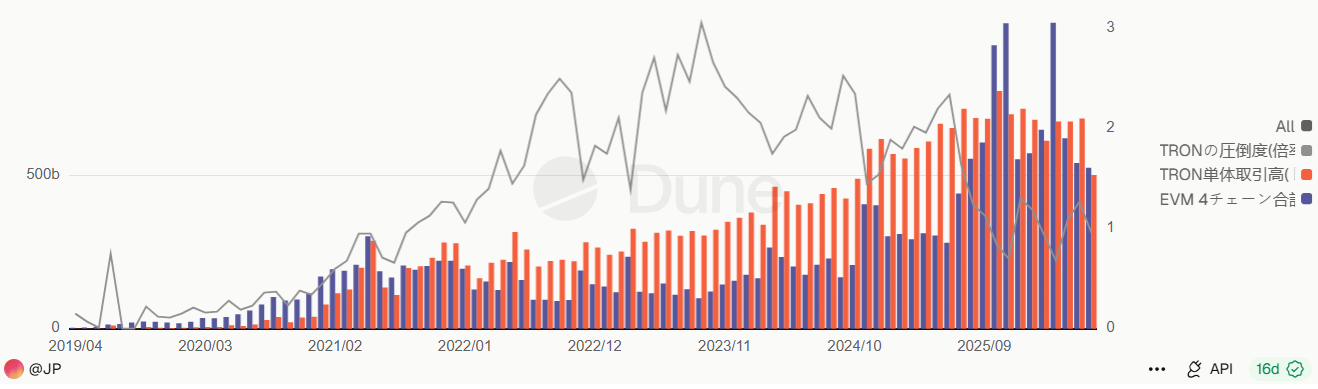
Binance’s reserves are a proxy indicator of activity, using TRON to capture the Asian market and some global traders. Recently, Binance’s reserves on TRON were above $1B, and have now entered a period of contraction.
Binance carries around $39B in stablecoin reserves, as the supply remained relatively unchanged in the past month.
Will USDT survive as the leading stablecoin?
The recent $2.5B token burn is a relatively small contraction for the leading stablecoin. USDT suffered some setbacks after Revolut announced it would wind down exposure.
Based on Artemis data, stablecoin transfers have contracted by 83% in the past 30 days, reflecting the overall stagnant trading sentiment. However, the supply of stablecoins stands near an all-time peak, with only a 1% contraction in the past month.
During the last crypto cycle, stablecoin growth was one of the major drivers of price growth. Now, the supply remains stagnant or shows slight outflows.
USDT still takes a central role in handling transactions in crypto space. The token has a supply of $99.98B on Ethereum, and over $89B on the TRON network. Recently, a proposal was made to build a USDT version on the Bitcoin network for targeted liquidity.
As of July, USDT is still more widely used in commercial transactions, while losing ground to USDC within DeFi space. USDC got a boost from perpetual futures trading and the perpetual futures ecosystem on the Base network, while USDT remains the P2P tool for payments.
If you’re reading this, you’re already ahead. Stay there with our newsletter.




Read More


