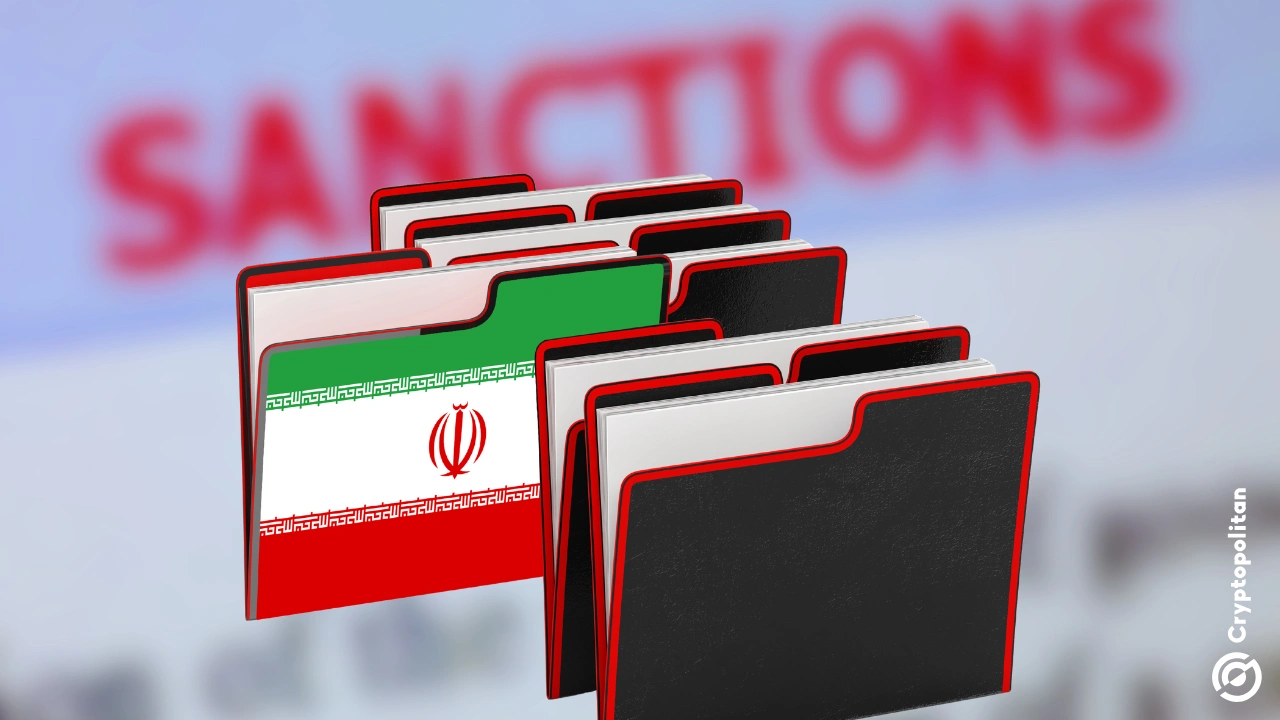


An unlicensed Dubai crypto exchange, Shelbit, moved at least $4 billion since May 2024 for Iranian gambling operators and sanctioned state entities, a series of investigations corroborated by Reuters revealed.
The revelation makes it the latest crypto platform to be uncovered as a channel for moving money past sanctions by Tehran.
Shelbit sits alongside Nobitex, the Iranian exchange that the US blacklisted in June, and the oil-money network run by sanctioned tycoon Babak Zanjani. Each of these platforms was a workaround that was revealed after investigators followed the blockchain.
Shelbit was operating openly from a Dubai office and was run by an Iranian expatriate named Siavash Kayvanpour.
Who was Shelbit’s biggest customer, and were they linked to Iran?
Investigators say that Shelbit’s biggest customer is a Farsi-language online gambling operation built on more than 2,000 websites. Gambling is illegal inside Iran and carries criminal penalties, yet the network has access to the country’s central-bank-supervised payment rails. Blockchain records trace tens of millions of dollars in crypto from the gambling sites into Shelbit’s wallets.
John Wojcik, a senior analyst at TRM Labs who spent seven years investigating illegal gambling for the United Nations Office on Drugs and Crime, called it “by far the biggest Iranian illegal gambling network ever discovered.” Two Iranian influencers with government ties front the operation. Both men, along with Kayvanpour, were convicted in Iran in a 2023 illegal-gambling case.
Where did the $4 billion go to?
From that hub, hundreds of millions flowed onward to mainstream platforms. At least $676 million reached Binance, the world’s largest exchange. Around $540 million of that landed after Dubai’s Virtual Assets Regulatory Authority (VARA) fined Shelbit in 2025 for operating without a license.
Investigators also followed money in the other direction. About $125 million came from Iran’s central bank, much of it sent directly, and another $20 million originated from what two investigative firms described as an Iranian bitcoin-mining operation minting fresh coins. Iran’s central bank has carried US counterterrorism sanctions since 2019 over its support for the Islamic Revolutionary Guard Corps.
Were Binance’s controls able to detect and deter Shelbit users?
Binance told the investigators that Shelbit never opened an account on its platform and was not itself sanctioned. The exchange did not dispute processing hundreds of millions for users tied to Shelbit but said an independent analytics firm had not flagged those transactions as high risk. Binance added that it investigated the associated users, froze the relevant accounts and referred them to law enforcement.
Shelbit’s wallets also touched entities already on Washington’s radar. The exchange interacted with Nobitex, sanctioned by the US Treasury earlier this year, and with wallets the Israeli government links to the IRGC.
What are the Shelbit investigators saying?
Rich Sanders, an independent blockchain researcher focused on Iran, stated, “It’s an IRGC operation, and that’s plain as day.” Reuters, which built the investigation on interviews with more than 30 people, including former IRGC affiliates and senior Iranian insiders, said it could not confirm the Guard Corps directly controlled Shelbit or the gambling network.
In 2016, the US broke up a roughly $20 billion IRGC gold-for-oil scheme in Turkey and seized about $1 billion in Iranian crypto in May. More recently in July, the US and Tether froze approximately $131 million in USDT that was linked to Iran’s central bank.
VARA already ordered Shelbit to halt unlicensed activity in July, and observers will be looking out for any move by the Office of Foreign Assets Control (OFAC) to add the exchange or its operator to the sanctions list.
If you’re reading this, you’re already ahead. Stay there with our newsletter.

Read More