


The price fluctuations of BTC depend even more on futures trading, with decreasing spot demand. On Binance, the ratio of futures to spot volumes reached a new all-time peak.
BTC price discovery has heavily shifted to the futures market. Based on Cryptoquant data, futures volumes are approximately 7.82 times higher than spot trading. Traders now rely on derivatives, instead of going through the hassle of direct buying and selling.
As of August 6, Binance open interest for BTC is $24.47B, down from over $44B in October 2025. Daily trading volumes reach $57.82B, while spot volume hovers at around $6B.
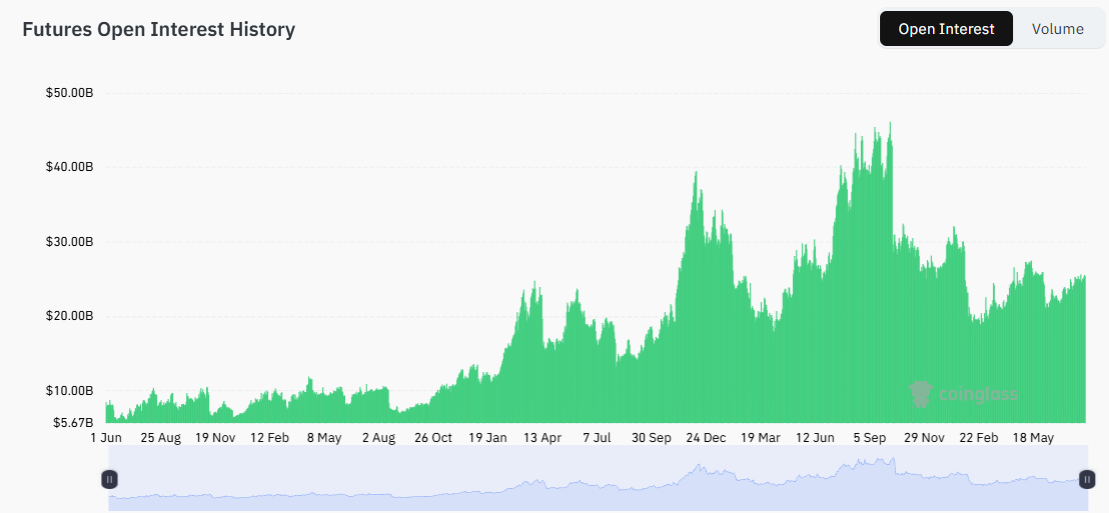
Driven by futures trading, BTC mostly moved sideways, trading at $64,339.89. BTC still has a 56.8% dominance of the crypto market, and July was a relatively strong month with a close in the green.
BTC is now stuck in a tight range between $64,000 and $65,000, based on the liquidation heatmap.
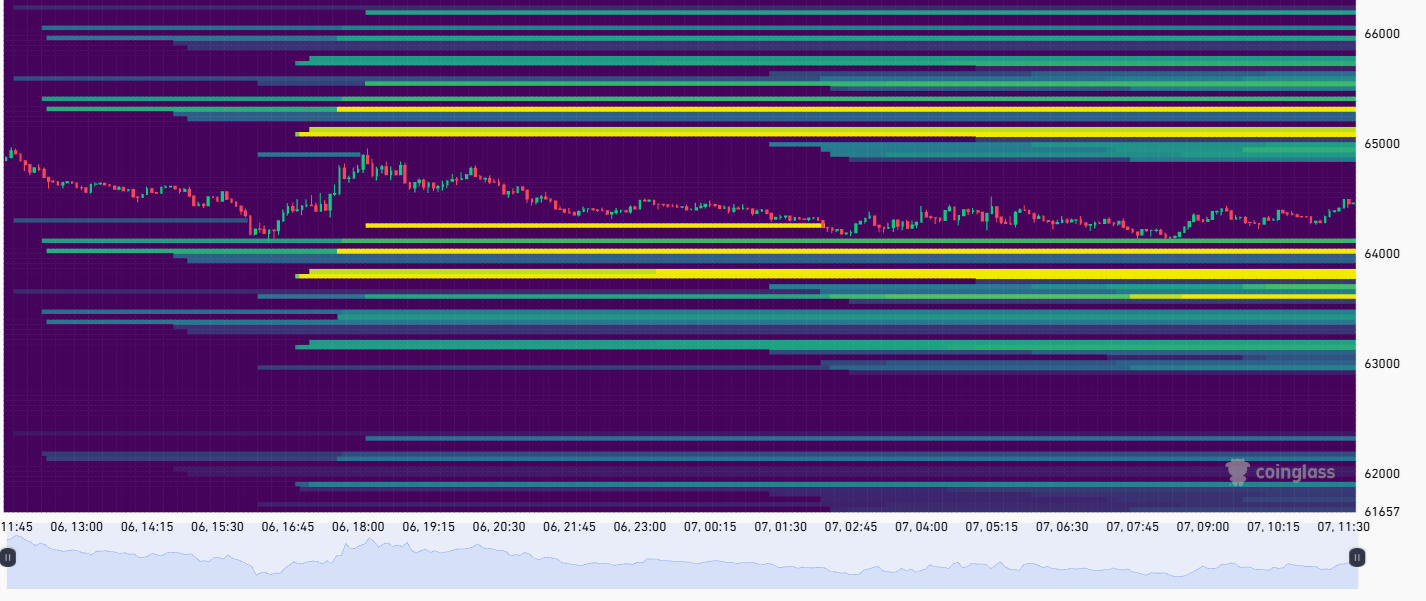
On Binance, most accounts have taken long positions. However, in terms of the value of positions, the bulk of allocated liquidity attempts to short BTC. In the tight price range, this means even a relatively small price move can cause significant liqudiations. During previous market periods, the BTC price often had to move by thousands of dollars to attack some of the leveraged positions.
Is the high futures to spot ratio bullish?
In the past months, futures trading volumes expanded faster compared to spot trading. This reflects the potential to play out short-term market strategies, take higher risk with leverage, and make the best of the BTC range-bound price action.
The ratio is not linked to a bullish or bearish signal clearly, but this time, it reveals increasing speculative activity. For BTC, this mans traders can react much faster to rapid price shifts, without being caught with spot orders.
Despite the predominance of BTC futures trading, volatility remains low, sliding to 1.17%. Under those conditions, BTC traders can still afford relatively minor liquidations, while trying to extract gains from the BTC sideways trading.
BTC spot volumes keep weakening
BTC spot positions may be used as a hedge for futures trading. In 2026, both the spot and futures markets diminished their volumes, leading to a much smaller demand for holding spot positions.
The exit of retail traders also decreased spot BTC buying, leaving whales and professional traders to take more advanced risk with futures.
According to analyst @darkfrost, BTC spot demand has been falling for the past 10 months, still affected by the October 10 crash. In June, an extra 273,000 BTC entered the market, while currently the excess supply is 72,000 BTC.
As Cryptopolitan reported, the period of low demand coincided with Strategy’s new trend of selling BTC each week. Treasury companies may disappear as potential buyers, as Strategy’s models seems to unravel.
The weak spot demand and short-term derivative trading show BTC has fewer conviction positions. At the current price range, BTC is still not seeing significant accumulation, and still raises the question of reaching a bear market bottom.
If you’re reading this, you’re already ahead. Stay there with our newsletter.




Read More