

The venture firm has stepped back from the corporate SOL-holding vehicle eight months after backing its formation.
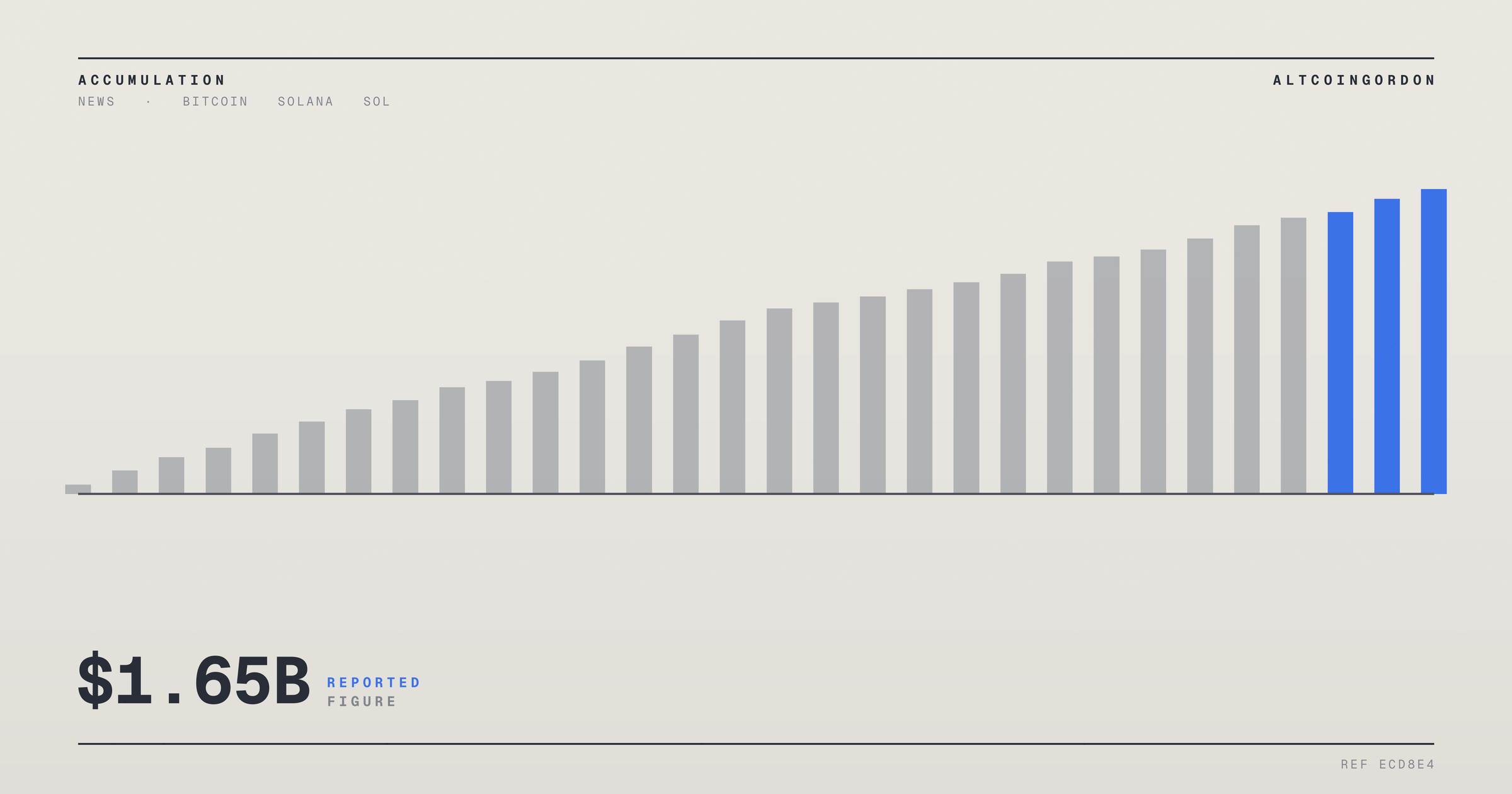
Multicoin Capital has exited the Solana treasury company it helped bring to market less than a year ago, CryptoSlate reported. The company, which holds SOL as its primary treasury asset, was valued at $1.65 billion at the time of the report.
Multicoin is one of the most prominent investors focused on the Solana ecosystem. It has backed exchanges, infrastructure projects and token issuers built on the network. Its involvement in launching a dedicated Solana treasury vehicle eight months ago was seen as a vote of confidence in the model of publicly held companies stockpiling a specific cryptocurrency as a core balance-sheet strategy.
Treasury companies built around single digital assets have grown more common since Bitcoin-focused firms popularized the approach. Corporate entities raise capital, often through equity or debt markets, and use the proceeds to accumulate crypto held on their balance sheet. Investors can then gain indirect exposure to the underlying asset through the company’s publicly traded shares.
Solana-specific treasury vehicles emerged as a variation on that theme, aiming to capture investor interest in SOL without requiring direct token custody. Multicoin’s backing lent early credibility to the effort, given its standing among Solana-aligned investors and its history of early-stage bets on the network’s infrastructure.
Details on why Multicoin exited, and what stake it held prior to departure, were not included in the available reporting. It also remains unclear whether the exit involved a sale of equity, a redemption of underlying assets, or another structural change to the arrangement. CryptoSlate’s report did not specify the buyer, if any, or the terms of the transaction.
The timing is notable given the relatively short window between the company’s launch and Multicoin’s departure. Eight months is a brief span for an early backer to step away from a treasury vehicle designed around long-term asset accumulation. That short timeline may prompt questions among market participants about the durability of the treasury-company model as applied to assets beyond Bitcoin.
The broader treasury company trend has drawn scrutiny from analysts who question whether premiums assigned to these vehicles, relative to the value of the crypto they hold, are sustainable. Some treasury companies trade above the market value of their underlying holdings, a dynamic that has periodically narrowed or reversed depending on sentiment toward the underlying token.
Market Impact
An early backer’s exit from a treasury company can influence how other investors view the vehicle’s stability, particularly when the departure comes soon after launch. For Solana-focused treasury firms, which remain a newer category than their Bitcoin counterparts, investor confidence is closely tied to the credibility of sponsors like Multicoin.
The development may draw attention to how digital-asset treasury companies structure ownership and exit provisions for early institutional backers. It could also feed into broader debate over whether the treasury-company model, built for Bitcoin, translates cleanly to other assets like SOL, which carries different liquidity and volatility characteristics.
Further detail on the terms and motivation behind Multicoin’s exit has not yet emerged. The episode adds a data point to the ongoing conversation about the resilience of crypto treasury companies beyond Bitcoin.
Frequently Asked Questions
What is a Solana treasury company?
It is a publicly traded firm that holds SOL, the native token of the Solana blockchain, as a core treasury asset, similar to how some companies hold Bitcoin on their balance sheets.
Why did Multicoin Capital exit the company?
The available reporting did not specify a reason for the exit or details of how the position was unwound.
How large was the treasury company involved?
CryptoSlate reported the company was valued at $1.65 billion at the time Multicoin’s exit was reported.
Is this the only Solana treasury company Multicoin has backed?
The report did not indicate whether Multicoin holds positions in other Solana treasury vehicles.
Original source: AltcoinGordon


Read More