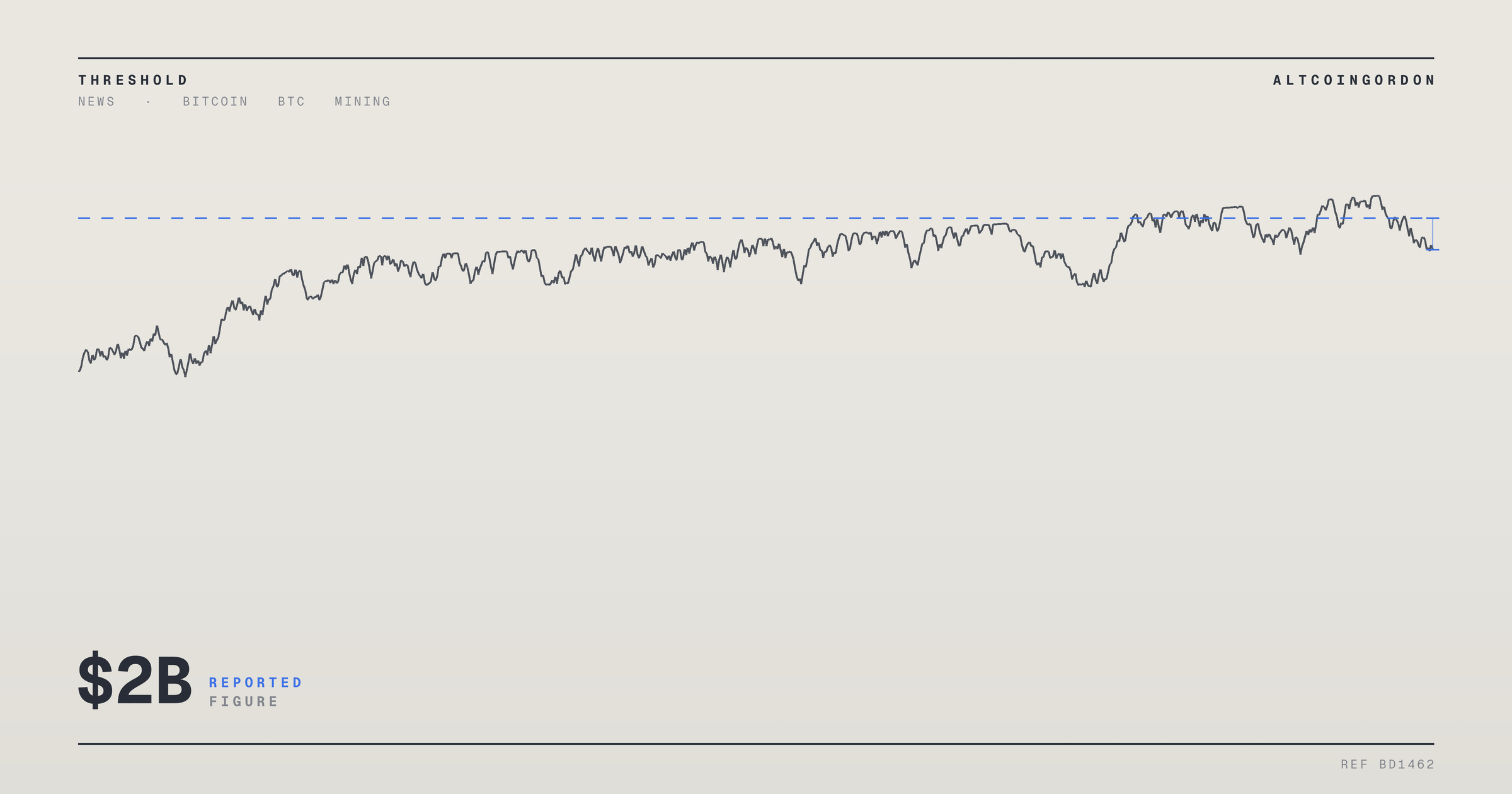


Rising energy and hardware expenses appear to be pushing miners toward larger balance-sheet sales, according to CryptoBriefing.
Bitcoin miners have sold approximately 28,000 BTC, worth close to $2 billion, according to a report from CryptoBriefing. The outlet attributes the sales to rising operating costs facing mining companies. The figure represents a substantial reduction in miner-held bitcoin reserves over a short period.
Mining companies typically hold a portion of the bitcoin they produce rather than selling it immediately. This practice allows firms to benefit from potential price appreciation while managing cash flow needs. When costs rise sharply, miners often turn to their bitcoin reserves to cover expenses, since selling holdings can be faster than raising new capital or cutting operations.
The mining industry has faced several cost pressures in recent periods. Electricity prices, a major input for mining operations, have fluctuated in many regions. Hardware expenses, including the cost of specialized mining machines, also factor into overall profitability. When revenue from block rewards and transaction fees fails to keep pace with these costs, miners face tighter margins.
Bitcoin’s mining reward structure adds another layer of complexity. The network periodically halves the block reward given to miners, reducing the bitcoin earned per block. This mechanism, built into Bitcoin’s protocol, is designed to control supply issuance over time. Miners must adjust their strategies as rewards shrink, often relying more heavily on transaction fees or operational efficiency to remain profitable.
Large-scale bitcoin sales by miners have historically drawn attention from market watchers. Miner reserves are sometimes viewed as an indicator of industry health. A significant reduction in these reserves can signal that mining companies are under financial strain. It can also reflect broader industry consolidation, as smaller or less efficient operations struggle to compete with larger, better-capitalized firms.
The scale of this reported sale, at roughly $2 billion, is notable given the size of the broader bitcoin mining sector. Miners collectively hold bitcoin reserves that fluctuate based on market conditions and individual company strategies. A sale of this magnitude suggests that cost pressures may be widespread across multiple mining operations rather than isolated to a single company.
CryptoBriefing’s report does not specify which mining firms were involved in the sales or over what exact timeframe the 28,000 BTC was sold. It also does not detail the specific cost drivers, such as whether electricity prices, equipment expenses, or other factors played the largest role. These details may become clearer as more information emerges from the mining sector.
The broader cryptocurrency market has seen periods of volatility tied to shifts in mining economics. Analysts and investors often monitor miner behavior as one input among many when assessing market conditions. Large disposals of bitcoin by miners can, in some cases, coincide with broader supply-side dynamics affecting available liquidity on exchanges.
Market Impact
A sale of 28,000 BTC, worth close to $2 billion, adds meaningful supply to the market over the period in which it occurred. Increased selling from miners can weigh on short-term price dynamics, particularly if the bitcoin is sold directly on exchanges rather than through over-the-counter channels.
The broader implication concerns mining sector health. If rising costs are forcing widespread reserve liquidation, it could point to margin compression across the industry. This may eventually affect network hash rate if smaller or less efficient miners are forced to scale back operations or shut down entirely.
The reported sale underscores the financial pressures facing bitcoin miners as operating costs rise. Further details on which companies are involved, and how sustained the selling trend might be, are likely to shape how the market interprets this development in the weeks ahead.
Frequently Asked Questions
Why do bitcoin miners sell their bitcoin holdings?
Miners often sell reserves to cover operating expenses like electricity and hardware costs. When these costs rise faster than mining revenue, companies may liquidate more of their holdings than usual.
How much bitcoin did miners reportedly sell?
CryptoBriefing reported that miners sold approximately 28,000 BTC, valued at roughly $2 billion, amid rising cost pressures.
What costs are pressuring bitcoin miners?
The report cites rising operating costs broadly, which typically include electricity prices and mining hardware expenses, though specific cost breakdowns were not detailed.
Does miner selling affect bitcoin’s price?
Large miner sales can add supply to the market and may influence short-term price movement, though the overall effect depends on broader market demand and liquidity conditions.
Original source: AltcoinGordon

Read More