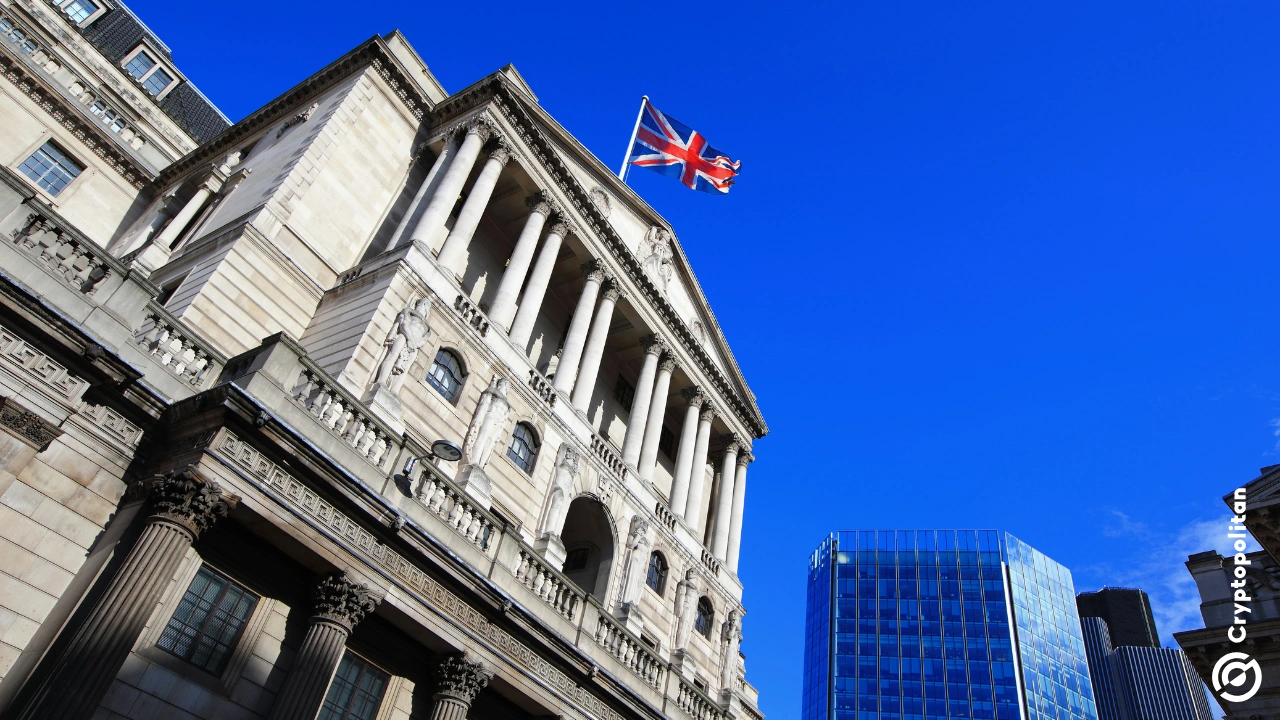


A collapse in AI share prices could remove a total of 2.2 percentage points from the UK’s economic output, the Bank of England said in its financial stability report on Tuesday. The BOE warned investors and lenders fully sized into tech exposure that the AI trade is ballooning.
Governor of the Bank of England Andrew Bailey described the danger as a “triple whammy,” according to Politico. He stated that the issues come from bets on AI stocks that have grown too large, adoption of AI technology moving slower than promised, and no clarity yet on the companies that would actually survive as long-term winners. “The risk of a sharp correction in equity markets remains high,” he added.
AI-related companies now account for half of the value of the US S&P 500, which is double the approximately one-quarter share they held in 2022, the Bank of England noted. Stock markets in Taiwan and South Korea have climbed fast based on the same sentiments, and hedge funds have moved heavily into semiconductors and other AI interests.
Britain’s indices carry comparatively little direct exposure to AI, which might suggest the UK is insulated. However, A repricing of these companies abroad would travel into the UK “via spillovers” that reach both the wider economy and the financial system, the report said. The Bank of England claims that in the worst scenario, turbulence in bond markets would drive about half the damage, with falling equities responsible for about 36 percent.
AI is being financed with debt
Morgan Stanley believes that over half the required money needed to build data centers between 2026 and 2028 will come from debt, including $700 billion from private credit, an area of finance watched nervously by regulators.
Companies such as OpenAI and Anthropic went from 3 percent of debt at the end of 2025 to 15 percent by May 2026, the report said. Because these firms work with several funding channels with varying levels of disclosure, the Bank of England warned that banks and other lenders might be unable to see the full size of their own exposure to the sector.
The report also pointed out “self-reinforcing capital loops,” in which tech firms invest in AI companies that then spend that money buying products from the same tech firms. This can lead to a situation where a single shock in the markets devolves into a huge slump across AI-related businesses. In addition, a squeeze on chip supply or power could stall the expansion that current revenue forecasts are working with.
Bank of England considers AI a cyber threat
Beyond the ups and downs of the markets, the Financial Policy Committee also singled out AI as a growing cyber threat. Leading AI models are now capable enough to find and exploit software flaws, the Bank of England said, raising the “sophistication and impact of cyber attacks” against banks and market infrastructure.
According to the report, the committee believes that recent advances in AI have lifted financial stability risks tied to cybersecurity.
Bailey told journalists that the Bank of England’s access to Anthropic’s latest model, Mythos, “does tend to differ week by week,” which is a reference to President Donald Trump’s temporary ban on foreigners using the US company’s newest AI systems.
“We are now, obviously, keen to work with Anthropic, and are talking to Anthropic about just how that will work,” he said, adding that testing these models would require international coordination.
Don’t just read crypto news. Understand it. Subscribe to our newsletter. It’s free.




Read More