

BTC whale accumulation happened ahead of the recent rally above $74,000. Long-term holders have also increased their holdings.
BTC is showing a picture of slow recovery and ongoing accumulation. The past few months revealed a steady trend of whale accumulation in various cohorts.
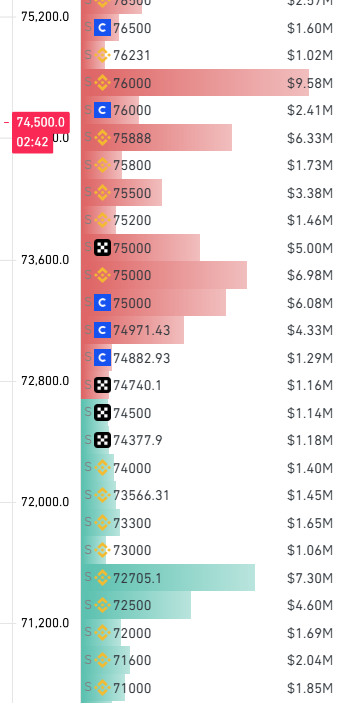
Following the recent switch to risk-on assets, BTC climbed to $74,476.23, for an overall 4% recovery of the crypto market. Spot markets are facing a sell wall of 81 BTC at $75,000, and the rally may be extended if the selling is absorbed quickly. Buyers quickly bought up the selling pressure at $74,000 and broke above the previous resistance level.
BTC is showing there are still buyers and a potential inclusion of a new type of investor, with inflows coming from Strategy’s digital credit, as well as potential large-scale financial buyers.
BTC has switched to a whale-heavy market, potentially becoming a risk-on play at scale. The leading digital coin was extremely responsive to any signs of alleviation of the Hormuz Straits situation and is quick to return to a normal risk-on market.
The crypto market may also be tracking the stock market performance, boosted by a potentially positive Q1 earnings season.
BTC whales control more of the supply
Around 21.3% of the BTC supply is now concentrated in whale holdings of 1K to 10K coins. Those whale cohorts hold the highest reserves since February and added another 27,562 BTC since Sunday for around $2B in accumulation.
Despite the slow price action in Q1, whales and older wallet cohorts increased their holdings.
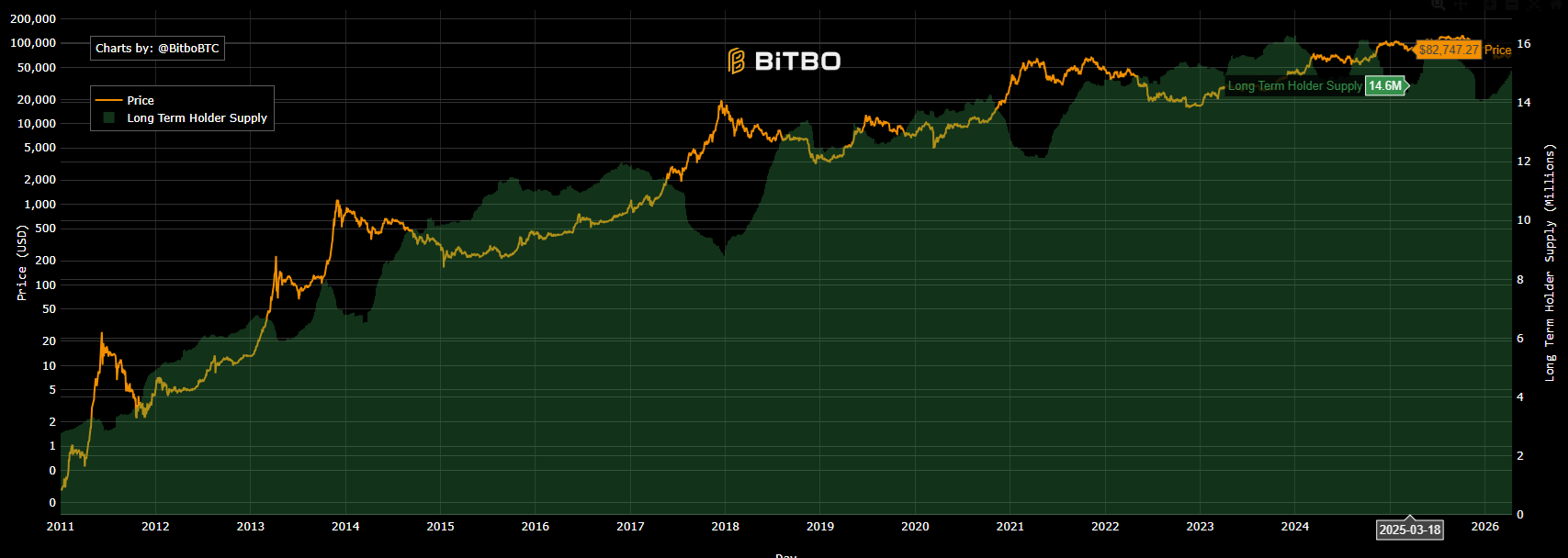
Since December 2025, long-term holders have added another 1M BTC to their reserves. In the short term, on-chain data shows major centralized exchanges also loaded up on BTC, accelerating the rally in the past day. For now, the BTC recovery is still fragile.
During the latest accumulation stage, BTC also traded with relatively low open interest on the futures market. Trading switched to spot or OTC, where whales tried to secure more BTC. In late March, whales positioned themselves with predominantly short positions and downside protection for BTC, but silently accumulated more coins to benefit from an eventual rally.
BTC sentiment improved in the past week
The BTC fear and greed index is still at 21 points, signaling “extreme fear.” The index suggests most traders are avoiding long positions due to fears of liquidation.
At the same time, actual BTC holdings are gaining importance. Whales accumulated strategically, especially after BTC established stability above $71,000. Retail buying was more sporadic, mostly “buying the dip,” while whales avoided being caught in prolonged crashes and mostly bought during consolidation and stability periods.
BTC may be entering a new period of demand, driven by institutions, projects, DeFi, and other large-scale entities. The coin has shown rapid reaction to periods of uncertainty, often offering rapid appreciation and unexpected upside. While allocation is still much lower compared to stocks or other traditional markets, BTC is becoming part of the mix, especially for its fast reaction to news.
Don’t just read crypto news. Understand it. Subscribe to our newsletter. It’s free.



Read More