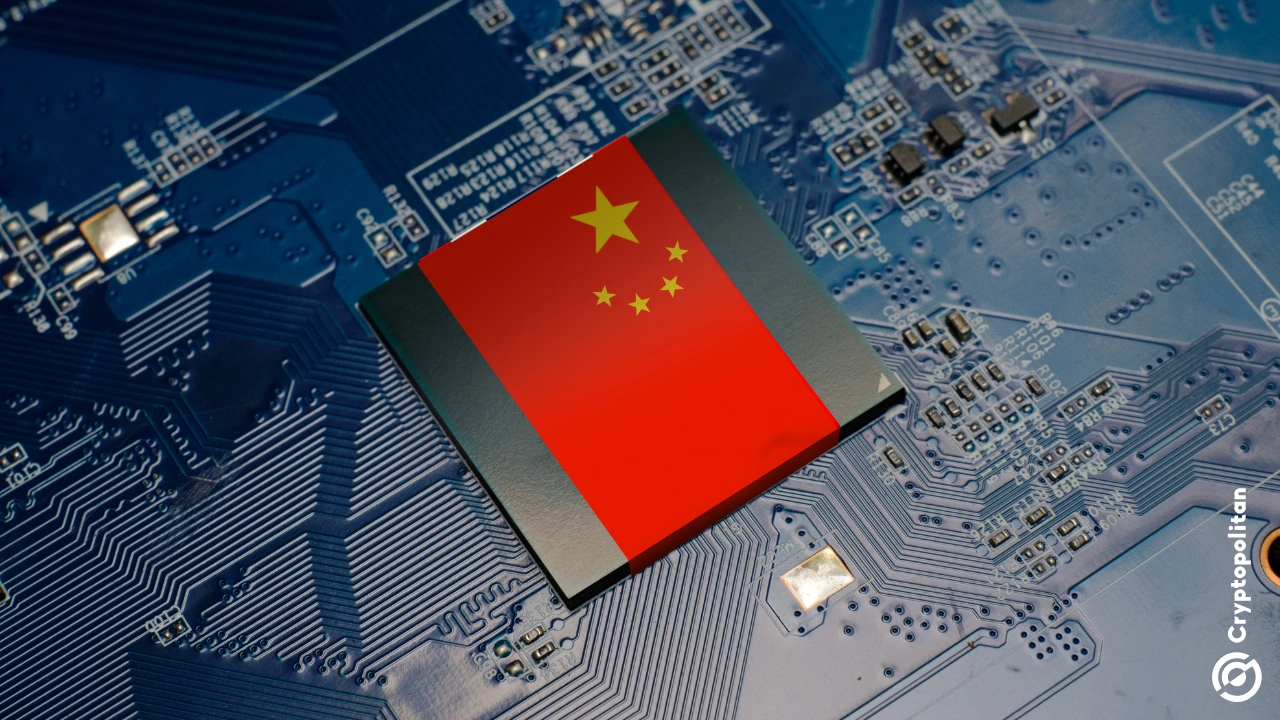


A Chinese supercomputer has become the most powerful in the world, the first time since 2017 that a machine from China has topped a closely watched ranking often seen as a measure of a country’s technological strength.
The computer, called LineShine and based in Shenzhen, knocked the American machine El Capitan off the top spot in the latest TOP500 list released Tuesday.
Researchers behind the project said the computer, at China’s National Supercomputing Center, reached 2.198 exaflops, meaning it can run more than 2 quintillion calculations every second.
El Capitan, at the Lawrence Livermore National Laboratory in California, now sits second. LineShine runs entirely on regular processors rather than the graphics chips used for artificial intelligence, and it draws about 42.2 megawatts of power.
The milestone is one more sign of a wider shift
In a handful of industries China has pulled ahead of the United States, and few examples are clearer than a battery plant in the country’s southeast.
At a factory run by Contemporary Amperex Technology Company, or CATL, robot arms wind strips of metal into rolls and shape them into the bricks that become batteries. It is the largest and most advanced cluster of battery factories in the world.
For years the relationship ran the other way. American firms held the lead and came to China to build their goods cheaply, and Beijing made them share technology with local partners as the price of entry.
Now, in fields from batteries and solar panels to rare earths and life sciences, China is building some of the most advanced technology around and moving fast to corner new markets.
CATL shows the change. The company says it has a battery that can drive an electric car 250 miles on less than 10 minutes of charging, roughly three times faster than the batteries in most other electric vehicles. “Of course if there’s an opportunity in the U.S., we wish to pursue it,” Fred Zhang, a company spokesman told NYT.
The advances worry American officials, who see risk in leaning too much on Chinese technology. Representative John Moolenaar, a Michigan Republican who chairs the House Select Committee on China, said Beijing had subsidized CATL “to undercut non-China competitors and build worldwide dependence,” and called handing the company a critical industry “a grave error.”
Others warn that shutting out firms like CATL would leave American companies behind. “For decades now, we’ve been used to a world where the technology and innovation comes out of the West,” said Kyle Chan of the Brookings Institution. “The tables are turning.”
Automakers are split
General Motors has teamed up with South Korean battery makers, but CATL sells to Tesla and has licensed its technology to Ford for plants in Michigan and Kentucky. Ford ended a partnership with South Korea’s SK On in December. The company has drawn fire before.
In 2023, Virginia’s then-governor Glenn Youngkin blocked a Ford-CATL plant, calling it a “Trojan horse.” In 2025, Washington added CATL to a list of Chinese military companies, which the firm called “a mistake.”
Chinese investment faces steep hurdles in the United States, including federal security reviews, high tariffs, and a ban on Chinese vehicle software starting with 2027 models. Even so, companies are watching whether President Trump’s apparent openness to deals with China could open the door to more partnerships.
On May 14, Treasury Secretary Scott Bessent said a planned “board of investment” would decide which nonstrategic, nonsensitive areas might be open to Chinese money.
CATL was founded in 2011 out of a firm that made the battery for Apple’s iPod. It now produces about 40 percent of the world’s electric vehicle batteries and 30 percent of the batteries used to store solar and wind power. Of its 185,000 workers, 22,000 work in research, and more than 700 of them hold Ph.D.s.
A study released in June by the OECD found that Chinese industrial firms received three to eight times as much government support over two decades as companies in the 38 mostly wealthy nations in the group.
Pfizer’s chief executive, Albert Bourla, speaking in March, called China’s scientific “meteoric rise” a major challenge and predicted the country would pass the United States in drug innovation within this decade. “They built their science,” he said. “So this is where we need to become better.”
Don’t just read crypto news. Understand it. Subscribe to our newsletter. It’s free.

Read More