


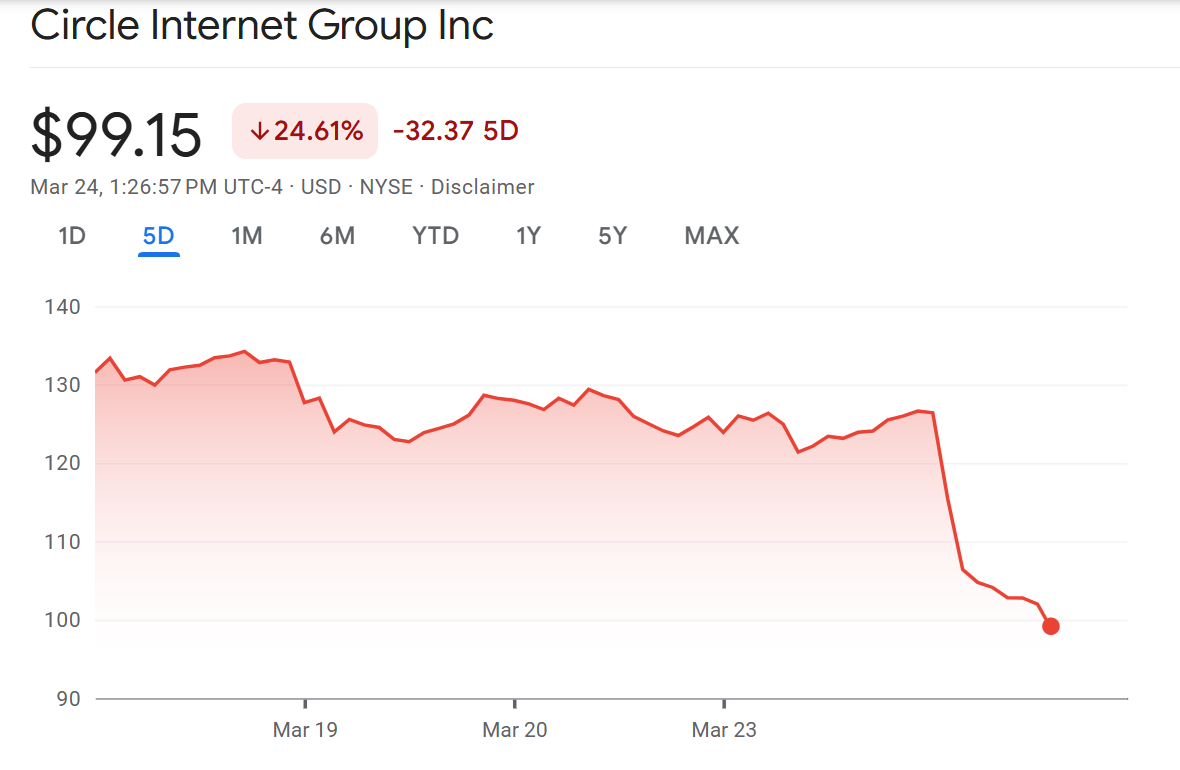
Circle’s stock fell by 15% after a disappointing CLARITY Act deal signaling no yield on stablecoins. CRCL fell below $100, hurting the prospects of one of the leading stablecoin issuers.
Circle immediately reflected the recent CLARITY Act deal, which limited the ability of stablecoin issuers to promise yield. The native CRCL token declined by around 15% on the news. Additionally, CRCL fell in response to Tether’s announcement of an official audit by a Big Four firm. The behavior of CRCL reflects the concerns of future regulations on the usage of stablecoins. CRCL continued its slide in the past day, crashing to the $98 range.
As Cryptopolitan reported, the CLARITY Act changes were expected by March 1, but were once again delayed. The bill was awaiting a breakthrough for about two months, while stablecoins continued to serve crypto insiders. Circle’s bid to cross over to traditional finance and expand its services was cut short by the bill’s amended language.
CLARITY Act excludes stablecoin holders from yield
In the past few days, the CLARITY Act deal reached a key agreement, aligning senators Thom Tillis and Angela Alsobrooks with White House officials. The breakthrough shifted the balance on the side of traditional bank demands, meaning stablecoin issuers would not be allowed to offer yield to passive holders. The contentious issue was stalled with the Senate Banking Committee for the past few weeks.
The CLARITY Act thus may proceed and become the next key piece of stablecoin regulation in the coming weeks. Along with the GENIUS bill, the act outlines the possibilities for stablecoins to serve as a cross between traditional finance and crypto. The biggest concern was that stablecoins could compete with banks in offering interest rates, bypassing other requirements for banking entities.
For now, the agreement is not final, and Senator Tillis may continue to consult the banking industry. Senator Alsobrooks stated the language of the bill is not finalized, and some types of rewards may be allowed, but not for passive holding.
Currently, stablecoins can offer yield through DeFi liquidity provision or through special exchange-based incentive programs. Coins held in wallets rarely accrue yield.
Can Circle offer yield?
Both Tether and Circle rely on short-term US T-bills to back their stablecoins, receiving regular returns. However, neither company can share the yield with token holders, based on the intended bill.
Despite the rapid adoption of USDC and its presence on 12-16M monthly active wallets, the CLARITY Act will not allow rewards to accrue. In general, USDC was created without yield in mind, but other types of stablecoin may also be affected.
USDC is also widely used in DeFi space, serving as collateral and for liquidity on decentralized trading pairs.
For now, the effect of the CLARITY Act remains uncertain. According to some analysts, even protocols like Uniswap may be affected. Uniswap offers stablecoin yield through its smart contracts, but the problem may be the user interface, which may have to comply with requirements tailored for the financial sector.
However, the CLARITY Act only affects US-based companies, meaning international USDC usage and forms of yield may continue. Additionally, DEX liquidity providers are not passively holding USDC, meaning their reward is part of an activity. The exact language of the CLARITY Act will also signal the future for DeFi.
Still letting the bank keep the best part? Watch our free video on being your own bank.



Read More