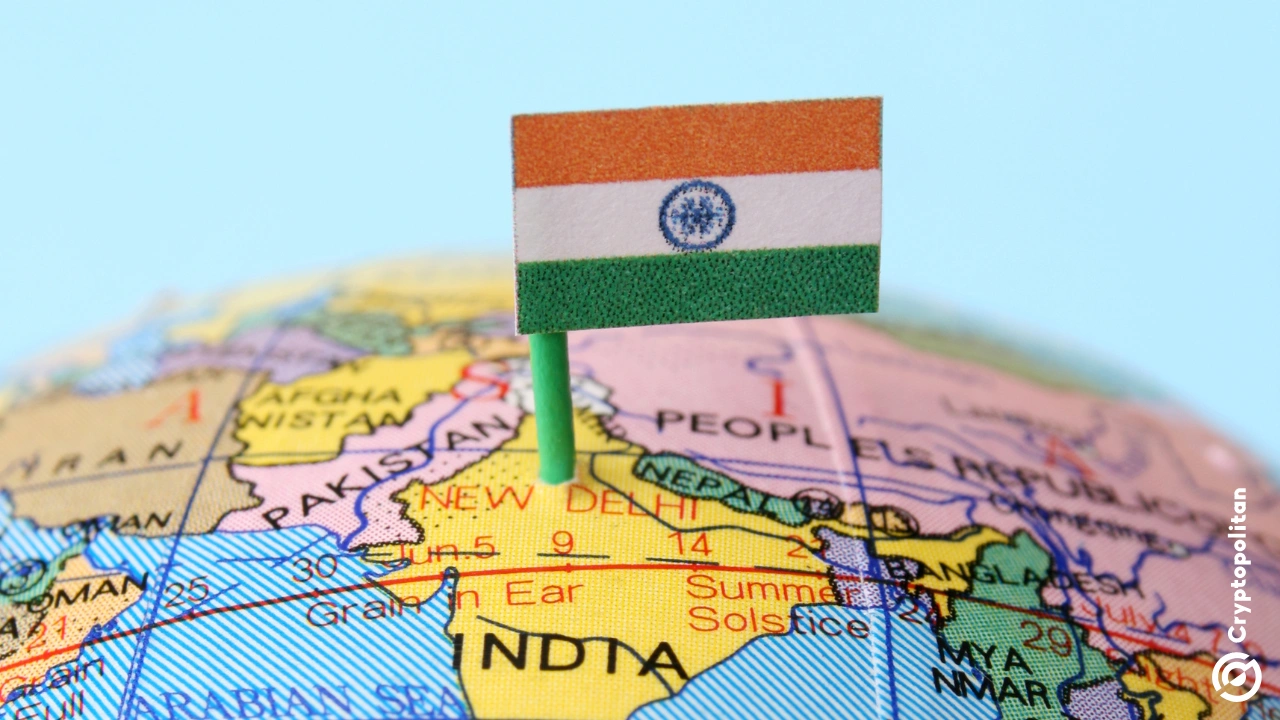


India has loosened curbs on Chinese investment, letting certain sectors skip the usual government queue, while New Delhi tries to keep relations steady with Washington, Beijing, and Tehran all at once.
The Indian cabinet said on Tuesday that investments from countries sharing a land border with India, China among them, can now go through a quicker approval process. Before this, all such capital inflows went through mandatory government review.
Chinese money going into capital goods, electronics, and solar parts now gets a 60-day deadline for approval. Investors from bordering countries with a stake of up to 10%, without control of the business, will be waved through automatically, under set regulatory conditions.
New Delhi had previously imposed restrictions to stop “opportunistic takeovers” while the pandemic was underway. It caught all land-bordering countries in its net and sent every foreign investment proposal through government hands.
Mao Keji, a research fellow at the International Cooperation Centre of China’s National Development and Reform Commission, said India had come to see that approach as shortsighted. “From the perspective of supply chain collaboration, India should welcome Chinese investment,” he said.
Beijing said little. At a press briefing on Wednesday, foreign ministry spokesperson Guo Jiakun told reporters to take the question to the relevant Chinese departments.
India’s troubles go beyond investment policy
The fighting in the Middle East is cutting into its oil supply and straining its habit of not picking sides in foreign disputes. India has only a few weeks of crude oil in reserve, a much thinner buffer than China, which sits on months of oil and critical minerals.
Chinese Foreign Minister Wang Yi used a Sunday press conference in Beijing to call on BRICS nations, including Brazil, Russia, India, China, and South Africa, to pull together.
“We must step up to the plate, and support each other’s BRICS presidency over the next two years, so as to make BRICS cooperation more substantive and bring new hope to the Global South,” he said. India has said nothing in reply.
The numbers inside India tell their own story. LPG prices have gone up, natural gas is being rationed, the rupee is close to its lowest-ever level, and the country’s stock markets just had their worst week in over a year.
India has also gone quiet on a string of events that would usually prompt a public comment. It is the only founding BRICS country that has not spoken out against the attacks on Iran.
When a U.S. submarine sank an Iranian warship that had been taking part in exercises hosted by India, New Delhi said nothing. Foreign Minister S. Jaishankar, asked soon after whether India was the main security guarantor in the Indian Ocean, did not give a straight answer.
India’s foreign secretary then went to the Iranian embassy to sign a condolence book after the death of Iran’s then-supreme leader, Ayatollah Ali Khamenei.
Modi’s trip to Israel a day or so before the country attacked Iran raised eyebrows, though Israel’s ambassador said the chance to act came only after the Indian leader had gone home.
Political economist Zakir Husain said the events add up to something significant.
These “recent developments send a signal that New India under PM Modi may have departed from the traditional policy of equi-balancing,” he said, and this has “created confusion among major countries in the Global South, leading them to believe that India has tilted towards Israel and the US.”
U.S. tariff lifted, Russia oil waiver follows
Washington had put a 25% tariff on India for buying Russian crude, but dropped it last month. Two days after the Iranian warship was attacked, Treasury Secretary Scott Bessent gave Indian refiners a 30-day pass to carry on purchasing Russian oil.
Eerishika Pankaj, director at the Organisation for Research on China and Asia in New Delhi, said India has stuck to calling for “dialogue and de-escalation rather than outright condemnation.” Dropping that line, she said, could lead to oil supply problems, a weaker rupee, and a bigger bill for energy subsidies.
Not all analysts see it as a problem. “India’s national interests definitely lie more with the US-Israel and their allies, vis-a-vis Iran,” said Jayant Krishna, senior fellow at the Center for Strategic and International Studies. “India has every right to continue its stand based on its interest, the call of the Chinese Foreign Minister notwithstanding.”
On the shipping side, regulators in both India and China are telling carriers to stop piling on extra fees linked to the Middle East war. China’s Ministry of Transport said it has spoken to Maersk and Mediterranean Shipping Co. directly about halted routes and higher charges.
The smartest crypto minds already read our newsletter. Want in? Join them.


Read More