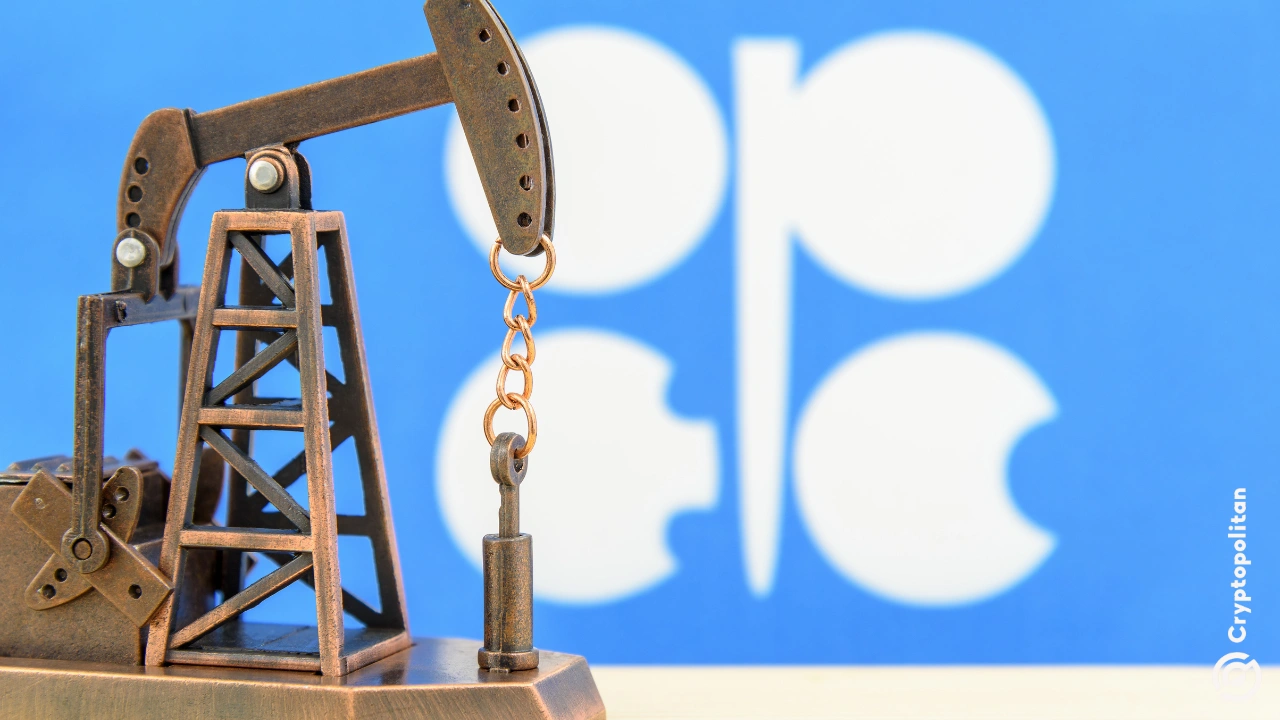


OPEC’s seven major oil-producing nations have agreed to pump an additional 188,000 barrels per day starting in June. This is the group’s first production decision since losing the UAE on May 1 as the key member.
The countries involved in the production bump (Saudi Arabia, Russia, Iraq, Kuwait, Kazakhstan, Algeria, and Oman) are adding slightly less than they did in May, when they increased daily output by 206,000 barrels. The latest figure does not include any contribution from the UAE, which is no longer part of the arrangement.
In their Sunday statement, the seven nations said they decided on the adjustment “in their collective commitment to support oil market stability,” referencing production changes first announced in April 2023.
Global oil supplies remain severely limited
The Strait of Hormuz, a narrow waterway that normally carries a large flow of the world’s oil and natural gas shipments, has been blocked for weeks.
Oil markets showed some relief on Friday after Iran sent a new peace proposal through mediators in Pakistan, raising hopes that an agreement with Washington might still be possible. U.S. crude prices dropped 3% to close at $101.94 per barrel, while the international Brent benchmark fell nearly 2% to settle at $108.17. Both prices remain roughly 78% higher than they were at the start of this year.
President Donald Trump told reporters on Saturday that he had heard about the general outline of a potential deal with Iran but was still waiting for specific details. He cautioned that military strikes could resume if Iran does not follow through on any commitments.
According to a senior Iranian official quoted by Reuters, Tehran’s proposal (which Trump has not yet accepted) would reopen the strait and end the American blockade of Iranian ports while postponing discussions about the country’s nuclear program.
UAE quits after six decades of membership
Cryptopolitan reported the shock announcement from the UAE, which made already strained global oil markets more complex.
Abu Dhabi concluded that leaving the group served its national interests after conducting a thorough review of its production strategy and capabilities, according to a statement from the Energy Ministry.
For nearly 60 years, the UAE had been deeply involved in the organization’s decision-making. By February, it had become the third-biggest producer in the group, trailing only Saudi Arabia and Iraq.
Oil quotas and production disputes are not the only reasons for the UAE. Abu Dhabi no longer depends on the revenue it generated for decades from oil. This is because they have been simultaneously diversifying foreign investments.
A prolonged oil shock might boost export revenues in the short term, but it can simultaneously damage the value of stocks, real estate, infrastructure projects, and technology companies that make up the bulk of the UAE’s investment portfolio.
This will affect the United States as well in the bigger picture. Gulf Cooperation Council economies (including Bahrain, Kuwait, Oman, Qatar, Saudi Arabia, and the UAE) have built up sovereign wealth funds managing an estimated $4 trillion to $6 trillion in total assets. Last year alone, these funds invested more than $120 billion, with the United States receiving the largest share.
However, the ongoing conflict has strained budgets across the Gulf region. Energy exports have been disrupted, tourism has stopped, and governments need more money for defense spending and infrastructure repairs. This could force these countries to keep more capital at home instead of investing it abroad.
That poses a potential problem for American technology companies that have come to rely on Gulf money to fund their artificial intelligence projects. If these firms cannot get the capital they need from Middle Eastern investors, they may have to borrow more money through debt, which has already made some investors nervous about their financial health.
The smartest crypto minds already read our newsletter. Want in? Join them.


Read More