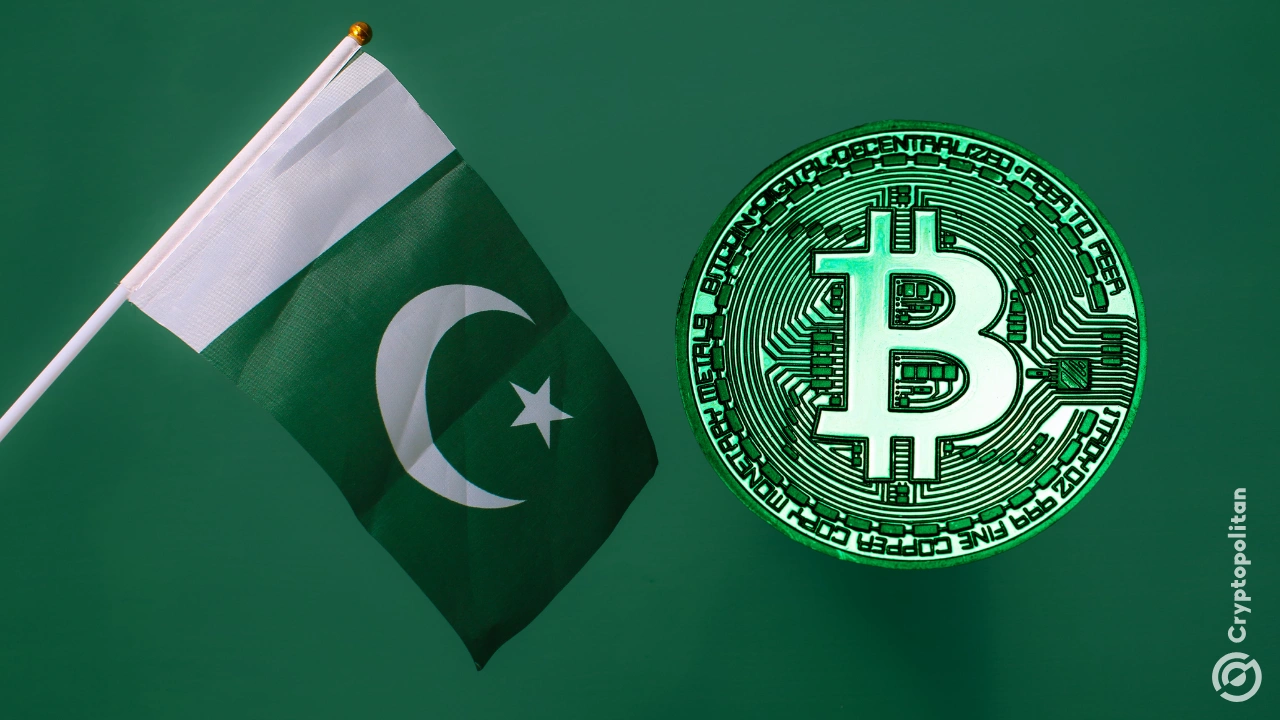


The government of Pakistan has sought a $10 billion Bilateral Exchange Stabilization Support Facility from the U.S. This request is in line with its efforts to improve its forex reserves and boost its digital financing efforts.
As reported by Reuters, the proposal was presented by Finance Minister Muhammad Aurangzeb to US Treasury Secretary Scott Bessent, asking for a facility up to five years. The proceeds will help strengthen national reserves, give a boost to the Pakistani rupee, and help reduce the need for emergency funding in times of market distress.
The proposition has been made while Pakistan is already undergoing reforms due to the program of the International Monetary Fund (IMF) and searching for more external financing sources. Amid growing instability of global financing, the authorities feel the need to find methods of making the economy more resilient instead of relying only on traditional creditors.
Stablecoins become part of Pakistan’s economic playbook
The request is consistent with Pakistan’s ongoing growing strategy for digital assets.
Earlier this year, the country joined forces with World Liberty Financial to investigate the feasibility of a stablecoin backed by the US dollar as well as other blockchain applications. The goal of the partnership is to upgrade international payments, increase remittance inflows, and broaden access to digital financial services.
Pakistan is one of the world’s fastest-growing markets for cryptocurrencies. Chainalysis lists Pakistan among the top countries in the world regarding grassroots cryptocurrency utilization as a result of active participation from common people, remittances, and demand for quicker transactions at affordable cost.
According to experts, the country’s ambitions in the field of cryptocurrencies are no longer restricted to innovations in financial technology. The Observer Research Foundation believes that Islamabad has been making increasing use of collaboration in the area of digital assets as part of its wide-ranging interactions with Washington, making crypto an important element of its economic diplomacy.
Taken together, the proposed reserve facility and stablecoin partnership suggest Pakistan is pursuing a dual-track strategy: strengthening its financial safety net while investing in digital payment infrastructure that could support long-term growth.
IMF and BIS urge caution as stablecoins expand
Global institutions have largely welcomed innovation in digital payments but continue to warn about the risks.
The IMF says stablecoins could make payments cheaper and more efficient while expanding financial inclusion.
The IMF has also noted that emerging markets are attracting more investment from non-bank financial institutions, creating fresh funding opportunities but also exposing economies to faster shifts in global capital.
The Bank for International Settlements (BIS) echoes those concerns. While acknowledging the benefits of tokenization and programmable finance, the BIS argues that privately issued stablecoins cannot fully deliver the trust, stability, and settlement finality expected of money without strong oversight. The institution instead sees regulated tokenized bank deposits and central bank money as a more durable foundation for future financial systems.
Traditional finance and crypto are beginning to converge
Pakistan’s request for US financial support highlights how traditional macroeconomic policy and digital asset development are becoming increasingly connected.
Washington has yet to decide whether it will approve the proposed facility. But regardless of the outcome, Pakistan’s latest moves suggest it is trying to build a more diversified economic strategy—one that combines conventional financial support with digital asset innovation to strengthen its position in an increasingly digital global economy.
If you’re reading this, you’re already ahead. Stay there with our newsletter.




Read More