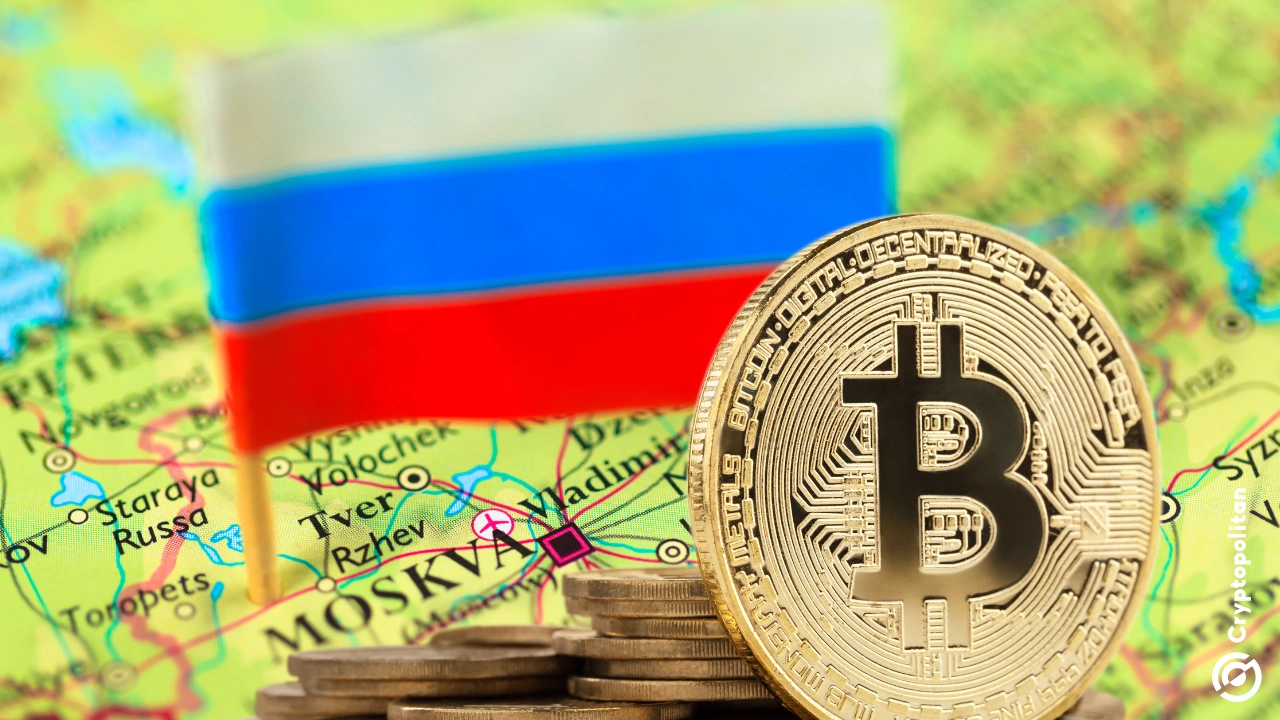


Russia’s delayed cryptocurrency law is now expected to enter into force on the first day of September, a couple of months later than originally planned.
Additional rules necessary to fully legalize coin transactions will be introduced by November, and the first regulated crypto operations should begin in early 2027.
Russian ‘digital currency’ law delayed by amendments
A draft law laying the legal ground for the circulation of cryptocurrencies like Bitcoin in Russia will be adopted in the coming weeks, well past the initially announced deadline, local media reported.
The legislation, which overcame its first hurdle at the lower house of Russian parliament in April, was supposed to be finally passed and enforced no later than July 1, 2026.
However, a number of proposed amendments and approval procedures are delaying the process, the business daily Kommersant wrote Friday, citing knowledgeable sources.
According to Anatoly Aksakov, chair of the State Duma Committee on Financial Markets, the enactment of the law is being postponed mainly “due to protracted approvals with government agencies.”
Thus, the second and third reading of Bill No. 1194918-8 “On Digital Currency and Digital Rights” are now tentatively scheduled for July 21, the prominent lawmaker unveiled.
It will then require a positive vote at the Federation Council, the upper house, as well as President Putin’s signature to enter into force, which will take another two weeks, the newspaper noted.
The comprehensive legislation is based on a new regulatory concept released by the Central Bank of Russia (CBR) in December 2025.
The policy envisages recognizing cryptocurrencies as “monetary assets” and regulating their turnover in the Russian Federation’s economy.
Crypto transactions should be conducted exclusively through licensed intermediaries such as exchanges, brokers, trustees, and depositories, registered with the CBR.
While expanding access to digital assets by allowing even non-qualified investors to acquire them, the framework introduces a number of restrictions, such as an annual 300,000-ruble purchase limit for ordinary Russians (less than $4,000).
Initially, the draft law also permitted custodial storage of cryptocurrencies, with wallet keys held by state-approved depositories.
It’s now being discussed whether to permit Russian investors to withdraw up to 100,000 rubles’ worth of digital coins ($1,300) to non-custodial wallets.
This was revealed to Kommersant by Mikhail Uspensky, a member of the expert council on the legislative regulation of cryptocurrencies at the State Duma.
Crypto legislation to come into force in September
The law that will allow Russian citizens and businesses to legally transact with cryptocurrencies will enter into force on September 1, 2026, Interfax confirmed in a separate report.
The Bank of Russia sees other provisions governing crypto operations adopted by November, the news agency added, quoting its First Deputy Chairman Vladimir Chistyukhin.
Speaking to journalists on the sidelines of the Financial Congress forum organized by the monetary authority, the CBR official elaborated:
“I think the regulations will be ready by October, and we’ll send them to the Ministry of Justice … If everything goes according to plan, then by early November, all of this could already be adopted and published.”
Chistyukhin expects Russia’s first regulated crypto transactions to take place by early next year, depending on how ready market participants are to launch specific products and services.
Major players in the Russian financial market, which will be able to provide them under their existing licenses, are already prepared to take this step.
On Thursday, the Moscow Exchange (MOEX) said it plans to commence cryptocurrency operations by the end of the year, as per a statement by its representative at the same event, Igor Marich.
Meanwhile, two leading Russian banks, VTB and T-Bank, announced they intend to create depositories for digital assets, as reported by the business news portal RBC.
A number of major financial institutions have already been offering crypto derivatives to their clients since the CBR authorized them to do so in May of 2025.
Pressed by Western sanctions, Russia gradually softened its previously conservative stance on decentralized digital money over the course of the past year.
Nevertheless, it’s still lagging behind other nations in the post-Soviet space when it comes to regulation, including regional leaders like Belarus and Kazakhstan.
Representatives of the country’s central bank are currently in dialogue with their Belarusian counterparts to maintain Russian access to the Belarusian infrastructure.
Don’t just read crypto news. Understand it. Subscribe to our newsletter. It’s free.



Read More