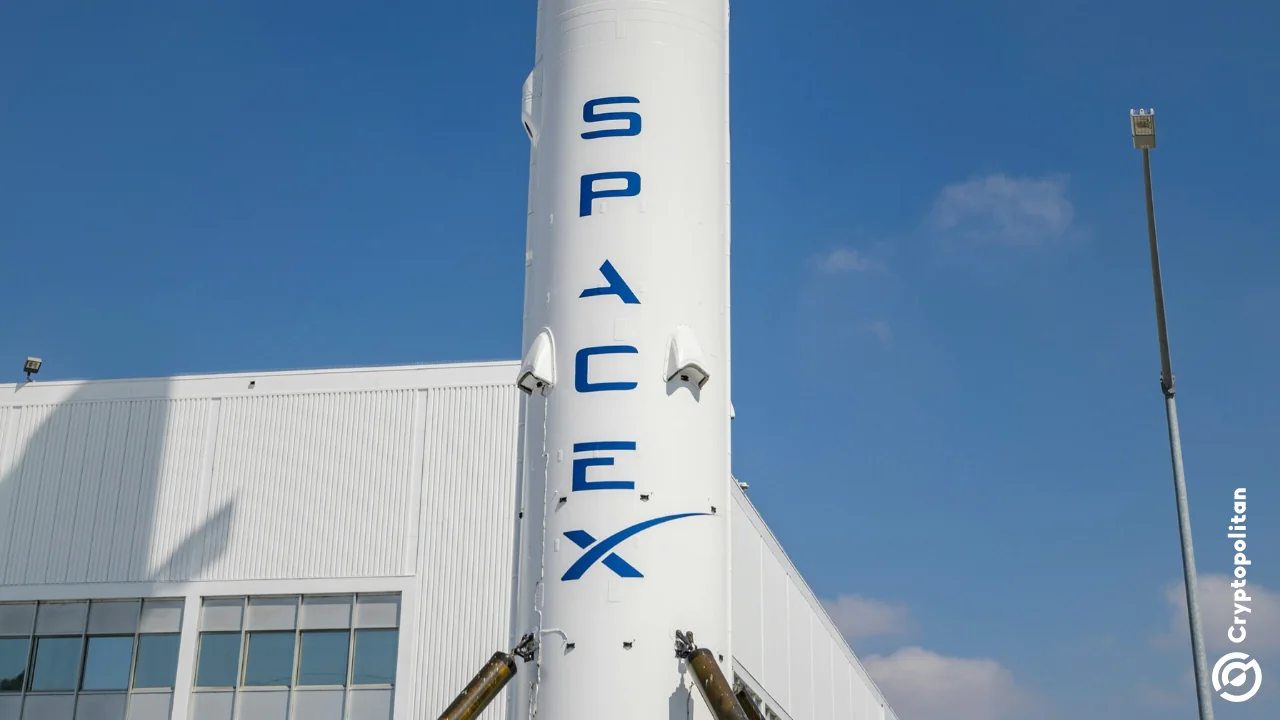


On Thursday (July 16), the highly anticipated launch of SpaceX’s Starship test flight mission was called off at the last minute, causing SPCX shares to fall deeper below its IPO price in June and intensifying the already-existing selling wave in the aerospace and technology industries.
The sell-off came at a delicate time for investors. With the share count from SpaceX’s June IPO, the stock’s close at $131.11 gave a market capitalization of approximately $1.73 trillion, around 3% below the $1.78 trillion IPO valuation. Even with the decline, the company continues to be one of the most valuable listed companies around the globe, which is very significant in shaping the performance of the large technology and industrial indexes.
According to a report from the Associated Press, AI-related stocks have been at the forefront of the decline across the world, which has resulted in a decline in S&P 500 futures which is down by about 0.25%, while Nasdaq futures have also dipped by about 0.45%. This drove the CBOE Volatility Index (VIX) up by about 6.8% to reach 16.73. Furthermore, Bitcoin (BTC) has lost about 1.3% as investors have preferred to invest in safer instruments.
What happened on the pad
The launch timer at the Starbase in South Texas stopped at around 6:45 p.m. EDT, shortly after engine ignition had begun for the Super Heavy booster.
SpaceX spokesperson Dan Huot told viewers during the company’s livestream that engineers would inspect the issue before scheduling another attempt.
“Hopefully, we’ll be back real soon for Flight 13 and another attempt to get Starship off the pad,” Huot said.
Flight 13 represents the second test flight of SpaceX’s latest rocket design called the Starship Version 3. With a height reaching 124 meters, this rocket can carry payloads of up to 100 tons to orbit. The goal of this mission was to send into orbit 20 of SpaceX’s own Starlink V3 satellites, the latest in the series of satellites used by SpaceX to enlarge its satellite internet services.
Although the scrub ultimately caused a delay to the mission, it also allowed SpaceX to keep the spacecraft for further study, providing further proof that the company’s philosophy is that salvaging hardware and engineering insight is more important than launching on schedule.
Flight 12, the first launch of Version 3 mission in May, managed to reach orbit and deploy modified Starlink satellites but did not fulfill all of its booster recovery targets. Flight 13 was supposed to take this work a step forward and launch operational batch of 20 Starlink V3 satellites, but the countdown was halted.
Beyond the test itself, the mission carried major commercial significance. SpaceX is counting on Starship to deploy its larger Starlink V3 satellites more efficiently, positioning the rocket as a cornerstone of the company’s long-term growth strategy and efforts to lower launch costs.
The stock reaction
The unsuccessful launch that took place on Thursday has been another blow to SpaceX’s investors. The company’s stock closed at $131.11, down 3.1% and even below its IPO price of $135 on June 12. After reaching its peak after the IPO, the stock has lost almost 42%, and it continues to go lower after the initial excitement about the successful IPO.
This last decline continues the weakness since the IPO that Cryptopolitan has reported. Investors are reassessing the stock after its record-breaking debut in the market.
The sell-off did not end only with SpaceX, with AST SpaceMobile (ASTS) down 17% and Alphabet (GOOG) losing 4.4% in value as investors pulled out of high-tech, high-growth companies. Analysts have pointed out that another reason for the decrease in investor appetite is the impending expiration of lock-up periods for insiders, even as they maintained bullish long-term outlook.
Ahead of the launch attempt, JPMorgan analyst Seth Seifman said investors should focus less on the outcome of any individual Starship test than on how quickly SpaceX can refurbish and relaunch the vehicle.
“There will be plenty to analyze from Flight 13, but over time, we expect both progress and setbacks,” Seifman wrote.
Analysts are assessing Starship more by its launch frequency than by individual mission results. Faster launches will facilitate the growth of Starlink, NASA’s Artemis initiative, and the cost-effectiveness of a fully reusable launch vehicle.
What happens next
The delay is widely seen as a short-term setback rather than a sign of deeper problems. In a post on X, Elon Musk said, “To be confident of a good flight, 2 Raptors will be removed & replaced. Most probable launch timing is early next week.”
Until then, the Starlink V3 payload will remain on the ground while engineers complete the engine replacement and final checks. For investors, the key issue is less about the aborted launch than how quickly SpaceX can resume Starship flights. As the company relies on Starship to expand its Starlink network and drive future growth, maintaining a rapid launch cadence has become increasingly important.
If you’re reading this, you’re already ahead. Stay there with our newsletter.




Read More