


The post US Banks Just Fired Back at the White House Over Stablecoin Yield: “Misleading Sense of Safety” appeared first on Coinpedia Fintech News
The White House said the banking industry was wrong about stablecoin yield. The banking industry just said the White House asked the wrong question entirely.
The American Bankers Association published a formal rebuttal today to the White House Council of Economic Advisers’ stablecoin report, pushing back on its core framing and warning that policymakers are being given a false sense of security.
The CEA Report: What the White House Said
On April 8, the CEA released a 21-page analysis concluding that prohibiting stablecoin yield would increase bank lending by just $2.1 billion – roughly 0.02% of total loans outstanding. It described fears of deposit flight as dramatically overstated and argued a yield ban would cost consumers $800 million in lost returns while doing almost nothing to protect bank lending.
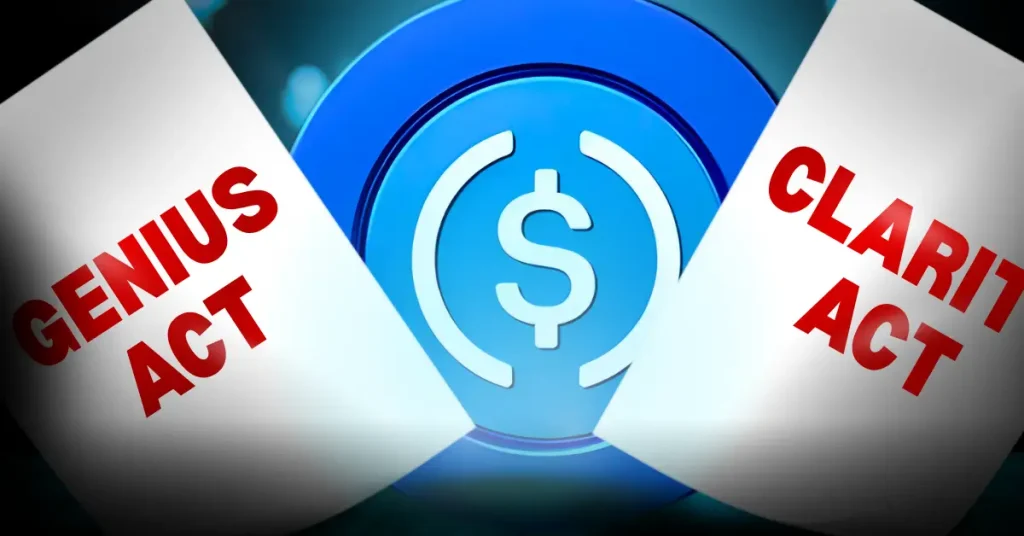
The crypto industry declared it decisive. Treasury Secretary Scott Bessent publicly called for Congress to move the stalled CLARITY Act to a vote immediately.
Why the ABA Says the Question Was Wrong
The ABA’s response, written by its chief economist and VP of banking research, argues the CEA modelled an irrelevant scenario.
“By focusing on the effects of a prohibition, the CEA paper risks creating a misleading sense of safety by avoiding the much more consequential scenario: yield-paying payment stablecoins scaling quickly,” the ABA wrote.
The live policy concern, according to the ABA, is not what happens if you ban yield. It is what happens when you allow it and stablecoins grow from today’s roughly $300 billion market to $1-2 trillion. At that scale, yield becomes the mechanism that pulls deposits away from community banks, raises their funding costs and reduces local lending.
Why This Fight Has Direct Stakes for Crypto
The CLARITY Act, the legislation that would establish a comprehensive US crypto regulatory framework, has been stalled in the Senate Banking Committee since January 2026, partly over the yield question. Coinbase withdrew its support for the bill after it moved to restrict yield-like rewards from exchanges.
The CEA report was a deliberate White House intervention designed to break that deadlock. The ABA’s rebuttal today is the banking industry’s direct response.
Congress now has two competing economic frameworks in front of it. Which argument wins determines whether yield-bearing stablecoins become legal at scale in the United States.
The ABA’s own analysis estimates that a single state like Iowa could see between $4.4 billion and $8.7 billion in reduced lending as the payment stablecoin market grows.
The post US Banks Just Fired Back at the White House Over Stablecoin Yield: “Misleading Sense of Safety” appeared first on Coinpedia.org.

Read More


