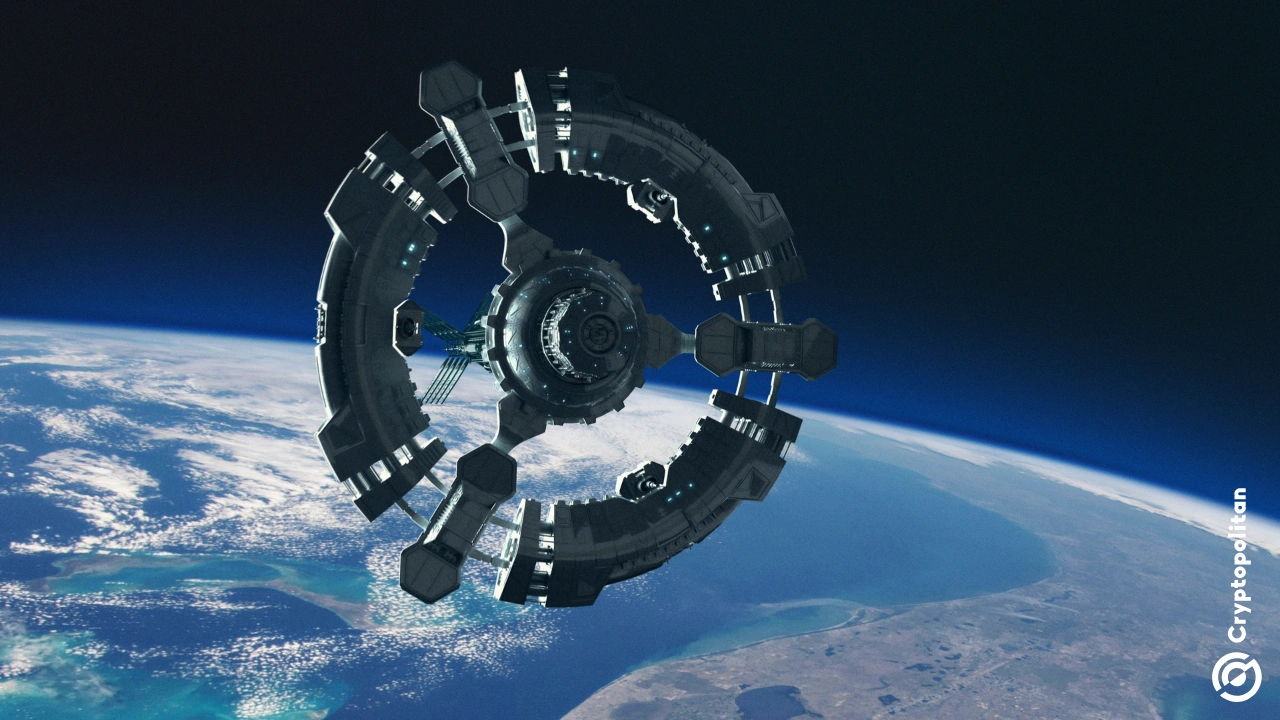


China has developed the technology to attack American and Australian forces from space and has already tested it, a senior US military official said during a visit to Canberra this week, as Washington released the largest military space budget in its history.
Lieutenant-General Gregory Gagnon, who leads the US Space Force’s combat operations, told media reporters that China now runs the world’s biggest space force, three times the size of America’s, and is moving fast to extend that lead.
“They are not moving out slowly. They are moving out like a world-class sprinter, and they are making gains,” he said during a visit to meet with his Australian military counterparts.
Gagnon said China had about 70 satellites in orbit when Xi Jinping came to power in 2013. That number has since climbed to 1,400. He said space had replaced air power as the defining military high ground of the age.
“Space is a warfighting domain today not because we want it to be, but because the People’s Liberation Army has made it so,” he said. “They have built the weapons to attack us in space. They have practised using those weapons to attack us in space.”
He warned that Chinese satellites could already track the movements of Australian and US troops on the ground and relay that information to long-range missile systems. Any conflict with China or Russia would extend into space, he said, because both countries had deliberately built the forces to fight there.
Gagnon compared China’s approach to its military build-up in the South China Sea, a slow and calculated expansion that eventually handed Beijing major strategic leverage.
He said the US and Australia could not simply defend their space assets. They needed to go on the offensive. “We must be prepared to protect, defend and, as a joint force, attack the PLA space capabilities so that they can no longer track our ships, so that they can no longer track forces,” he said.
What the Pentagon’s space report says
The remarks align with the US Space Force’s recently released Future Operating Environment 2040, which describes a long, largely hidden conflict in space already taking shape, one the authors compare to the drift toward war that preceded World War I in 1914.
By 2040, the report says China aims to match or surpass US space power. To get there, it is building anti-satellite missiles, directed-energy weapons, killer robot satellites, and AI-driven systems that can make targeting decisions faster than any human.
The report also describes Chinese research into brain-computer interfaces that could allow a single operator to manage entire satellite fleets, cutting decision times from minutes to milliseconds.
China’s methods, the report warns, will be hard to detect, including satellite jamming disguised as technical faults, GPS spoofing dressed up as routine errors, and supply chain disruption. The goal is to gradually erode US capability rather than strike in a single decisive blow.
Australia lags behind as Washington opens its wallet
Australia’s position is under scrutiny. A United States Studies Centre report released last week found the country lags behind its allies in space and has no clear strategy to catch up.
The Australian government’s new 10-year defense plan commits between $9 billion and $12 billion to space, including a new multi-orbit satellite communications system for the Indo-Pacific.
Space is more vital than ever to our economic prosperity, national security, & the lethality of the Joint Force. The proposed budget is a generational opportunity to position the Space Force to win against growing threats today & tomorrow. https://t.co/WwhEhSOMwP
— General Chance Saltzman (@SpaceForceCSO) April 21, 2026
Washington is moving on a far larger scale. The Department of the Air Force on April 21 requested a record $338.8 billion for the coming fiscal year, $92.5 billion more than the current year. The Space Force’s share reaches $71.1 billion, a 124% increase.
Space control systems receive $21.6 billion, up 158%. Satellite communications get $6.7 billion, missile warning systems $6.8 billion, and cyber protection for satellites $500 million.
“The proposed budget represents a generational opportunity to position the Space Force to win,” said Space Force Chief General Chance Saltzman.
The crypto card with no spending limits. Get 3% cashback and instant mobile payments. Claim your Ether.fi card.




Read More