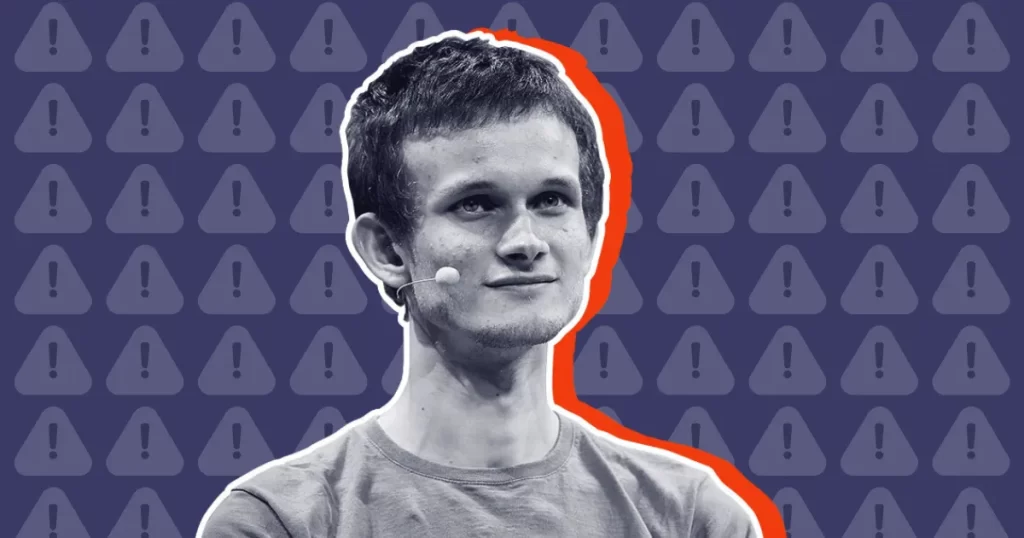


The post Vitalik Buterin Warns of RPC Risks, Proposes Partially Stateless Ethereum Nodes appeared first on Coinpedia Fintech News
Ethereum co-founder Vitalik Buterin has unveiled an ambitious new proposal that promises to turbocharge Ethereum’s scalability and privacy while preserving decentralization.
In a detailed blog post on May 19, Buterin introduced the concept of partially stateless nodes – a breakthrough approach designed to make running Ethereum nodes easier, more efficient, and censorship-resistant.
Here’s what you need to know.
The Hidden Danger of RPC Centralization
There is a growing risk in the Ethereum ecosystem: the increasing dominance of Remote Procedure Call (RPC) providers. These services allow wallets, users, and decentralized apps to interact with Ethereum without running their own full nodes, but there’s a catch.
“A market structure dominated by a few RPC providers will face strong pressure to deplatform or censor users,” Buterin warned.
Some providers already exclude entire countries, creating a dangerous concentration of power that threatens Ethereum’s foundational principles of openness and trustlessness.
What Are Partially Stateless Nodes – And Why They Matter
Buterin’s solution? Partially stateless nodes – a novel node design that validates blocks “statelessly.” Unlike traditional full nodes that require storing the entire blockchain history and all Merkle proofs, these nodes selectively keep only relevant data subsets.
This means users can configure their nodes to store data tied to their own accounts, frequently used decentralized finance (DeFi) protocols, and popular tokens like Ether and stablecoins. Queries outside this stored subset either fail or are routed through RPC providers, dramatically reducing storage needs and bandwidth without sacrificing security.
.article-inside-link {
margin-left: 0 !important;
border: 1px solid #0052CC4D;
border-left: 0;
border-right: 0;
padding: 10px 0;
text-align: left;
}
.entry ul.article-inside-link li {
font-size: 14px;
line-height: 21px;
font-weight: 600;
list-style-type: none;
margin-bottom: 0;
display: inline-block;
}
.entry ul.article-inside-link li:last-child {
display: none;
}
Balancing Efficiency, Privacy, and Trust
As Ethereum scales and gas limits rise, running a full node becomes increasingly resource-intensive. Partially stateless nodes aim to ease this burden, enabling more users to run nodes locally and maintain privacy-preserving access to blockchain data.
Beyond reducing resource demands, this design addresses metadata privacy concerns, helping users avoid exposing their full transaction activity.
The approach aligns with ongoing Ethereum Improvement Proposals like EIP-4444, which focuses on decentralized history storage, and reflects Buterin’s broader push to keep Ethereum’s infrastructure robust and user-friendly.
.article_register_shortcode {
padding: 18px 24px;
border-radius: 8px;
display: flex;
align-items: center;
margin: 6px 0 22px;
border: 1px solid #0052CC4D;
background: linear-gradient(90deg, rgba(255, 255, 255, 0.1) 0%, rgba(0, 82, 204, 0.1) 100%);
}
.article_register_shortcode .media-body h5 {
color: #000000;
font-weight: 600;
font-size: 20px;
line-height: 22px;
text-align:left;
}
.article_register_shortcode .media-body h5 span {
color: #0052CC;
}
.article_register_shortcode .media-body p {
font-weight: 400;
font-size: 14px;
line-height: 22px;
color: #171717B2;
margin-top: 4px;
text-align:left;
}
.article_register_shortcode .media-body{
padding-right: 14px;
}
.article_register_shortcode .media-button a {
float: right;
}
.article_register_shortcode .primary-button img{
vertical-align: middle;
width: 20px;
margin: 0;
display: inline-block;
}
@media (min-width: 581px) and (max-width: 991px) {
.article_register_shortcode .media-body p {
margin-bottom: 0;
}
}
@media (max-width: 580px) {
.article_register_shortcode {
display: block;
padding: 20px;
}
.article_register_shortcode img {
max-width: 50px;
}
.article_register_shortcode .media-body h5 {
font-size: 16px;
}
.article_register_shortcode .media-body {
margin-left: 0px;
}
.article_register_shortcode .media-body p {
font-size: 13px;
line-height: 20px;
margin-top: 6px;
margin-bottom: 14px;
}
.article_register_shortcode .media-button a {
float: unset;
}
.article_register_shortcode .secondary-button {
margin-bottom: 0;
}
}
Never Miss a Beat in the Crypto World!
Stay ahead with breaking news, expert analysis, and real-time updates on the latest trends in Bitcoin, altcoins, DeFi, NFTs, and more.
.subscription-options li {
display: none;
}
.research-report-subscribe{
background-color: #0052CC;
padding: 12px 20px;
border-radius: 8px;
color: #fff;
font-weight: 500;
font-size: 14px;
width: 96%;
}
.research-report-subscribe img{
vertical-align: sub;
margin-right: 2px;
}
var templateIds = “6”;
var listOfSubscribed = [];
function subscribed_popupmodal(template_id) {
var templateId = ‘6’;
getAllSubscriberCategoryList([templateId]);
var subcribemodal = window.parent.document.getElementById(‘subscribe-modal-design’);
if (subcribemodal) {
var modalContent = `


Never Miss a Beat in the Crypto World!
Stay informed and gain the edge you need to navigate the crypto world. Select your subscription now
`;
subcribemodal.innerHTML = modalContent;
}
subscribe_unsubscribe_status(template_id);
//getAllSubscriberCategoryList(template_id);
}
function toggleSubscription(subscription, template_id) {
var subscriptionCheckbox = document.getElementById(subscription + ‘_’ + template_id);
var li = document.getElementById(subscription + ‘Selected_’ + template_id);
if (subscriptionCheckbox.checked) {
li.classList.add(‘active’);
} else {
li.classList.remove(‘active’);
}
}
function getAllSubscriberCategoryList(getcategoryId) {
jQuery.ajax({
url: ‘https://coinpedia.org/wp-admin/admin-ajax.php’,
type: ‘GET’,
data: {
action: ‘subscribe_api_ajax_request’,
apiurl: ‘/app/email_newsletter/list’,
},
success: function(response) {
var result = JSON.parse(response.message);
if (result.status === true) {
var idstosubscribed = []
// Populate listOfSubscribed with subscribed category IDs
result.message.forEach(listofcategory => {
if (listofcategory.subscribe_status === 1) {
if (!listOfSubscribed.includes(listofcategory._id)) {
listOfSubscribed.push(listofcategory._id);
}
if (!idstosubscribed.includes(listofcategory.news_cp_category_row_id)) {
idstosubscribed.push(listofcategory.news_cp_category_row_id);
}
}
});
idstosubscribed.forEach(id => {
var subscribeButton = document.getElementById(‘subscribe_’ + id);
var unsubscribeButton = document.getElementById(‘unsubscribe_’ + id);
if (subscribeButton && unsubscribeButton) {
subscribeButton.style.display = ‘none’;
unsubscribeButton.style.display = ‘block’;
var showDownloadReport = document.getElementById(‘download_report’);
if (showDownloadReport) {
showDownloadReport.style.display = ‘block’;
}
}
});
}
},
error: function(xhr, status, error) {
console.error(‘Error:’, error);
}
});
}
function subscribe_unsubscribe_status(getcategoryId) {
var elementTounsubscribe = parent.document.getElementById(‘unsubscribe_’ + getcategoryId);
var elementTosubscribe = parent.document.getElementById(‘subscribe_’ + getcategoryId);
jQuery.ajax({
url: ‘https://coinpedia.org/wp-admin/admin-ajax.php’,
type: ‘POST’,
data: {
action: ‘subscribe_api_ajax_request’,
apiurl: ‘/app/email_newsletter/list?category_row_id=’ + getcategoryId,
},
success: function(response) {
var result = JSON.parse(response.message);
if (result.status === true) {
parent.jQuery(‘.skeliton-loader-block’).hide();
var hasSubscribeStatusOne = false;
result.message.forEach(subscribeStatus => {
if (listOfSubscribed.includes(subscribeStatus._id) && subscribeStatus.subscribe_status === 1) {
hasSubscribeStatusOne = true;
}
if (subscribeStatus.notification_type === 3) {
parent.document.getElementById(‘monthlySelected_’ + getcategoryId).style.display = ‘block’;
parent.document.getElementById(‘monthly_’ + getcategoryId).setAttribute(‘data-id’, subscribeStatus._id);
if (subscribeStatus.subscribe_status === 1) {
parent.document.getElementById(‘monthly_’ + getcategoryId).checked = true;
}
} else if (subscribeStatus.notification_type === 2) {
parent.document.getElementById(‘weeklySelected_’ + getcategoryId).style.display = ‘block’;
parent.document.getElementById(‘weekly_’ + getcategoryId).setAttribute(‘data-id’, subscribeStatus._id);
if (subscribeStatus.subscribe_status === 1) {
parent.document.getElementById(‘weekly_’ + getcategoryId).checked = true;
}
} else if (subscribeStatus.notification_type === 1) {
parent.document.getElementById(‘dailySelected_’ + getcategoryId).style.display = ‘block’;
parent.document.getElementById(‘daily_’ + getcategoryId).setAttribute(‘data-id’, subscribeStatus._id);
if (subscribeStatus.subscribe_status === 1) {
parent.document.getElementById(‘daily_’ + getcategoryId).checked = true;
}
}
if (subscribeStatus.subscribe_status === 1) {
listOfSubscribed.push(subscribeStatus._id);
}
});
if (hasSubscribeStatusOne) {
elementTosubscribe.style.display = ‘none’;
elementTounsubscribe.style.display = ‘block’;
} else {
elementTosubscribe.style.display = ‘block’;
elementTounsubscribe.style.display = ‘none’;
}
}
},
error: function(xhr, status, error) {
console.error(‘Error:’, error);
}
});
}
function logSelectedSubscriptions(categoryid) {
var unsubscribemodal = document.querySelector(‘.unsubscribed-popup-modal .modal’);
var subscribedmodal = document.querySelector(‘.subscribed-popup-modal .modal’);
unsubscribemodal.innerHTML=”;
subscribedmodal.innerHTML=”;
var selectedSubscriptions = [];
var storeCheckedId = [];
var checkboxes = document.querySelectorAll(‘#subscription-options-‘ + categoryid + ‘ input[type=”checkbox”]’);
var errorMessage = document.getElementById(‘error-message-select’);
// Use a Set to handle unique data-ids
var uniqueSubscribedIds = new Set(listOfSubscribed);
checkboxes.forEach(function(checkbox) {
var dataId = parseInt(checkbox.getAttribute(‘data-id’));
if (checkbox.checked) {
selectedSubscriptions.push(checkbox.id);
storeCheckedId.push(dataId);
} else {
uniqueSubscribedIds.delete(dataId); // Remove unchecked data-id
}
});
// Update listOfSubscribed with unique values
listOfSubscribed = Array.from(uniqueSubscribedIds);
var selectedSubscriptionsString = selectedSubscriptions.join(‘, ‘);
var concatinateSubscribeId = […new Set(storeCheckedId.concat(listOfSubscribed))];
var categoryData = {
‘subscribed_categories’: concatinateSubscribeId
};
var requestSubscriberData = {
action: ‘handle_dynamic_api_request_with_headers’,
security: ‘ebbd7fc58f’,
endpoint: ‘/app/email_newsletter/update_categories’,
token: ”,
data: categoryData
};
jQuery.ajax({
url: ‘https://coinpedia.org/wp-admin/admin-ajax.php’,
type: ‘POST’,
data: requestSubscriberData,
beforeSend: function(xhr) {
xhr.setRequestHeader(‘X-Requested-With’, ‘XMLHttpRequest’);
},
success: function(response) {
try {
response = response.data;
if (storeCheckedId.length === 0) {
var unsubcribedPopUpmodal =
`

You’ve Unsubscribed Successfully
We’re sorry to see you go! Your subscription has been canceled. If you change your mind, you can re-subscribe anytime. Thank you for being part of our community!
`;
unsubscribemodal.innerHTML = unsubcribedPopUpmodal;
document.querySelector(‘#subscribe-modal-design .modal’).style.display = ‘none’;
unsubscribemodal.style.display = ‘block’;
unsubscribemodal.classList.remove(‘hide’);
unsubscribemodal.classList.add(‘show’);
document.getElementById(‘subscribe_’ + categoryid).style.display = ‘block’;
document.getElementById(‘unsubscribe_’ + categoryid).style.display = ‘none’;
var showDownloadReport = document.getElementById(‘download_report’);
if (showDownloadReport) {
showDownloadReport.style.display = ‘none’;
}
} else {
var subscribedPopupModal =
`

Thank you for subscribing!
Thank you for subscribing to our crypto and blockchain newsletter! You’ll now receive the latest news, insights, and updates straight to your inbox. Welcome to our community!
`;
let selectedSubscriptionsArray = selectedSubscriptionsString.split(‘,’);
let subscribedCategories = selectedSubscriptionsArray.map(subscription => subscription.split(‘_’)[0]);
let subscribedCategoriesString = subscribedCategories.join(‘, ‘);
subscribedmodal.innerHTML = subscribedPopupModal;
if (document.getElementById(‘selectidname’)) {
document.getElementById(‘selectidname’).textContent = subscribedCategoriesString;
}
document.querySelector(‘#subscribe-modal-design .modal’).style.display = ‘none’;
subscribedmodal.style.display = ‘block’;
subscribedmodal.classList.remove(‘hide’);
subscribedmodal.classList.add(‘show’);
document.getElementById(‘subscribe_’ + categoryid).style.display = ‘none’;
document.getElementById(‘unsubscribe_’ + categoryid).style.display = ‘block’;
var showDownloadReport = document.getElementById(‘download_report’);
if (showDownloadReport) {
showDownloadReport.style.display = ‘block’;
}
}
} catch (e) {
console.error(‘Error parsing response:’, e);
}
},
});
}
function closeModal(template_id) {
var modalId = template_id;
var modal = document.querySelector(‘#’ + modalId); // Using querySelector to find the modal
if (modal) {
modal.classList.add(‘hide’);
modal.classList.remove(‘show’);
setTimeout(function() {
modal.style.display = ‘none’;
}, 500);
} else {
console.warn(‘Modal not found:’, modalId);
}
}
function closeunsubscribemodal() {
var unsubscribemodal = document.querySelector(‘.unsubscribed-popup-modal .modal’);
if (unsubscribemodal) {
unsubscribemodal.classList.add(‘hide’);
unsubscribemodal.classList.remove(‘show’);
}
setTimeout(function() {
unsubscribemodal.style.display = ‘none’;
}, 500);
}
function closesubscribemodal() {
var subscribedmodal = document.querySelector(‘.subscribed-popup-modal .modal’);
setTimeout(function() {
subscribedmodal.style.display = ‘none’;
}, 500);
if (subscribedmodal) {
subscribedmodal.classList.add(‘hide’);
subscribedmodal.classList.remove(‘show’);
}
}
function withoutLoginClicked(withoutlogin_id) {
localStorage.setItem(‘subscribe_without_Login’, ‘true’);
localStorage.setItem(‘subscribe_clicked_id’, withoutlogin_id);
}
document.addEventListener(‘DOMContentLoaded’, function() {
const subscribewithoutData = localStorage.getItem(‘subscribe_without_Login’);
const subscribe_clicked_cat_id = localStorage.getItem(‘subscribe_clicked_id’);
// Function to get cookies
function getCookie(name) {
let value = “; ” + document.cookie;
let parts = value.split(“; ” + name + “=”);
if (parts.length == 2) return parts.pop().split(“;”).shift();
}
// Get user token from cookies
const userToken = getCookie(‘user_token’);
if (subscribewithoutData === ‘true’ && userToken) {
// Call the modal function with the category ID
subscribed_popupmodal(subscribe_clicked_cat_id);
// Remove the flag and category ID from localStorage
localStorage.removeItem(‘subscribe_without_Login’);
localStorage.removeItem(‘subscribe_clicked_id’);
}
});
/************************** update susbcriber content **************************** */
function initializeSubscriptionButton() {
var initialListItems = document.querySelectorAll(‘.subscription-options input[type=”checkbox”]’);
initialListItems.forEach(function(item) {
console.log(item.checked, ‘Initial Checkbox checked status’);
});
var listItems = document.querySelectorAll(‘.subscription-options li’);
if (listItems.length === 0) return;
var anyActive = false;
listItems.forEach(function(item) {
var checkbox = item.querySelector(‘input[type=”checkbox”]’);
if (checkbox) {
if (checkbox.checked) {
item.classList.add(‘active’);
anyActive = true; // Set anyActive to true
} else {
item.classList.remove(‘active’); // Remove ‘active’ class if checkbox is unchecked
}
}
});
}
function updateButtonText(anyActive) {
var subscribeButtonSpan = document.querySelector(‘.subscribe-submit .changeBtnText’);
if (subscribeButtonSpan) {
if (anyActive) {
subscribeButtonSpan.textContent = ‘Subscribe Now’;
} else {
subscribeButtonSpan.textContent = ‘Unsubscribe’;
}
}
}
function updateSubscriptionButton() {
var listItems = document.querySelectorAll(‘.subscription-options li’);
if (listItems.length === 0) return;
var anyActive = false;
listItems.forEach(function(item) {
var checkbox = item.querySelector(‘input[type=”checkbox”]’);
if (checkbox) {
if (checkbox.checked) {
item.classList.add(‘active’);
anyActive = true; // Set anyActive to true
} else {
item.classList.remove(‘active’); // Remove ‘active’ class if checkbox is unchecked
}
}
});
// Update the button text based on whether any list item has the ‘active’ class
updateButtonText(anyActive);
}
document.addEventListener(‘click’, function(event) {
var clickedItem = event.target.closest(‘.subscription-options li’);
if (clickedItem) {
var checkbox = clickedItem.querySelector(‘input[type=”checkbox”]’);
if (checkbox) {
checkbox.checked = !checkbox.checked;
updateSubscriptionButton();
}
}
});
The world is watching. Will Ethereum’s new innovation win?
FAQs
Partially stateless nodes validate blocks without storing all blockchain data, keeping only relevant subsets for efficiency and privacy.
By lowering storage and bandwidth needs, more users can run nodes, bolstering the network’s overall resilience and accessibility as it scales.
Users gain more control over their data, reduce reliance on potentially censoring RPC providers, and lower the barrier to node operation.
The post Vitalik Buterin Warns of RPC Risks, Proposes Partially Stateless Ethereum Nodes appeared first on Coinpedia.org.



Read More