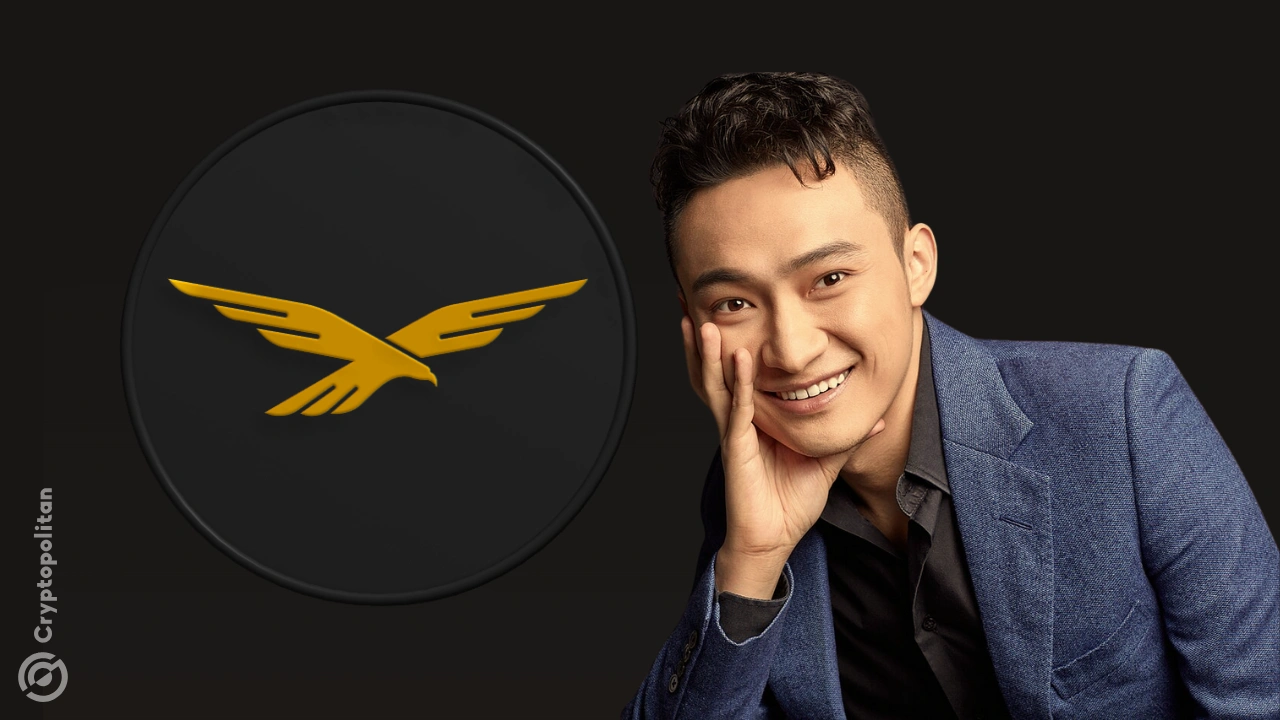


World Liberty Financial (WLF) filed a defamation lawsuit against billionaire investor Justin Sun, calling his lawsuit “malicious misrepresentation.” The lawsuit was filed in the Eleventh Judicial Circuit Court for Miami-Dade County, Florida, and is a countersuit of Sun’s fraud and extortion suit against WLF.
World Liberty Financial asserts that Sun engaged in a campaign to publish false and defamatory statements to his 4 million followers on X. The company also claims that Sun engaged in “straw purchases,” prohibited token transfers, and short selling WLFI tokens.
WLF further alleges that Sun launched his public campaign after it enforced contractual restrictions on his holdings and refused his “hush money” demands for hundreds of millions of dollars. The company says that Sun was fully aware of its right to freeze tokens under the “Token Unlock Agreement” he signed.
However, Sun previously publicly claimed that the authority is a hidden “trap door.” Meanwhile, WLF believes that Sun’s actions caused actual business losses, including the collapse of a potential partnership with Native Market.
Dispute centers on millions in frozen assets, WLF attorney sets record straight
The dispute centers on millions in frozen assets, for which Sun sued WLF in California. In his lawsuit, Sun alleged that the firm illegally froze his tokens (valued at roughly $45M) in retaliation for his refusal to invest an additional $200 million into their USD1 stablecoin. Nevertheless, WLF emphasizes that the freeze was a routine security measure triggered by suspicious on-chain activity–including unauthorized transfers to Binance.
“Rather than acting in good faith, Justin Sun chose to defame World Liberty — repeatedly, publicly, and to millions of followers. World Liberty filed this lawsuit as a last resort to correct the record and to protect its token holders, its employees, and all its stakeholders. We are eager to expose the falsity of Sun’s statements in court and in public.”
–Tom Clare, Attorney for World Liberty Financial.
WLF is seeking compensatory damages along with a court order requiring the public retraction of Sun’s statements. The legal battle between World Liberty Financial and Justin Sun represents a critical intersection of high-stakes litigation and digital influence. It serves as a litmus test for how the crypto industry balances decentralized principles with traditional legal accountability.
The dispute moved from the blockchain to the public in April 2026, when Sun portrayed WLF as “centralized finance in a decentralization costume” on social media. He claimed that his assets were being held hostage to pressure him into making further investments.
WLF says Sun’s outbursts are ‘malicious misrepresentation’
WLF is referring to Sun’s recent public outbursts as “malicious misrepresentation” intended to hide his misconduct. The case forces a judicial examination of the functionality of smart contracts alongside that of contractual agreements.
On the other hand, at the heart of the WLF’s countersuit is the emphasis on its ability to blacklist wallets. The company says this function is a “Regulatory Compliance Module” required under the 2025 Clarity Act.
However, Sun argues that this same feature is a backdoor blacklist function that violates the fundamental crypto principle of immutability. His fraud suit also includes defamation claims against WLF’s aggressive social media responses.
Meanwhile, the outcome of the WLF-Sun lawsuit may determine if “influence” can be legally restrained when it impacts market stability or corporate reputation. The resolution of this suit will likely set a landmark precedent on whether decentralized protocols can legally enforce compliance modules without being liable for fraud or defamation.
The timing of Sun’s regulatory relief is also another major point of public contention. In March 2026, the U.S. SEC settled its long-standing 2023 fraud and market manipulation case against Sun for a $10 million fine, with no admission of wrongdoing. The agency allegedly paused its prosecution shortly after Sun’s $75 million investment in WLF and his purchase of $90 million in TRUMP memecoins.
In particular, this led to fierce public debate and to demands from House Democrats for an investigation into potential “pay-to-play.” Sun was unable to vote on a controversial April 15 governance proposal because his tokens are frozen. The proposal seeks to lock early investor tokens until 2030, a year after President Trump is scheduled to leave office. It also mandates a 10% permanent burn of advisor tokens.
Don’t just read crypto news. Understand it. Subscribe to our newsletter. It’s free.


Read More