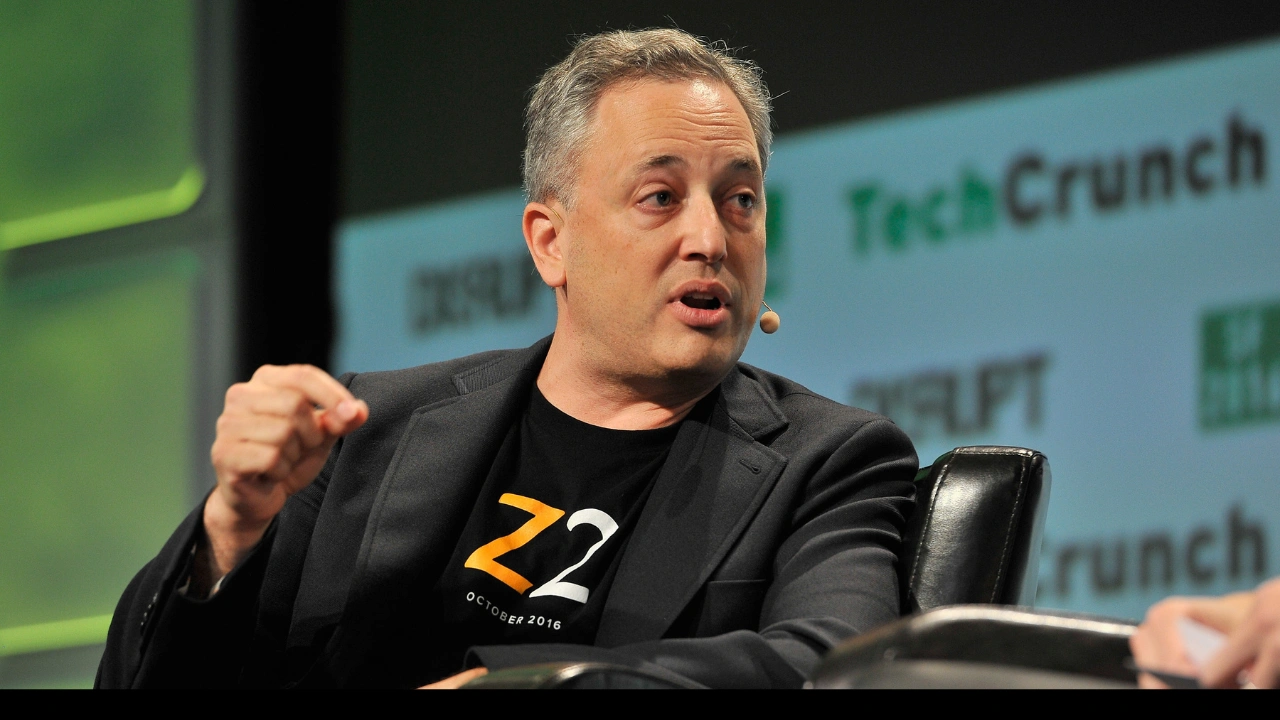


David Sacks, former White House AI & Crypto Czar, recently stated that AI has become a core driver of economic growth in the United States. His opinion is that stopping progress with AI would be akin to bringing the U.S. economy to a screeching halt.
This Sunday, David Sacks posted on X to state his opinion on a recent report issued by Morgan Stanley. This report focused on investment forecasts for the top five hyperscalers in the U.S. (Amazon, Alphabet, Meta, Microsoft, and Oracle) for this year and next.
It raised combined capex forecasts from $805 billion USD in 2026 to $1.1 trillion in 2027. For reference, the expected $805 billion in spending for 2026 would be roughly double the same expenditures for the previous year.
This unprecedented level of spending may seem absurd to the average person, but Sacks sees it differently. To him, it is an indicator that stopping or slowing down the progress with AI investment and development would be detrimental to the U.S. economy.
Despite polls referenced by Sacks which show AI to be unpopular among the masses, he believes the potential of this technology for economic growth holds much greater weight.
Why is AI investment so important to U.S. economic growth?
According to David Sacks, this new report by Morgan Stanley shows that AI capex will be a 2.5% tailwind to GDP growth this year, and over 3% for 2027. However, it is important to note that this report only covers the top five hyperscalers; it does not include all the companies currently investing in AI, nor the multitude of AI startups. This means the economic impact of AI growth and investment could have a much larger impact on GDP growth than these numbers suggest.
The rationale behind this idea is simply that capex only refers to the investment in the infrastructure that AI programs need to operate (i.e. data centers). It does not take into consideration the value that will be generated by the usage of AI programs, systems, and applications in the economy via productivity gains.
Sacks stated in his post on X, “The ROI on capex is likely to dwarf the capex itself, which is why investment continues to grow.” In furtherance of his perspective, Sacks went on to say that “in Q1,” (2026) “AI was already 75% of GDP growth.”
The bet behind the AI boom
Many proponents of the AI boom understandably share the same perspective as Sacks. There certainly is massive potential for the widespread adoption of AI to vastly improve productivity gains for the U.S. economy in never-before-seen ways.
At the same time, just because this is possible does not mean it will look exactly as expected in implementation. Many critics of the recent AI boom liken it to the Dot-com bubble, where there was massive spending on infrastructure to support the new technologies of that era, but much of it did not translate into the returns that were promised.
That said, there is great concern that major tech companies are overbuilding in anticipation of a demand that has not taken shape yet. It is worth noting that just because AI can increase productivity does not mean companies will rapidly integrate it or that workers will immediately adapt.
Furthermore, AI datacenters consume a massive amount of energy, which creates an additional constraint on how fast the anticipated ROI can materialize. Lastly, since much of the current investment in AI is concentrated amongst five tech giants, it raises an important question: will the economic benefits of this technology be widely distributed or remain in the hands of the few in control of it? Unfortunately, this can only be answered with time.
If you want a calmer entry point into DeFi crypto without the usual hype, start with this free video.




Read More