Bitcoin Funding Rates Climb to Highest Level in Over a Year



Derivatives data show traders paying steep premiums to hold long positions, a signal some analysts read as bullish momentum
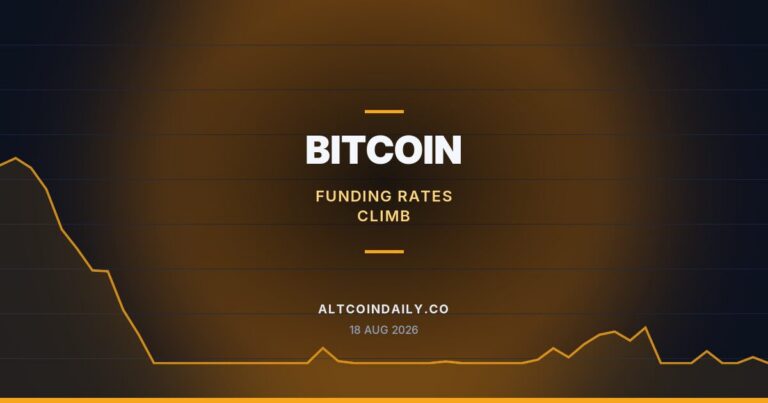
Bitcoin’s funding rate on perpetual futures contracts has climbed to its highest point since late 2024, according to data cited by several market observers on August 18. The metric, which measures periodic payments between long and short traders on derivatives exchanges, is widely used as a gauge of leverage and sentiment in the crypto futures market.
Sources tracking the figure differ slightly on the exact scale of the move. Some report a 20-month high, while others describe it as a 19-month high. Both readings point to the same underlying trend: funding rates have not been this elevated in well over a year.
A positive and rising funding rate means traders holding long positions are paying a premium to those holding shorts. This happens on perpetual futures markets, which lack an expiration date and instead use funding payments to keep contract prices tethered to the spot price. When longs significantly outnumber shorts, the rate rises to compensate short sellers and discourage excessive one-sided positioning.
Analysts often interpret a sharply rising funding rate as a sign of bullish conviction among leveraged traders. It suggests many market participants are willing to pay to maintain upside bets, reflecting confidence that Bitcoin’s price will continue climbing. This pattern has historically accompanied periods of strong upward price momentum in the asset.
However, elevated funding rates also carry a cautionary dimension. A market crowded with long positions becomes more vulnerable to sharp downside moves. If the price reverses even modestly, over-leveraged longs can be forced into liquidation, triggering cascading sell orders. Traders and analysts frequently watch funding rate spikes for signs that a market has become overheated, since crowded positioning has preceded sudden corrections in past cycles.
The current reading arrives at a moment when broader attention on Bitcoin’s price action and institutional flows remains high. Elevated funding rates alone do not determine future price direction. They reflect current positioning and sentiment among leveraged traders rather than a guaranteed forecast. Market participants typically weigh funding data alongside open interest, spot volume, and broader macroeconomic conditions before drawing conclusions about where prices might head next.
Exchanges calculate funding rates differently, and methodologies for measuring historical highs can vary across data providers. This helps explain why the reported milestone differs by roughly a month depending on the source. Regardless of the precise timeframe, the consensus among trackers is that leveraged bullish positioning has reached a multi-month extreme.
Market Impact
A sustained rise in funding rates typically signals that derivatives traders are willing to pay a premium to stay long Bitcoin, which can reinforce short-term upward price momentum if spot demand keeps pace. It also raises the stakes for volatility, since a large concentration of leveraged longs increases the risk of forced liquidations if the price turns lower unexpectedly.
Traders and risk managers often treat funding rate spikes as a signal to monitor open interest and liquidation levels closely. Exchanges and market data providers may see increased attention to funding metrics in the coming days as participants assess whether current positioning reflects sustainable demand or a buildup of leveraged risk that could unwind quickly.
The elevated funding rate underscores strong leveraged demand for Bitcoin exposure, even as sources differ on the precise multi-month record being set. Market participants will likely watch whether this positioning holds or triggers volatility if sentiment shifts.
Frequently Asked Questions
What is a Bitcoin funding rate?
It is a periodic payment exchanged between long and short traders on perpetual futures contracts, used to keep the contract price aligned with Bitcoin’s spot price.
Why does a high funding rate suggest bullish sentiment?
A high, positive funding rate means long traders are paying a premium to short traders, indicating that demand for leveraged long positions outweighs demand for shorts.
Is the reported milestone a 19-month or 20-month high?
Sources differ on the exact timeframe, with some citing a 20-month high and others a 19-month high, though both point to the highest funding rate level in well over a year.
What risks come with elevated funding rates?
High funding rates often reflect crowded long positioning, which can increase the risk of cascading liquidations if the price moves against the majority of leveraged traders.
Original source: AltcoinGordon
Syndicated coverage. Originally reported by altcoingordon.com.




Read More