Circle Gets $100M Investment From Binance, Cementing Deeper USDC Ties



The investment coincides with reports that Circle’s distribution payments to partners like Binance are squeezing its profit margins.
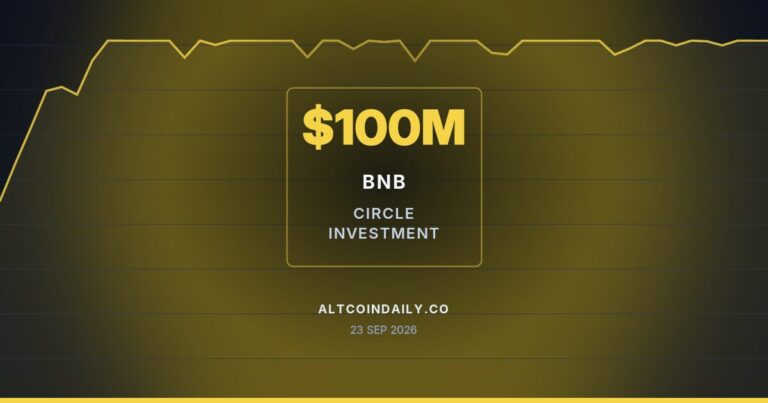
Binance has acquired $100 million in Circle stock, according to Bitcoin.com News. The purchase deepens the exchange’s relationship with the issuer of USDC, one of the largest dollar-pegged stablecoins by market capitalization.
The equity stake follows Circle’s public listing and reflects growing interest among major exchanges in owning a piece of stablecoin infrastructure. Binance, the world’s largest crypto exchange by trading volume, already plays a central role in distributing stablecoins to its user base.
Separately, CryptoSlate reported that Circle is paying significant sums to distribution partners, including Binance, in exchange for promoting and integrating USDC. That reporting indicates these payments are contributing to compressed margins at Circle.
Stablecoin issuers commonly pay exchanges and platforms to encourage adoption of their tokens over rival stablecoins. Tether’s USDT remains the dominant stablecoin by market share, and Circle has sought to close that gap through distribution agreements. Paying for placement on major exchanges is one lever issuers use to grow their float and transaction volume.
The dynamic described by CryptoSlate suggests a tension in Circle’s business model. Circle earns revenue primarily from interest on reserves backing USDC, but distribution costs paid to partners can eat into that income. Binance both receiving a stock investment from, or investing in, its partner while also collecting distribution payments illustrates how tightly the commercial relationship between the two firms is structured.
Binance’s decision to hold Circle equity gives the exchange a direct financial stake in Circle’s performance, beyond its existing role as a distribution partner. This aligns incentives between the two companies around USDC’s growth. It also signals that Binance views Circle’s public equity as a worthwhile addition to its balance sheet, separate from any stablecoin distribution fees it may already collect.
The timing of the stock purchase and the margin-pressure reporting invites scrutiny of how sustainable Circle’s current distribution strategy is. Investors watching Circle’s public shares will likely weigh both its stablecoin growth trajectory and the cost of maintaining exchange partnerships that drive that growth.
Market Impact
For Circle, deeper ties with Binance could support USDC’s circulation and trading volume across one of the industry’s largest venues. However, the reported margin pressure from distribution payments raises questions about the profitability of that growth strategy over time.
For Binance, the equity stake diversifies its holdings beyond stablecoin distribution fees and gives it upside exposure to Circle’s public market performance. The arrangement may also influence how other exchanges structure their own stablecoin partnerships, particularly as competition between USDC and USDT continues.
The $100 million stock purchase underscores how closely stablecoin issuers and major exchanges are now intertwined financially. Whether that alignment eases the margin pressures reported at Circle remains to be seen.
Frequently Asked Questions
What did Binance purchase?
Binance bought $100 million worth of Circle stock, according to Bitcoin.com News, deepening its commercial relationship with the USDC issuer.
Why is Circle paying Binance for distribution?
Stablecoin issuers often pay exchanges to promote and integrate their tokens, helping grow adoption relative to competitors like Tether’s USDT.
How does this affect Circle’s margins?
CryptoSlate reported that Circle’s payments to distribution partners, including Binance, are contributing to compressed profit margins for the company.
Does this change Binance’s relationship with USDC?
The stock purchase gives Binance a direct financial stake in Circle, in addition to its existing role distributing USDC on its platform.
Original source: AltcoinGordon
Syndicated coverage. Originally reported by altcoingordon.com.


Read More