
Fake Trust Wallet Site Linked to $1.1M Exploit Prompts Warning From Binance’s CZ

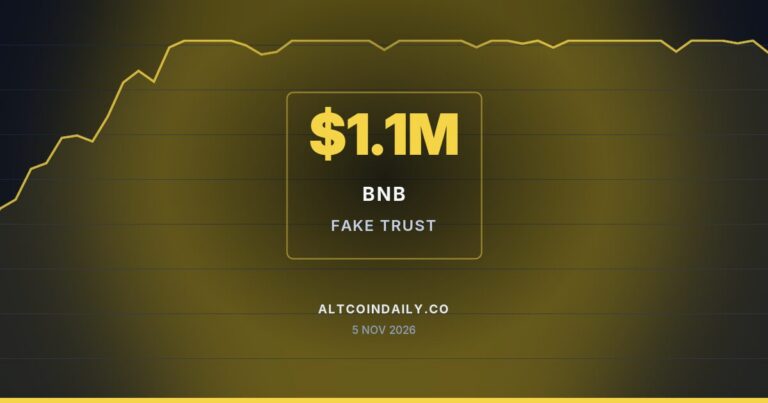


Changpeng Zhao flagged a phishing scheme targeting Trust Wallet users as losses from a related exploit reached $1.1 million.
Changpeng Zhao, the founder of Binance, issued a public warning about a phishing scam targeting cryptocurrency holders. The alert specifically named a fraudulent website designed to impersonate Trust Wallet, a popular self-custody wallet application.
According to reports, the fake site has already been connected to an exploit resulting in losses of approximately $1.1 million. CZ used his platform to alert users directly, urging caution before interacting with unfamiliar links or websites claiming to represent legitimate wallet providers.
Phishing attacks remain one of the most persistent threats in the crypto industry. Unlike exchange hacks or smart contract exploits, phishing relies on tricking users into voluntarily handing over sensitive information. Attackers often clone the look and feel of trusted platforms, making fake websites difficult to distinguish from the real thing at a glance.
Trust Wallet, widely used for storing and managing digital assets outside centralized exchanges, has become a frequent target for impersonation schemes. Because self-custody wallets give users direct control over private keys, a successful phishing attack can result in the irreversible loss of funds. There is no central authority to reverse fraudulent transactions once assets leave a victim’s wallet.
CZ’s warning follows a pattern seen throughout 2025 and into 2026, where high-profile figures in crypto have increasingly used their public platforms to flag emerging scams in near real time. As an industry figure with a large following, his alerts often reach users faster than official security advisories from wallet providers themselves.
The $1.1 million exploit figure cited alongside the warning indicates the scam had already caused measurable financial damage before drawing wider public attention. Details on how the fake website operated, or how many individual victims were affected, were not fully specified in available reporting. The core elements reported are the phishing warning from CZ, the fake Trust Wallet site, and the resulting losses.
Security researchers and wallet developers routinely stress that users should verify website URLs directly, avoid clicking links from unsolicited messages, and never share seed phrases or private keys with any third party. These basic precautions remain the primary defense against phishing attacks, since blockchain transactions cannot typically be undone once funds are transferred to an attacker’s address.
Market Impact
Phishing incidents like this one do not typically move broader cryptocurrency prices, but they do carry reputational and operational consequences for wallet providers and the wider self-custody ecosystem. Repeated scam incidents can erode user trust in non-custodial wallets, even when the fault lies with impersonators rather than the legitimate platform itself.
For Trust Wallet specifically, being named in connection with a $1.1 million exploit may prompt increased scrutiny of its security communications and user education efforts. High-profile warnings from figures like CZ can also drive short-term spikes in public awareness, potentially reducing further losses as users become more cautious about verifying official wallet domains.
As phishing tactics grow more sophisticated, warnings like CZ’s underscore the ongoing need for user vigilance in self-custody crypto environments. Verifying official sources before interacting with wallet websites remains one of the simplest ways to avoid becoming the next victim.
Frequently Asked Questions
What did CZ warn about?
CZ warned crypto users about a phishing scam involving a fake website impersonating Trust Wallet, a widely used self-custody wallet.
How much money was lost in the related exploit?
Reports indicate the exploit linked to the fake website resulted in losses of approximately $1.1 million.
Is Trust Wallet itself responsible for the losses?
The losses stem from a fraudulent website impersonating Trust Wallet, not a flaw in the legitimate Trust Wallet platform, according to available reports.
How can users protect themselves from similar phishing scams?
Users are generally advised to verify website URLs directly, avoid unsolicited links, and never share private keys or seed phrases with anyone.
Original source: AltcoinGordon
Syndicated coverage. Originally reported by altcoingordon.com.




Read More