HYPE Token Supply Shrinks Nearly 5% After $4 Billion Burn by Hyperliquid



The decentralized exchange’s token burn coincides with lifetime protocol revenue crossing $1.38 billion.
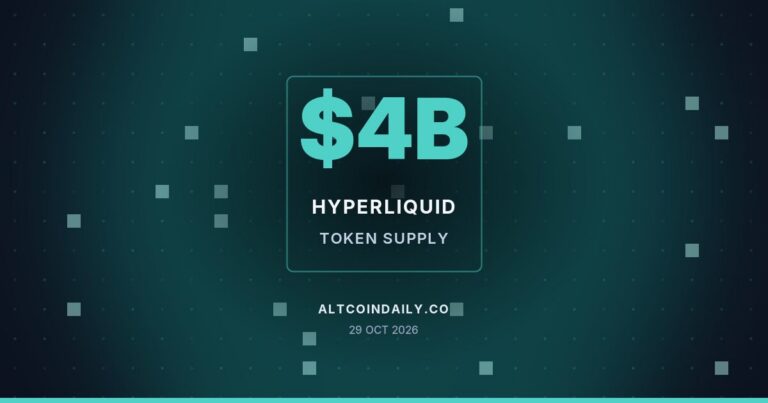
Hyperliquid, a decentralized exchange known for its perpetual futures trading, has burned approximately $4 billion worth of its native HYPE token. The move reduces the total circulating supply by nearly 5%, according to reporting on the burn.
Token burns permanently remove coins from circulation by sending them to addresses that cannot be accessed or spent. Protocols use burns to manage supply, often funneling a portion of revenue or fees into the process. A burn of this size signals that Hyperliquid is directing substantial resources toward reducing its token count.
The burn was reported alongside data showing Hyperliquid’s lifetime revenue has reached $1.38 billion. That figure reflects cumulative earnings generated since the platform launched, spanning trading fees and other protocol activity. Reaching that milestone places Hyperliquid among the more commercially active decentralized exchanges in the current market cycle.
Hyperliquid has built its reputation on offering on-chain perpetual futures trading with performance closer to centralized exchanges. The platform operates its own layer-1 blockchain, designed specifically to support high-speed trading without relying on external networks. HYPE serves as the native token used for governance, fee payments, and incentive structures within that ecosystem.
Supply reduction mechanisms like this burn are often tied to a protocol’s revenue-sharing design. When a decentralized exchange generates substantial fee income, some projects allocate a share of that income toward buying back and destroying tokens. This approach is intended to align token holder interests with the platform’s financial performance, though the degree of correlation between burns and token value varies across different projects and market conditions.
The scale of this burn, at roughly $4 billion, is notable relative to Hyperliquid’s overall market presence. Removing nearly 5% of total supply in a single action is a meaningful supply-side event for any token, though the broader effect depends on trading volumes, demand, and how the market interprets the protocol’s underlying revenue trajectory.
Neither report detailed the exact mechanism timeline behind the burn, such as whether it represents an accumulation of smaller burns over time or a single consolidated event. Readers should note that figures describing both the burn size and lifetime revenue were sourced from separate reports, which may reflect slightly different reporting periods or methodologies.
Market Impact
A supply reduction of this magnitude can influence market perception of a token’s scarcity, particularly when paired with strong revenue figures. Investors often view consistent burns backed by real protocol income as a sign of sustainable tokenomics, distinct from inflationary models that rely on continuous new token issuance.
For the broader decentralized derivatives sector, Hyperliquid’s reported revenue milestone may reinforce competitive pressure on rival platforms to demonstrate comparable fee generation and token utility. However, burns alone do not guarantee price appreciation, and market participants should weigh supply changes alongside trading volume, user growth, and overall crypto market conditions before drawing conclusions about future performance.
The $4 billion burn and accompanying revenue figures point to Hyperliquid’s growing footprint in decentralized derivatives trading, though their lasting market impact will become clearer as more data and independent confirmation emerge.
Frequently Asked Questions
What does it mean for Hyperliquid to burn HYPE tokens?
Burning tokens means permanently removing them from circulation, typically by sending them to an inaccessible address. This reduces the total available supply of HYPE.
How much of HYPE’s total supply was burned?
The burn removed roughly $4 billion worth of tokens, which reduced the total circulating supply by close to 5%, according to the reports.
What is Hyperliquid’s lifetime revenue?
One report cited lifetime revenue surpassing $1.38 billion, reflecting cumulative earnings from trading fees and other platform activity since launch.
Why do crypto protocols burn tokens?
Protocols often burn tokens to manage circulating supply, sometimes using a share of revenue to do so, aiming to align token economics with platform performance.
Original source: AltcoinGordon
Syndicated coverage. Originally reported by altcoingordon.com.



Read More