Real-World Asset Deposits in DeFi Approach $4 Billion After Sixfold Yearly Growth



Tokenized treasuries, credit, and other real-world assets are drawing rising deposits into decentralized finance protocols.
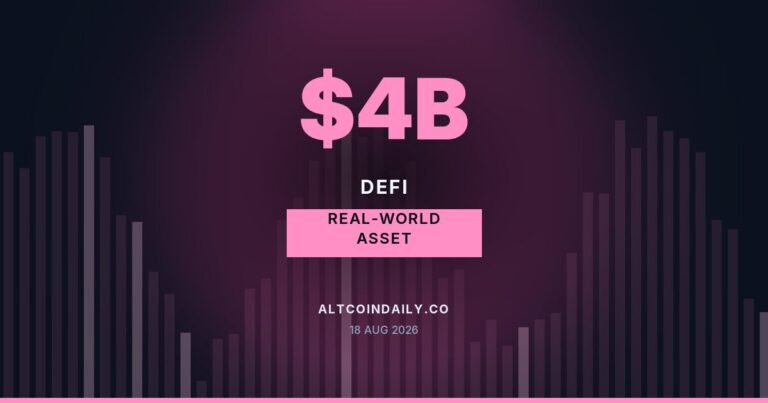
Deposits linked to real-world assets held within decentralized finance protocols have reached nearly $4 billion. That total represents roughly a sixfold jump compared to the same period last year. The figure was reported by Coinfomania, Cryptopolitan, and UNLOCK Blockchain, each pointing to accelerating momentum behind RWA integration in DeFi.
Real-world assets, or RWAs, refer to traditional financial instruments that have been tokenized and brought onto blockchain networks. Common examples include short-term government treasuries, corporate credit, and other yield-bearing instruments. Once tokenized, these assets can be deposited, traded, or used as collateral within DeFi protocols, much like native crypto tokens.
The sharp rise in deposits reflects a broader shift in how investors approach yield generation in digital markets. As interest rates on traditional assets have remained a focal point for investors, tokenized treasuries and similar instruments have offered a bridge between conventional fixed-income returns and blockchain-based liquidity. This has made RWAs an attractive category for both crypto-native users and institutions exploring on-chain finance.
Growth of this magnitude also underscores a maturing relationship between DeFi infrastructure and traditional finance. Protocols that once focused almost exclusively on volatile crypto assets have increasingly added support for tokenized real-world instruments. This expansion has been driven partly by demand for more stable, yield-generating collateral within lending and borrowing markets.
The sixfold annual increase suggests that RWA adoption has moved beyond early experimentation. A year ago, tokenized asset deposits in DeFi represented a much smaller share of total value locked across the sector. The current scale, approaching $4 billion, indicates that RWAs are becoming a more established category within decentralized finance rather than a niche product line.
Analysts and industry participants have pointed to custody solutions, regulatory clarity in certain jurisdictions, and improved tokenization infrastructure as contributing factors. These developments have made it easier for asset issuers to bring real-world instruments on-chain while meeting compliance requirements. As more issuers and platforms enter this space, the pool of available tokenized assets for DeFi deposit has expanded correspondingly.
The trend also intersects with broader institutional interest in blockchain-based settlement and custody. Traditional financial firms have shown growing willingness to experiment with tokenized products, viewing them as a way to access blockchain efficiency without abandoning familiar asset classes. This has helped narrow the gap between conventional finance and decentralized markets.
While the reported figures highlight strong momentum, the RWA sector remains a small fraction of the overall DeFi and traditional finance markets combined. Continued growth will likely depend on further regulatory developments, expanded tokenization infrastructure, and sustained investor appetite for blockchain-based yield products.
Market Impact
The rise in RWA deposits could support increased total value locked across DeFi protocols that offer tokenized asset products. Platforms integrating real-world instruments may see higher liquidity and broader user participation as more capital flows into yield-bearing, blockchain-based collateral.
Institutional participation in this segment could also influence how traditional asset managers view blockchain infrastructure more broadly. Sustained growth in RWA deposits may encourage further tokenization efforts across asset classes, though the pace of adoption will likely remain tied to regulatory clarity and custody solutions available in different markets.
The near sixfold annual increase in RWA deposits highlights growing convergence between traditional finance and decentralized markets, a trend likely to draw continued attention from both crypto-native participants and institutional investors.
Frequently Asked Questions
What are real-world assets (RWAs) in DeFi?
RWAs are traditional financial instruments, such as government treasuries or corporate credit, that have been tokenized for use on blockchain networks and within DeFi protocols.
How much have RWA deposits grown in DeFi?
According to reports from Coinfomania, Cryptopolitan, and UNLOCK Blockchain, RWA deposits in DeFi have grown roughly sixfold over the past year, nearing $4 billion.
Why are RWAs becoming popular in decentralized finance?
RWAs offer yield-bearing collateral tied to traditional financial instruments, appealing to investors seeking blockchain-based access to conventional fixed-income-style returns.
Does this growth mean RWAs now dominate DeFi?
No. While deposits have grown significantly, RWAs still represent a relatively small portion of overall value locked across the broader DeFi and traditional finance markets.
Original source: AltcoinGordon
Syndicated coverage. Originally reported by altcoingordon.com.




Read More