Stablecoin RLUSD Earns A2 Investment-Grade Rating From Moody’s

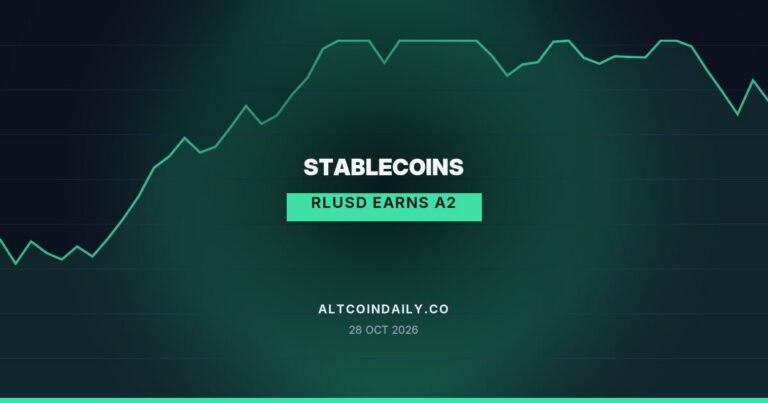


Ripple confirms the rating as the stablecoin market faces growing scrutiny over credit quality and reserve backing.
Moody’s has assigned an A2 rating to RLUSD, the dollar-pegged stablecoin issued by Ripple. The company announced the rating itself, presenting it as external confirmation of the token’s credit quality. An A2 rating sits within the investment-grade range used by Moody’s across traditional finance.
For stablecoins, a formal credit rating remains uncommon. Most tokens pegged to the dollar rely on issuer attestations or periodic reserve reports rather than ratings from major agencies. Moody’s rating of RLUSD introduces a different kind of scrutiny, one built on established methodologies used for banks, corporations, and sovereign debt.
RLUSD launched as Ripple’s entry into the stablecoin sector, an area dominated by Tether’s USDT and Circle’s USDC. Ripple has positioned the token as a bridge between traditional finance and blockchain-based payments, an area the company has focused on for years through its cross-border settlement business.
An investment-grade rating could matter for institutional adoption. Banks, asset managers, and corporate treasuries often operate under internal rules that require rated instruments before they can hold or transact in them. A Moody’s rating may lower one barrier that has kept some regulated entities on the sidelines of stablecoin markets.
The announcement arrives alongside broader questions about how value flows through Ripple’s ecosystem. Commentary following the rating has focused on whether RLUSD’s growth benefits XRP, Ripple’s native token, or whether the two assets largely operate on separate tracks. That distinction matters for investors trying to understand where Ripple’s business activity actually accrues value.
Stablecoin issuers have faced increasing regulatory attention globally, with lawmakers and regulators pushing for clearer reserve requirements and oversight. A third-party credit rating does not replace regulatory approval, but it can serve as an additional signal to the market about an issuer’s financial discipline and risk management.
Ripple has not said whether it will seek similar ratings from other major agencies. The company’s public sharing of the Moody’s assessment suggests it views the rating as a meaningful marketing and credibility tool as competition in the stablecoin sector intensifies.
Market Impact
An investment-grade rating from Moody’s could encourage institutional treasuries and regulated financial firms to consider RLUSD for settlement or cash management purposes. Ratings often factor into internal compliance frameworks that govern which digital assets regulated entities can hold.
The development also feeds into ongoing debate about Ripple’s broader token economy. Analysts have raised questions about whether RLUSD’s expansion translates into direct value capture for XRP, or whether the stablecoin and the token serve largely separate functions within Ripple’s business model. Market participants will likely watch stablecoin supply and usage data for signs of how the rating affects adoption.
The Moody’s rating gives RLUSD a credential few stablecoins currently hold, potentially easing institutional hesitation. Whether that translates into measurable growth for Ripple’s broader ecosystem remains an open question for the market to resolve.
Frequently Asked Questions
What does an A2 rating from Moody’s mean?
A2 is an investment-grade rating within Moody’s scale, indicating relatively low credit risk based on the agency’s standard methodology.
Is RLUSD the first stablecoin to receive a Moody’s rating?
The sources provided do not specify whether RLUSD is the first stablecoin rated by Moody’s, only that formal credit ratings remain uncommon for stablecoins generally.
Does the Moody’s rating affect XRP directly?
The rating applies to RLUSD, Ripple’s stablecoin. Reporting has raised questions about whether RLUSD’s success benefits XRP, but no direct financial link was specified.
Why would an institution care about a stablecoin’s credit rating?
Many regulated institutions operate under compliance rules requiring rated instruments before they can hold or transact certain assets, making a credit rating potentially relevant for institutional adoption.
Original source: AltcoinGordon
Syndicated coverage. Originally reported by altcoingordon.com.





Read More