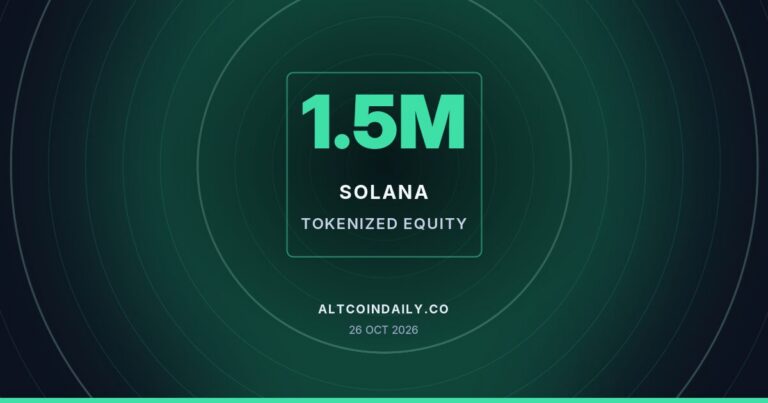
Tokenized Equity Holders on Solana Reach 1.5 Million, a New High



The milestone points to rising retail and institutional interest in blockchain-based stock exposure.
Tokenized equities on the Solana blockchain have reached 1.5 million holders, according to two separate reports published on October 26. CryptoBriefing and Finbold both described the figure as a new high for the sector. The milestone reflects a steady climb in participation since tokenized stock products first appeared on the network.
Tokenized equities are blockchain-based tokens designed to track the price of real-world shares. They allow holders to gain exposure to companies without directly owning the underlying stock through a traditional brokerage. Solana has emerged as one of the preferred networks for issuing these products, thanks to its low transaction costs and fast settlement times.
The growth in holder count suggests that more users are choosing on-chain alternatives for equity exposure. It also indicates that issuers are expanding their offerings and reaching new audiences. Neither report detailed which specific companies or tokens contributed most to the increase.
Tokenized stock markets have drawn attention from both crypto-native investors and traditional finance participants over the past year. Proponents argue that tokenization can lower barriers to entry, especially for investors outside the United States who face limited access to American equities. Critics have raised concerns about custody, regulatory clarity, and how closely these tokens track the actual value of the underlying shares.
The broader market structure around tokenized real-world assets has been evolving quickly. Stablecoins paved the way by demonstrating that blockchain rails could handle large volumes of dollar-denominated value. Tokenized equities represent a further step, applying similar infrastructure to stock ownership. Solana’s role in this expansion highlights the network’s push to position itself as a hub for tokenized finance beyond simple token trading.
Regulators in multiple jurisdictions continue to examine how tokenized securities should be classified and overseen. The pace of adoption described in these reports comes as that regulatory picture remains unsettled in several major markets. How authorities eventually treat these products could shape whether the current growth trend continues.
Market Impact
A rising holder count for tokenized equities can signal expanding demand for on-chain exposure to traditional markets. If the trend continues, it may encourage more issuers to launch tokenized products on Solana, deepening liquidity and broadening the range of available assets.
At the same time, growth in holder numbers does not by itself indicate trading volume or total value locked in these products. Investors should note that regulatory treatment of tokenized equities still varies by jurisdiction, which could affect future availability or compliance requirements for platforms offering them.
The 1.5 million holder milestone underscores Solana’s growing footprint in tokenized real-world assets. Whether this momentum continues will likely depend on regulatory developments and further issuer activity in the months ahead.
Frequently Asked Questions
What are tokenized equities?
Tokenized equities are blockchain-based tokens that aim to mirror the price of real-world company shares, allowing holders to gain price exposure without using a traditional brokerage account.
Why is Solana used for tokenized equities?
Solana is often chosen for tokenized asset products because of its low transaction fees and fast transaction settlement compared to some other blockchain networks.
Does holder growth mean trading volume is also rising?
Not necessarily. Holder count measures how many wallets hold tokenized equity tokens, which is distinct from trading volume or total assets locked in these products.
Are tokenized equities regulated the same way as traditional stocks?
Regulatory treatment of tokenized equities varies by jurisdiction and remains unsettled in several major markets, which could influence how these products are offered in the future.
Original source: AltcoinGordon
Syndicated coverage. Originally reported by altcoingordon.com.


Read More